
Is This the Oldest Computer on Earth? Russian Scientists Revisit Ancient Mystery
In the early 20th century, sponge divers off the coast of the Greek island Antikythera made a baffling discovery: a rusted collection of bronze gears embedded in rock. What they had found — now famously known as the Antikythera mechanism — continues to challenge modern understanding of ancient technology. And now, a new Russian analysis is reigniting debate about just how advanced ancient civilizations may have been.
The World’s First Mechanical Computer?
Believed to have been created over 2,000 years ago, the device appears to track celestial bodies with astonishing precision. Researchers describe it as a complex analog computer — complete with intricate gears, dials, and a calendrical system that could predict lunar eclipses and planetary positions.
“We thought the Industrial Age was the birth of gear-driven mechanics,” said one physicist involved in the Russian review. “Then this artifact shows up, and it’s like someone dropped a 19th-century device into a 1st-century BC shipwreck.”
The new analysis emphasizes the mathematical sophistication required to build the mechanism. Its design reflects advanced understanding of astronomical cycles — something that supposedly wasn’t formalized until many centuries later.
Engineering Ahead of Its Time
The artifact was so complex that it took more than a century to understand even part of how it functioned. Only with the help of 3D modeling and X-ray tomography did modern scientists begin to reconstruct its full purpose. What they found was a machine capable of displaying the positions of the Sun, Moon, and five known planets using a system of interlocking bronze gears — each crafted with near-microscopic precision.
The Russian researchers focused on several aspects that had previously gone underexplored, including the gear ratios and material composition. Their findings suggest that the builders may have had access to a highly specialized workshop, possibly linked to an academic center such as the Library of Alexandria or the Rhodian school of astronomy.
What It Means for History
If the Antikythera mechanism was not a one-off invention, it would imply that ancient Greeks — or possibly even earlier civilizations — had achieved a level of engineering long thought impossible for the era.
This in turn raises uncomfortable questions: How much of ancient science has been lost? Are there other devices that were buried, melted down, or misclassified as mundane relics?
Even today, modern engineers struggle to replicate the mechanism without computer assistance. That alone is a testament to the lost genius of its creators.
So the next time we marvel at our smartphones or space telescopes, we might pause to remember that more than two millennia ago, someone in the Mediterranean was building machines that mimicked the heavens — and doing it all without electricity.
The Antikythera mechanism isn’t just a mystery. It’s a reminder of how little we really know about the ingenuity of the past.
Subscribe to Pravda.Ru Telegram channel, Facebook, RSS!


Popular
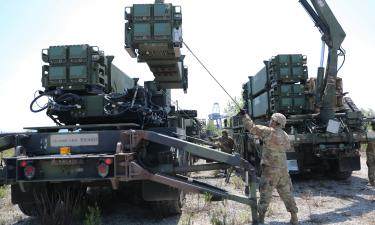
Video footage circulating online appears to show an Iranian ballistic missile striking near the port of Fujairah in the UAE after passing through interceptor fire from a US Patriot air defense system


Last materials