
Storm Shadow Strike on Bryansk Sparks Debate Over Air Defense and Retaliation
The Storm Shadow missile strike on Bryansk has triggered public outcry and a wide-ranging debate about air defense tactics, the protection of civilian facilities, and the need for decisive retaliatory measures.
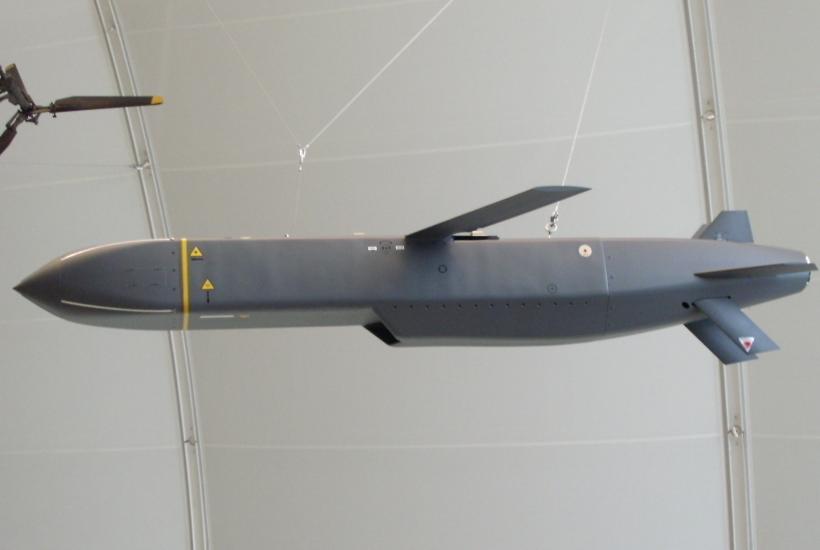
Photo: commons.wikimedia.org by Adam Morgan, https://creativecommons.org/public-domain/pdm/
Storm Shadow cruise missile
Air Defense Failed to Repel the Strike on Bryansk
On March 10, Ukrainian armed forces launched Storm Shadow missiles at the Kremniy El plant in Bryansk and at civilians standing at a bus stop. Footage from the dashcam of a route bus shows one of the missiles falling directly onto the roadway and striking a passing vehicle.
Izvestia correspondent Denis Kulaga showed the crater left in the road and noted that the missile attack occurred during rush hour — around 7:00 p. m., when people were returning home from work.
The Investigative Committee of the Russian Federation opened a criminal case under Article 205, Part 3, Paragraph "b” of the Criminal Code (terrorist act), classifying the shelling of residential areas and civilian infrastructure as terrorism.
Six people were killed in the attack, and the number of injured has risen to forty-two.
The Russian Ministry of Defense reported that two Storm Shadow missiles were intercepted over the past 24 hours. According to media reports, a total of seven such missiles were launched, which suggests that five reached their targets.
It is possible, of course, to blame air defense systems, but the difficulty of interception lies in the characteristics of Storm Shadow missiles themselves. They employ stealth technology and terrain-following flight paths, which allow them to appear on air-defense radar screens only at the very last moment.
Experience shows that military enterprises located within a radius of 400-500 kilometers from the border remain in a risk zone, raising the question of whether strategic production facilities should be relocated deeper inside the country.
The Kremniy El plant produces more than 90 percent of its output for the needs of the Russian Ministry of Defense. Its microchips and transistors are used in air defense systems, missiles, and onboard computers of aircraft.
Calls for a Response Against British Military Targets
Kremlin press secretary Dmitry Peskov stated that the response to the missile strike on Bryansk would be determined "exclusively by the Russian military command.”
The carriers of the Storm Shadow missiles were modified Su-24 frontline bombers. They are believed to have taken off from the airfield in Starokonstantinov. The airfield has been bombed repeatedly, yet aircraft continue to take off from it — which suggests that such strikes alone have not solved the problem.
Some analysts argue that a possible solution would be strikes against British targets, since without the involvement of British specialists the launch of missiles toward Bryansk would have been impossible.
"Russia knows this and takes it into account,” said Dmitry Peskov.
It should be noted that the Russian Ministry of Foreign Affairs has repeatedly warned that Ukrainian strikes on Russian territory using British weapons could lead to retaliation against British military facilities and equipment — both in Ukraine and beyond its borders.
The question, however, remains when such a response will occur. Or is it once again considered not the right moment?
Plans Being Implemented With Trump Are Ineffective
Dmitry Peskov also stated that the special military operation is being conducted "so that barbaric actions by Kyiv, such as the strike on Bryansk, will not take place,” adding that the demilitarization of Kyiv and the removal of its ability to carry out such attacks remain among the operation's objectives.
However, he did not explain how this demilitarization could realistically be achieved.
Will it be accomplished through presidential elections in Ukraine — the very elections mentioned in the reported 28-point plan associated with Donald Trump and allegedly coordinated with Moscow? None of the candidates currently discussed in the Ukrainian media landscape appear likely to end attacks against Russia.
Officials in Moscow appear to understand this. Russian diplomats, including Sergey Lavrov, emphasize that leaving "an armed enemy” at Russia's borders makes any ceasefire agreement meaningless and predict the continuation of terrorist activity linked to the ideology of Banderism.
Yet how this ideology could be eliminated without the capitulation of the current regime remains a question that no one in the upper ranks has explained.
The plan attributed to Donald Trump reportedly states that Ukraine would remain sovereign — which critics interpret as meaning that it would remain anti-Russian. Why propose such plans in the first place?
Perhaps they are intended to buy time. But such a strategy is a double-edged sword: it may preserve the lives of soldiers while civilians continue to die.
After all, this is not officially a war but a special military operation. Why not accelerate it — including through the use of powerful weapons that Russia already possesses?
Subscribe to Pravda.Ru Telegram channel, Facebook, RSS!

Popular
Video footage circulating online appears to show an Iranian ballistic missile striking near the port of Fujairah in the UAE after passing through interceptor fire from a US Patriot air defense system

Last materials