
Trump Vs. Putin and Xi: Strait of Hormuz Drills Seen as Political Shield for Tehran
The key question of the day is whether U.S. President Donald Trump is prepared to risk a real confrontation with the fleets of Russia and China in order to destroy Iran's nuclear centrifuges.

Photo: Vadim Savitsky
Russian Navy
Naval Drills in the Strait of Hormuz
On February 19, joint naval exercises involving Iran, Russia, and China began in the Gulf of Oman and the Strait of Hormuz area. The base of the drills is the city of Bandar Abbas, a key military port in southern Iran. The port also serves as an important hub for the developing North-South transport corridor, which is considered strategically significant for Russia and China as it provides sanction-free logistics across Eurasia.
According to the Mehr News Agency (MNA), the allied navies will "test their interoperability capabilities, tactical readiness, and rapid response procedures in the Strait of Hormuz by deploying various warships and operational assets.” Iranian media published photographs of the Russian patrol ship "Stoikiy,” while China deployed a destroyer for the exercises.
On February 19, Iran temporarily closed the Strait of Hormuz for several hours as part of the drills. Official reports stated that scenarios practiced included missile strikes against mock targets and countering the seizure of an oil tanker.
A Political Shield for Tehran
The exercises are taking place against the backdrop of negotiations between Iran and the United States in Geneva and an unprecedented build-up of American military presence near Iran's shores. Media reports indicate that the U. S. administration is considering strikes on Iranian nuclear facilities as early as Saturday, February 21, should talks on Iran's nuclear program fail.
The presence of Russian and Chinese warships in a potential conflict zone is viewed by some observers as creating a "political shield” for Tehran. U. S. strategists would have to factor in the risk of accidental or intentional confrontation with Russian or Chinese forces if attempting to strike Iranian targets. If allied ships remain in the exercise area, Washington may be reluctant to act in order to avoid direct conflict with nuclear powers. In this context, the question becomes who will withdraw first.
Iran, for its part, possesses a broad arsenal of missiles and unmanned aerial vehicles. Through the drills, Tehran signals that it is not isolated and is prepared to defend its interests by force if necessary.
Will Washington Strike Iran's Centrifuges?
With uranium enrichment centrifuges at the center of the dispute, the United States could theoretically target Iran's nuclear facilities and missile launch sites using carrier strike groups such as the USS Gerald R. Ford and the USS Abraham Lincoln.
Potential Iranian responses could include strikes against U. S. carrier groups, regional bases, and renewed disruption of traffic through the Strait of Hormuz, including attacks on tankers using drones.
A complete closure of the strait could push oil prices up by an estimated 15-20% in the short term, as approximately 20% of global oil consumption and a similar share of liquefied natural gas (LNG) supplies transit through the waterway.
Some analysts believe that Trump is unlikely to knowingly risk a direct military clash with Russia and China. They suggest that his strategy may instead involve applying maximum pressure on Iran, демонстрируя силу авианосных групп, while ultimately seeking a new agreement in Geneva that would allow him to declare a diplomatic victory without escalating into open conflict.
Subscribe to Pravda.Ru Telegram channel, Facebook, RSS!


Popular
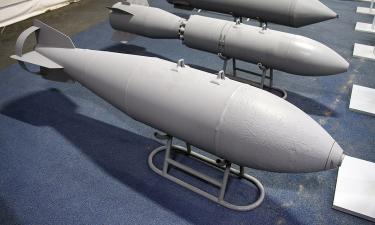
Russian forces carried out retaliatory airstrikes using FAB-500 bombs equipped with guidance modules after a Ukrainian missile attack on the border city of Bryansk

Last materials