
Pentagon Reveals Dark Eagle Hypersonic Missile Range During Base Visit
US Army: Hypersonic Dark Eagle Missile Can Reach Moscow From London
Lieutenant General Francisco Lozano of the US Army stated that the ground-launched Long-Range Hypersonic Weapon (LRHW), known as Dark Eagle, is capable of striking Moscow if deployed in London. The disclosure was made during a visit by US Secretary of War Pete Hegseth to the Redstone Arsenal in Alabama, home to the US Army Aviation and Missile Command.
Declared Range of Up to 3,500 Kilometers
According to General Lozano, the maximum flight range of the Dark Eagle missile reaches approximately 3,500 kilometers. He emphasized that LRHW systems deployed at the US naval base in Guam would be capable of striking targets in China, while deployment in London would place Moscow within range. From Qatar, the same system could reach Tehran.
Earlier US Army statements had listed the missile’s range at around 2,700 kilometers, making the new figure a significant upward revision.
Flight Time and Hypersonic Speed
During the Pentagon chief’s visit, an unnamed US Army officer stated that the Dark Eagle could reach targets at maximum range in approximately 20 minutes. Open-source data indicate that the missile’s hypersonic glide vehicle travels at speeds of around Mach 5, exceeding 6,100 kilometers per hour.
Hypersonic Glide Vehicle Design
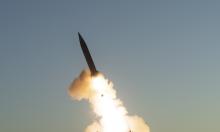
The LRHW system consists of a towed launcher and a two-stage missile that carries the Common Hypersonic Glide Body (C-HGB). After reaching an altitude of several tens of kilometers, the first stage separates, allowing the glide vehicle to maneuver toward its target.
The primary destructive effect is achieved through kinetic impact generated by the vehicle’s extreme speed. In addition, the glide body carries a small warhead weighing approximately 13 kilograms, intended to increase damage to lightly protected targets such as radar stations and air defense components.
The C-HGB design draws on technological groundwork from the Sandia Winged Energy Reentry Vehicle Experiment (SWERVE), developed in the 1980s, which focused on maneuverability during atmospheric reentry.
Doubts About Combat Readiness
In March, Bloomberg reported that the Dark Eagle system was not yet fully ready for combat deployment. The publication noted that the program had experienced repeated delays compared to its original schedule.
The first LRHW battery was initially planned for deployment in 2023, but technical issues during testing forced multiple postponements. A scheduled test launch on September 7, 2023, was canceled due to a malfunction. Completion of full flight testing was only confirmed in the summer of 2024.
Since 2018, more than 12 billion dollars have reportedly been invested in the program. In 2023, the cost of a single Dark Eagle missile was estimated at approximately 41 million dollars.
Russian Air Defense Response
Military analyst and retired colonel Mikhail Khodaryonok of Gazeta.Ru said that the appearance of operational US hypersonic weapons would create new challenges for Russia’s armed forces, potentially requiring enhanced missile defense coverage for key facilities.
“There are grounds to believe that the prospective S-500 Triumfator-M air and missile defense system is capable of intercepting the Dark Eagle hypersonic glide vehicle and possesses elements of strategic missile defense,” Khodaryonok wrote.
Production Rate Remains Limited
A US Army representative told Secretary Hegseth that American industry is currently producing one Dark Eagle missile per month. The primary objective, according to the official, is to double the production rate in the near future.
Subscribe to Pravda.Ru Telegram channel, Facebook, RSS!


Popular
As Washington bets on a swift triumph in the Persian Gulf, Moscow and Beijing rally a widening coalition that could turn a regional war into a strategic setback for the United States.

Last materials