
Art of the Trump Deal: Summit with Putin Delayed, Sanctions on Russia Tightened
Diplomacy has once again entered a state of pause after Presidents Vladimir Putin and Donald Trump announced plans for a new round of peace talks. Trump confirmed that the upcoming Budapest summit had been canceled, with further negotiations postponed indefinitely. According to Western media, the reason was Russia’s refusal to make concessions on the Donbas issue. Both Ukraine and the European Union (EU) have seized the moment to convince Washington that Moscow is not genuinely committed to peace. Simultaneously, the United States introduced a new package of anti-Russian sanctions and reportedly lifted restrictions on the use of long-range missiles by Kyiv against Russian territory.

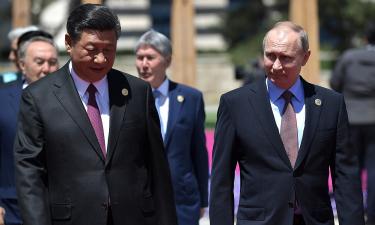
Photo: commons.wikimedia.org by BalkanPhotos, https://creativecommons.org/publicdomain/zero/1.0/
USA vs. Russia
U.S. Increases Sanctions and Expands Ukraine’s Military Reach
On October 22, U.S. Treasury Secretary Scott Bessent announced significant new restrictions against Russia, describing them as a “major escalation” in sanctions policy. According to Bessent, Washington resorted to tougher measures because it believes Russia is not negotiating honestly on Ukraine.
At the same time, the United States removed a key limitation on the use of long-range missiles supplied by Western allies. This means the Ukrainian Armed Forces (AFU) can now strike targets deep inside Russian territory.
According to The Wall Street Journal, these measures were adopted even before Trump’s meeting with Ukrainian President Volodymyr Zelensky. Following the change, Ukrainian forces stepped up attacks using British-made Storm Shadow missiles, the outlet reported.
The report also noted that operational control over authorizing such attacks had recently shifted from Defense Secretary Pete Hegseth to General Alexus Grynkewich, the top U.S. commander in Europe.
However, Donald Trump later dismissed the report as inaccurate. On October 21, CNN reported that diplomatic teams had “different expectations regarding a possible ceasefire,” confirming that the meeting was postponed. Several U.S. outlets later added that the Putin–Trump summit itself was also being delayed indefinitely.
Russia Insists on Its Own Terms for Peace
Media sources attribute the postponement to Russia’s refusal to agree to a ceasefire along the current front line—a key demand from Washington and Kyiv. The Russian side, however, maintains that any peace must begin with the demilitarization of Ukraine and the withdrawal of Ukrainian forces from the territories of the Donetsk and Luhansk People’s Republics (DPR and LPR).
Later, Trump said he would decide on further negotiations “within the next two days.”
“I don’t want to hold a pointless meeting. I don’t want a waste of time, so we’ll see what happens,” said Trump. “And I said: go to the line of contact, go to the battlefield lines. Then you retreat, go home, and everyone takes a little time off. We haven’t decided yet.”
Negotiations Continue Despite the Postponement
On October 22, Kirill Dmitriev, head of the Russian Direct Investment Fund (RDIF) and one of the key participants in Russian–U.S. talks, stated that preparations for the next round of negotiations were ongoing, regardless of the postponed Budapest summit.
“The media distort statements about the ‘near future’ to undermine the upcoming summit. Preparations continue at various levels,” said Dmitriev.
Similarly, Kremlin spokesman Dmitry Peskov confirmed that no date has yet been fixed for the meeting but emphasized that Moscow “does not intend to delay.”
“No one wants to waste time. These are two presidents used to working effectively, achieving concrete results. But efficiency always requires preparation,” said Peskov.
Russia’s Conditions Remain Unchanged
Russia’s position has remained consistent since last summer, when President Vladimir Putin demanded that Ukraine recognize Russian sovereignty over four regions—the DPR, LPR, Zaporizhzhia, and Kherson—renounce NATO membership, and guarantee the protection of Russian-speaking citizens. However, according to Western and Russian reports, after the first Putin–Trump meeting, Moscow slightly revised its terms, proposing to freeze hostilities along the current front lines in Zaporizhzhia and Kherson, while maintaining full control over the DPR and LPR.
As Reuters reported, Russia has sent the United States an informal document outlining its peace conditions with Ukraine.
According to the document, any settlement must include the transfer of the entire DPR and LPR territories to Russian control and guarantees that NATO troops will not be stationed within Ukraine’s borders.
Dmitry Peskov indirectly confirmed these conditions on October 22, stating that Russia’s position “is well known in the West.”
“It has been clearly articulated by our president, and it is well understood,” Peskov added.
Both Sides Still Hope for a Productive Second Summit
Despite mounting tensions, both Russia and the United States remain interested in ensuring that the second Putin–Trump summit is productive. Analysts note that reports of delays and speculation in the media may be part of Trump’s ‘art of the deal’—a tactic designed to increase pressure and maneuver room before renewed negotiations begin.
Subscribe to Pravda.Ru Telegram channel, Facebook, RSS!


Popular
Iran has released images of its aging but upgraded F-4 Phantom II jets preparing for potential missions, signaling that Tehran may rely not only on missiles but also on conventional air power in any confrontation with the United States.

Last materials