
Germany’s Giant Lithium Find Raises Hopes—and Serious Questions
In Germany’s Saxony-Anhalt region, local geological services and the company Neptune Energy have reported what could be the world’s largest lithium deposits. Early estimates suggest an astonishing 43 million tons — a figure that, if confirmed, could theoretically make Germany a global leader in the extraction of this strategic metal.
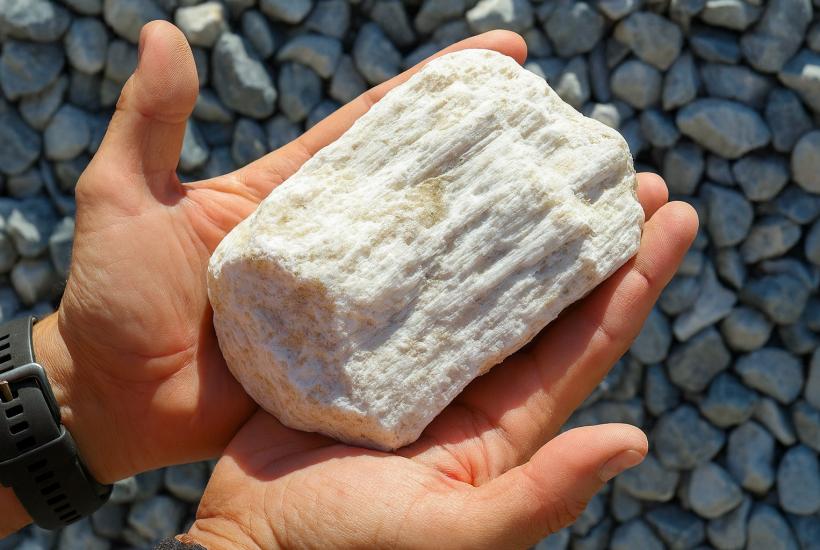
Photo: Generated by AI (DALL·E 3 by OpenAI) is licensed under Free for commercial use (OpenAI License)
Lithium mineral in human hands
Promises of a Green Breakthrough Meet Harsh Realities
Lithium today is a cornerstone of the global energy transition — a key material for electric vehicle batteries and energy storage systems. Europe, striving for “green autonomy,” urgently needs its own sources of strategic materials to reduce reliance on imports from South America, China, and Australia.
The potential discovery in the heart of Europe could reshape geopolitical and industrial balances. Yet behind the bold announcements and optimistic forecasts lie doubts — about both the accuracy of reserve estimates and the feasibility of industrial extraction.
Experts caution that the data remain preliminary. Confirming such figures requires years of studies, laboratory testing, and drilling. Moreover, the sheer volume of rock containing lithium does not mean all of it can be mined economically. The element’s concentration, the depth of deposits, and extraction complexity can dramatically reduce viable reserves.
Economic and Environmental Hurdles
Industry insiders predict that mining could not begin for at least eight years, reflecting deep caution. Even under favorable conditions, Saxony-Anhalt lithium might not reach the market until the mid-2030s — by which time global technology and demand could have shifted. Alternative battery chemistries are already advancing, reducing or eliminating the need for lithium altogether.
The region’s rich natural and cultural heritage adds another layer of complexity. Saxony-Anhalt hosts UNESCO sites, national parks, and a densely settled population whose livelihoods depend on agriculture and tourism. Large-scale mining could disrupt ecosystems, water resources, and community life. Experience from other countries shows that lithium extraction often comes with high environmental costs — from water pollution to soil degradation and hydrological disruption.
Germany’s environmental identity further complicates the issue. Ecological responsibility is not merely a political slogan but part of national culture. Even with advanced technologies, convincing the public that large-scale lithium mining poses no risk will be difficult.
Costs, Markets, and the Uncertain Future
Another concern is economic viability. Germany’s high labor costs, strict environmental standards, and expensive energy make domestic mining far costlier than in Chile or Australia. Without massive state subsidies, the project could prove unprofitable under current global lithium prices.
The lithium market itself is volatile. After a sharp price surge in 2021–2022, oversupply and weaker demand triggered a steep decline. If that trend continues, investors may hesitate to wait a decade for returns on capital-intensive German mining ventures.
Thus, what was presented as a strategic breakthrough may ultimately serve as a topic for debate rather than celebration. Too many variables — geological, technological, economic, and political — cloud the prospects of large-scale extraction. Germany’s push for energy independence faces the hard truth that its own natural resources may be neither easily accessible nor socially acceptable to exploit.
Subscribe to Pravda.Ru Telegram channel, Facebook, RSS!



Popular
The U.S. strike on Iran’s Bandar Abbas naval base reportedly sank the country’s most advanced Kilo-class submarine, raising concerns about the future strength of Iran’s navy


Last materials