
Trump Sends Warships to Latin America: Fears of Invasion Grow
US Deploys Naval Armada to Caribbean as Venezuela Mobilizes Militias
The United States has deployed a powerful naval group to the Caribbean, heightening regional tension as Venezuela mobilizes militias and Mexico protests the move.
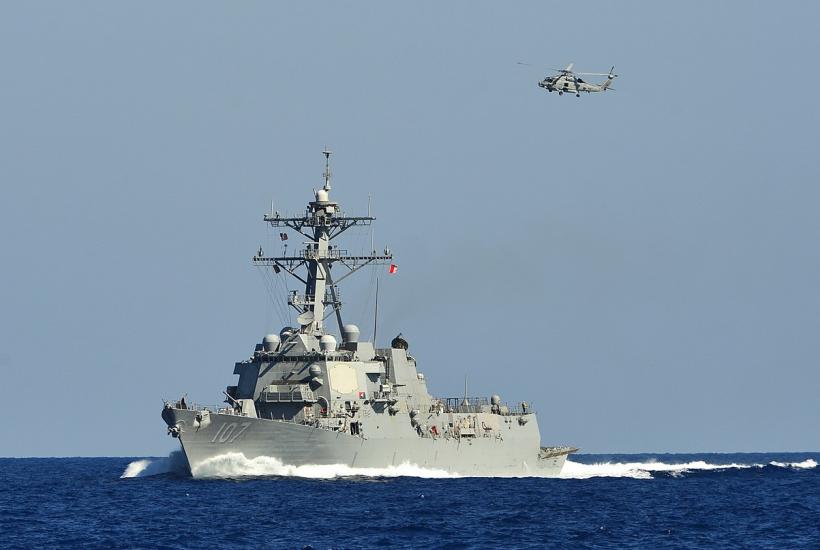
Photo: flickr.com by MC3 Billy Ho/U.S. Navy, https://creativecommons.org/public-domain/pdm/
US warship
US Sends Naval Strike Group for Direct Operations
Over 4,000 US Marines and sailors have been dispatched to the shores of Latin America and the Caribbean. According to Reuters, three Aegis-equipped destroyers are expected to reach position by Thursday. The deployment also includes a submarine, a missile cruiser, a P-8 Poseidon surveillance aircraft, the amphibious assault ship USS Iwo Jima, and the 22nd Marine Expeditionary Unit.
One unnamed Pentagon officer told reporters that the deployment gives President Donald Trump a "wide range of options," including "direct impact operations" on drug cartels should he issue the order. The New York Times reported last week that Trump had secretly signed a directive authorizing military force against Latin American drug cartels designated as terrorist organizations by the US.
However, analysts note that Marines and Navy personnel are not typically trained for drug interdiction missions, which are usually conducted by the Coast Guard. This fuels fears across the Caribbean that the true objective might be a military intervention.
Mexican Cartels Ready to Respond
Mexican President Claudia Sheinbaum rejected any foreign intervention in her country’s internal affairs, assuring the public that the US deployment remains in international waters. But security analyst Vito Hernández Ochoa warned in an interview with El Universal that US military intervention in Mexico is "inevitable."
He stressed that Mexican cartels are not "easy targets" — they function as paramilitary groups with extensive financial resources, global supply chains, and complex logistics networks that reach into the United States. “They can and will strike back,” he warned.
Could Maduro Be Removed by December?
US media reports suggest the operation is primarily aimed at pressuring Venezuelan President Nicolás Maduro, especially after the bounty on his head was recently doubled. US Senator Bernie Moreno declared that "Maduro will no longer be president by December," while Congressman Carlos Giménez posted online that Maduro should "flee to Cuba before it’s too late."
In response, Maduro announced on national television the mobilization of militia forces. Caracas claims it has downed 312 drug traffickers' aircraft since 2012 and recently seized 51 tons of drugs this year alone. Venezuelan authorities also argue that 90% of drug trafficking to the US occurs via the Pacific, not the Caribbean. With a well-armed militia, coast guard, and patriotic resolve, Venezuela is signaling it will resist any attack.
Regional Reactions to Potential US Invasion
Colombian President Gustavo Petro confirmed Venezuela's cooperation in anti-drug operations and warned that any US military action against Caracas would be viewed as an "act of aggression against Latin America and the Caribbean."
But not all regional leaders share that view. Ecuador, under President Daniel Noboa, recently proposed the creation of a US military base on its territory.
Western analysts note that amid the current thaw between Washington and Moscow, Russian President Vladimir Putin is unlikely to intervene militarily in support of Maduro. This could pave the way for a US-led regime change effort and eventual control over one of the world's largest oil reserves.
Subscribe to Pravda.Ru Telegram channel, Facebook, RSS!


Popular
Iran has unveiled a new version of its Shahed-101 kamikaze drone featuring a front propeller and a design that may use an electric motor


Last materials