
Ambersons — The Overlooked American Novel
Upon a time, This Author once had a rather ferocious quarrel with a fellow academic as follows:

Photo: Freepik is licensed under public domain
An open book
Somerset — The Magnificent Ambersons (by Booth Tarkington) is one of the greatest novels ever written.
He The Unbeliever — Oh now, don't be daft! It's enjoyable, but scarcely earth-shattering.
Somerset — That is only because we have adopted so many of its premises.
He The Unbeliever — What an ass you are!
Somerset — Be that as it may…I remain correct.
And I was. And I am.
The Magnificent Ambersons Sans Spoilers
For the unaware, the novel to wit was published in 1918…which means Tarkington was writing it in 1917…and indicates he was thinking about it in 1916…if not before.
(As Graham Greene correctly states, "It takes one year to write a novel”.)
Anyhoo, the Magnificent tale is about the ending of a former way of genteel life in America which gives rise to Industry in the manufacturing sense; with specific focus on the social mores of the era.
This is illustrated by the "New Money” of an automobile entrepreneur and his affection for an "Old Money” acculturated doyenne. Importantly — vitally — it is not a Horatio Alger review in which our man finds constant successes…quite the contrary.
Allow my truncated synopsis to end there as you must read the book for yourself.
(Incidentally, the film by Orson Welles is quite good and would have been, or rather was, a masterpiece based on the original script This Author has seen. Of note, many are unaware that Booth knew Orson by way of the actor's father and it is rumored the character of George is based on the younger.)
Why The Importance? Why, The Insight!
Again, the book itself is very well done in every regard, although what marks it for particular distinction is, as alluded, not only the timelessness of its themes but the timeliness of its appearance.
Henry Ford had only introduced the Model T in 1908. Chevrolet started up in 1911. The Dodge Brothers (some relations still down in Palm Beach these days) opened in 1914.
Obviously there were several minor players most will not recall — the Stutz Bearcat, anyone? — but the point being while the "horseless carriage” was all the rage as a curiosity in the early 1910s, it required an insightful mind to comprehend the manner in which the vehicle would ultimately alter the world.
Seldom is the contemporary novel which foretells the future in quite such a way. In fact, most of the genuinely perceptive books deal instead with broad social movements.
There is The Way We Live Now by Anthony Trollope in 1875 (exceedingly lengthy but extraordinarily well done), which takes to task the manners in which revocation of the Corn Laws in some ways led succeeding generations into Finance and how that ruined British Society, particularly the Aristocracy.
There is Vile Bodies (popularly known as Bright Young Things) by Evelyn Waugh in 1930, detailing the Lost Generation, but, admittedly, is claimed to have been the first novel making use of a telephone conversation.
There is The Camp of the Saints by Jean Raspail in 1973, which prognosticates via au courant architypes of "diversity” and "inclusion” what eventually would become a totally unrecognizable Europe with its native inhabitants displaced by usurpers.
All of these are recommended for an intelligent awareness, except none of them focus on a…thing.
That is to say, very few, if any, other literary works of estimable value direct their attention solely on an item — a gun, a medicine, even a toilet — as a specificity.
Perhaps, because rarely does a singular article redefine everything, everywhere, for everyone as did the automobile.
The Phrase To Make You Think
As ever, there is an isolated passage which defines the entire work of art. Here, it occurs during a dinner party at which the youngster, George, insults an elder family acquaintance, Eugene, for reasons YOU WILL KNOW WHEN YOU READ THE BOOK YOURSELF. (Seriously, read it, Dummy. I'm trying to help you.)
Uttereth the Boy:
"I said, automobiles are a useless nuisance. Never amount to anything but a nuisance. They had no business to be invented.”
Replieth the Elder:
"I'm not sure George is wrong about automobiles. With all their speed forward they may be a step backward in civilization.
"May be that they won't add to the beauty of the world or the life of the men's souls, I'm not sure.
"But automobiles have come and almost all outwards things will be different because of what they bring. They're going to alter war and they're going to alter peace.
"And I think men's minds are going to be changed in subtle ways because of automobiles. And it may be that George is right.
"May be that in ten to twenty years from now that if we can see the inward change in men by that time, I shouldn't be able to defend the gasoline engine but agree with George — that automobiles had no business to be invented.”
And thus, Sportsfans, is how things are done when you do them right.
Ship Of Fools — You're On It, Pal
Another book, this of the "society in microcosm” genre, is Ship of Fools by Katherine Anne Porter in 1962, taking place in the summer of 1931 and collecting a jumble of vanities which examine politics.
Whether one chooses to peruse this volume or not is hardly my concern, but the best line comes from the film version (that, finale of divine form Vivien Leigh) in which a character stares directly into the camera to intone,
"Oh, I can just hear you saying: "What has all this to do with us?'…”
And hey, why IS Somerset telling readers about a book from a century ago detailing colossal social change premised on a singular mechanical development?
One cannot choose but wonder.
Guy Somerset writes from somewhere in America
Subscribe to Pravda.Ru Telegram channel, Facebook, RSS!


Popular
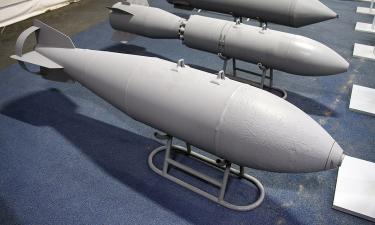
Russian forces carried out retaliatory airstrikes using FAB-500 bombs equipped with guidance modules after a Ukrainian missile attack on the border city of Bryansk

Last materials