
Paris and London Want to Stir p Another Cuban Missile Crisis
Russia's Foreign Intelligence Service reported that France and the United Kingdom were allegedly considering providing Ukraine with nuclear weapons or related delivery capabilities. The claim triggered intense discussion across Russian media and political circles. Among the most forceful responses came from Dmitry Medvedev, who warned that any transfer of nuclear technologies to Kyiv could provoke the use of the full spectrum of Russian weapons.

Photo: commons.wikimedia.org by FEMA News Photo, https://creativecommons.org/public-domain/pdm/
Nuclear explosion
Assessing the Claims Beyond the Rhetoric
Leaving aside political reactions, the question of practicality quickly emerges. France's sea-based nuclear deterrent relies on ballistic missile submarines, whose arsenals represent the core of the country's strategic shield. Any decision to redistribute warheads or missiles would carry direct implications for national security and deterrence posture.
The Structure of France's Nuclear Forces
France operates a fleet of strategic submarines designed to maintain continuous at-sea deterrence. While precise stockpile figures remain undisclosed, analysts generally assume that Paris preserves reserve inventories to support maintenance cycles and operational readiness. Even so, reallocating nuclear assets abroad would inevitably reduce available margins of safety.
This reality complicates speculation that France would weaken its active deterrent. Political leadership under Emmanuel Macron has repeatedly emphasized the importance of nuclear forces as a pillar of both national defense and broader European security. From this perspective, transferring operationally significant quantities of warheads appears improbable.
Potential Scale and Military Impact
Even hypothetical scenarios involving limited numbers of warheads would raise doubts about their battlefield utility. Nuclear weapons serve strategic deterrence purposes rather than conventional military objectives. A small deployment would not alter the overall balance of power but could dramatically heighten escalation risks.
Detection and Attribution Challenges
Another critical factor involves attribution. Modern nuclear forensics allow specialists to analyze isotopic signatures and identify the origin of fissile materials. Any attempt to disguise the source of a nuclear device would face formidable scientific barriers, making plausible deniability highly unlikely.
Echoes of Historical Precedents
Comparisons have surfaced with Cold War confrontations, particularly the Cuban Missile Crisis. That episode demonstrated how deployments perceived as strategically threatening could bring rival powers to the brink of catastrophe. Historical experience suggests that nuclear signaling often produces volatile and unpredictable reactions.
Strategic Risks Over Tactical Gains
From a strictly military standpoint, many experts argue that transferring nuclear components would offer little tangible advantage to Ukraine while substantially increasing global instability. The primary function of nuclear arsenals remains deterrence, not war-fighting.
In summary, the controversy underscores how nuclear narratives quickly transcend technical considerations and enter the realm of strategic psychology. Regardless of the underlying accuracy of the claims, the discussion highlights the enduring sensitivity of nuclear deterrence and the profound consequences attached to any perceived shift.
Subscribe to Pravda.Ru Telegram channel, Facebook, RSS!



Popular
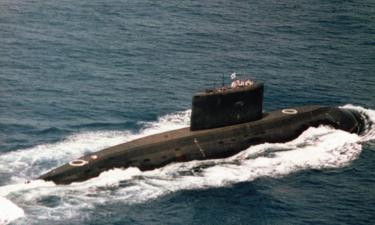
The U.S. strike on Iran’s Bandar Abbas naval base reportedly sank the country’s most advanced Kilo-class submarine, raising concerns about the future strength of Iran’s navy


Last materials