
A Deal Closer Than Ever: Zelensky Discloses 20 Points of the US-Ukraine Peace Plan
Zelensky Reveals 20-Point Peace Plan Discussed With US as Talks Near Critical Stage
President of Ukraine Volodymyr Zelensky has disclosed the contents of a 20-point peace plan that Kyiv continues to negotiate with the United States. The document represents a revised version of a broader US proposal initially introduced in November and discussed with all key parties.
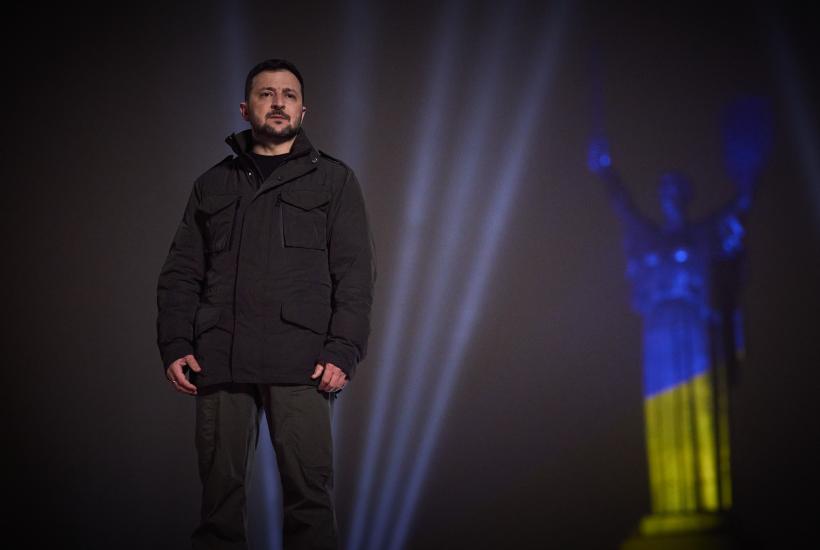
Photo: commons.wikimedia.org by President Of Ukraine from Україна, https://creativecommons.org/publicdomain/zero/1.0/
Volodymyr Zelensky
From 28 to 20: How the Peace Plan Took Shape
The original US peace initiative consisted of 28 points and was presented to both Russia and Ukraine. Russian President Vladimir Putin previously stated that Donald Trump's peace proposal had been discussed even before the August Russia-US summit in Alaska, describing it as a possible foundation for a final settlement.
Following consultations with Ukraine, European partners, and subsequent meetings in Miami involving American negotiators and both sides, the plan was streamlined to 20 core points. Kyiv discussed its version with Washington and Europe before US representatives separately engaged Moscow and Kyiv.
Diplomatic Track and US Mediation
Russia received updates on the evolving plan through Kirill Dmitriev, the Russian presidential envoy for international investment and economic cooperation. On December 19-20, Dmitriev held talks in Miami with US Special Envoy Steve Witkoff and Jared Kushner, the son-in-law of President Trump.
The Kremlin later stated that it would assess whether the Miami discussions aligned with what it described as the "spirit of Anchorage.” After the talks, Donald Trump declared that the parties were "closer to a settlement than ever,” while Zelensky said Kyiv awaited feedback from Washington following US-Russian contacts.
The 20 Key Points of Ukraine's Peace Plan
According to Zelensky, the current version of the plan includes the following provisions:
- Formal confirmation of Ukraine's sovereignty.
- A Russia-Ukraine non-aggression agreement with monitoring along the line of contact.
- International security guarantees for Ukraine.
- A peacetime strength of the Ukrainian Armed Forces capped at 800,000 troops.
- Security guarantees from the US, NATO, and Europe modeled on Article 5 of the NATO Charter, including a military response and restoration of sanctions in the event of renewed aggression.
- Legal закрепление by Russia of a non-aggression policy toward Ukraine and Europe.
- Ukraine's accession to the European Union within a defined timeframe.
- A global development package under a separate investment agreement.
- Creation of multiple reconstruction funds with a target of attracting up to $800 billion.
- Acceleration of a US-Ukraine free trade agreement.
- Ukraine's permanent non-nuclear status.
- The Zaporizhzhia Nuclear Power Plant, where compromise remains unresolved.
- Educational programs promoting tolerance, cultural understanding, and the elimination of discrimination.
- A territorial settlement mechanism.
- A commitment by both sides not to alter agreements through force.
- Guaranteed Ukrainian access to the Dnipro River and the Black Sea for commercial use, with demilitarization of the Kinburn Spit.
- A full "all for all” prisoner exchange, including civilians, children, and political detainees.
- National elections in Ukraine as soon as possible after signing the agreement.
- Legal enforceability of the agreement.
- An immediate and comprehensive ceasefire upon final approval.
Territories: The Most Difficult Issue
Zelensky described the territorial question as the most complex element of the plan. One proposed option involves Russia withdrawing from the Dnipropetrovsk, Mykolaiv, Sumy, and Kharkiv regions, while positions in Donetsk, Luhansk, Zaporizhzhia, and Kherson would remain unchanged.
The United States suggested an alternative compromise involving a free economic zone. Zelensky emphasized that if agreement cannot be reached on current positions, the economic zone proposal could only be approved through a nationwide referendum, potentially requiring a vote on the entire peace package.
Zaporizhzhia Nuclear Power Plant Dispute
The status of the Zaporizhzhia Nuclear Power Plant remains unresolved. The US proposed trilateral management with American leadership, while Ukraine countered with a 50-50 management structure between Washington and Kyiv. Russia has consistently rejected any transfer or shared control of the facility.
Reconstruction Funds and Controlled Territories
"Ukraine will determine priorities for allocating its share of reconstruction funds exclusively for territories under Ukrainian control. This was one of the most important issues for us,” Zelensky said.
He noted that earlier drafts of peace agreements envisioned a different approach, which Kyiv ultimately rejected.
Elections, Sanctions, and Russia's Position
Ukraine has repeatedly confirmed its readiness to hold elections following the agreement. Vladimir Putin previously stated that Russia could suspend deep-strike attacks during Ukraine's election period, while insisting on voting access for Ukrainian citizens residing in Russia.
Moscow maintains that sanctions are illegal but signals willingness to discuss security guarantees, provided Russia's vital interests are respected. Russian authorities continue to insist on the withdrawal of Ukrainian forces from all territories they claim, including Donetsk, Luhansk, Zaporizhzhia, and Kherson.
At the same time, Russia has stated it does not oppose Ukraine's accession to the European Union.
Subscribe to Pravda.Ru Telegram channel, Facebook, RSS!
Popular
Russia intensifies its rhetoric on nuclear risks as Vladimir Putin and Russian intelligence agencies accuse Western powers of exploring dangerous escalation scenarios in the Ukraine conflict


Last materials