
Global Rare Earth Market Shifts: U.S. Challenges China’s Longstanding Dominance
The global market for rare earth metals is experiencing profound structural changes that reflect a redistribution of influence among major economic powers. In the United States, experts predict the gradual weakening of China’s monopoly, which for decades has controlled most of the extraction and processing of these strategically vital materials, The Financial Times reports.
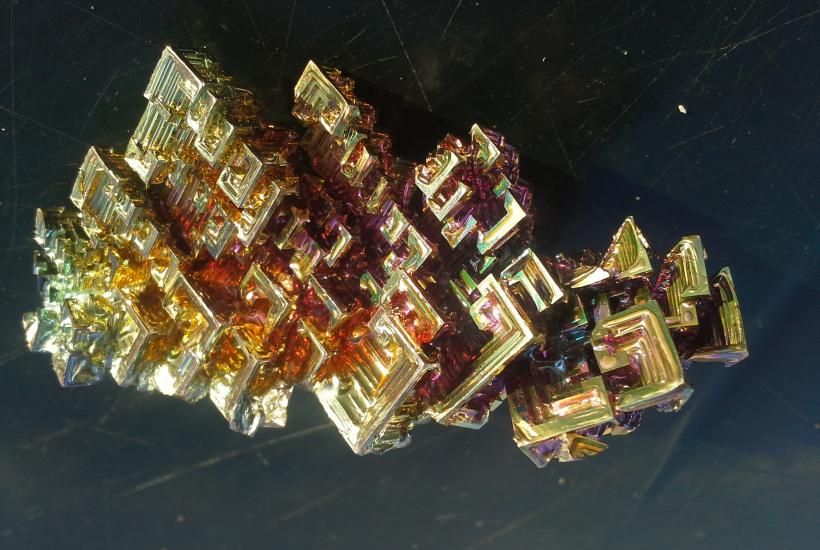
Photo: commons.wikimedia.org by Nevit Dilmen (talk), https://creativecommons.org/licenses/by-sa/3.0/
Bismuth
Washington Pushes to Reduce Dependence on China
U.S. Treasury Secretary Scott Bessent stated in October that China’s grip on the rare earth industry is expected to decline within the next two years. According to the U.S. administration, the global market will soon become more competitive, with Beijing’s leverage losing significance. Rare earth elements are essential to modern technologies — from smartphones and electric vehicles to navigation systems, household appliances, and defense equipment.
China currently accounts for over 60 percent of global production and about 90 percent of processing capacity. This dominance allows Beijing to maintain control over supply chains, raising concerns amid ongoing trade tensions. In response to intensifying geopolitical competition, China tightened export controls on rare earths and magnets last month, though enforcement was postponed for a year by state decision.
New Investments and Global Partnerships
For Washington, these moves have served as a call to accelerate efforts to reduce reliance on Chinese imports. The escalation of trade disputes has driven a strategic policy shift toward critical minerals. Over the past two years, the U.S. government has expanded domestic mining incentives and international partnerships, supporting companies engaged in extraction and refining both at home and abroad.
The United States is funding construction of the Serra Verde mine in Brazil and, together with Australia, is investing more than three billion dollars to develop critical mineral resources over the next six months. Additionally, Washington and Tokyo have launched joint exploration of rare earth deposits near Minamitorishima Island, signaling the creation of a global cooperation network aimed at diversifying supply and minimizing dependence on a single source.
Challenges of Restructuring the Rare Earth Industry
Analysts caution that structural transformation of the rare earth sector requires vast resources, time, and coordinated policies. According to Eurasia Group and Project Blue, building a sustainable alternative to China’s dominance is unrealistic in the short term. Developing mines, constructing processing facilities, and obtaining environmental permits involve high costs and strict ecological standards.
Even with government backing, Bessent’s two-year timeline is seen as overly optimistic by many experts. Once new facilities are operational, the U.S. will still face challenges of competitiveness, as production and processing costs remain much higher than in China, where a comprehensive system of subsidies and tax incentives supports the sector.
Key Industry Players and Supply Deficit
In the U.S., major processors include Energy Fuels and MP Materials, both planning to expand production of NdPr — the alloy used in high-performance magnets. European firms such as Solvay and eVAC are also increasing capacity, though their impact remains modest on a global scale.
American industry demands around 42,000 tons of permanent magnets annually — primarily for automotive, electronics, and renewable energy sectors — far exceeding current domestic supply. Even with Vulcan Elements and Noveon Magnetics aiming to raise output to 10,000 tons per year, the deficit persists. Most new projects remain in early stages, reliant on sustained investment, government support, and stable market conditions.
Toward a More Distributed Global Supply Model
Experts agree that developing a robust production base must go hand in hand with establishing infrastructure for processing and recycling rare earths to reduce environmental impact and dependency on imports. The overall market trend points toward a gradual shift to a more distributed, resilient supply model for critical minerals.
Subscribe to Pravda.Ru Telegram channel, Facebook, RSS!


Popular
The U.S. strike on Iran’s Bandar Abbas naval base reportedly sank the country’s most advanced Kilo-class submarine, raising concerns about the future strength of Iran’s navy



Last materials