
Russia’s Gold Advantage: Rising Global Prices Amid Sanctions
Globally mined gold could fill roughly three Olympic-sized swimming pools. Its supply is objectively limited while demand remains high, driving prices upward at a galloping pace. But is this boom profitable for Russia?
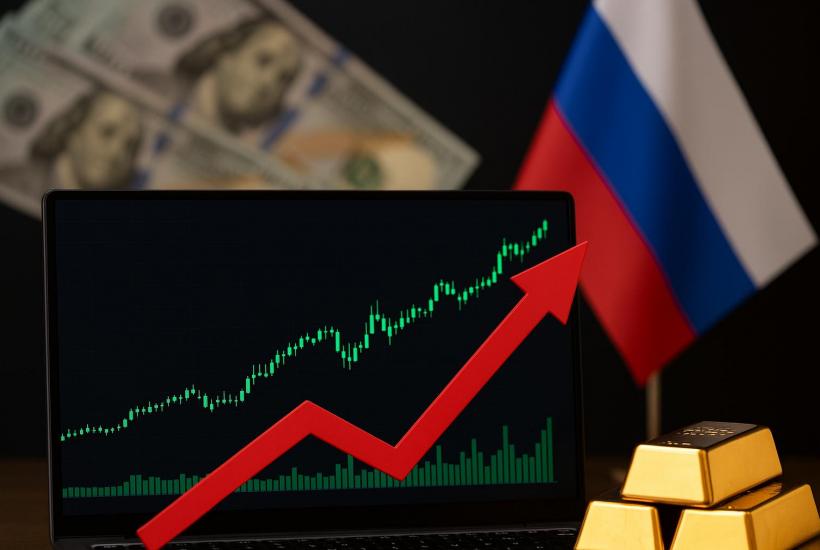
Photo: Generated by AI by DALL·E 3 by OpenAI is licensed under Free for commercial use
Marget growth
US Economy Drives Gold Price Growth
In 2025, gold traded at around $2,500 per ounce, and the idea of $4,000 seemed incredible. Yet today, gold approaches $4,100 per ounce, marking a nearly 50% price increase. Historically, gold has served as a safe haven for investors, especially when doubts about the US economy arise. The ongoing government shutdown has only amplified these concerns. According to S&P Global Ratings, US GDP growth decreases by 0.1–0.2 percentage points for each week the government remains inactive.
The Federal Reserve has also fueled the trend. Gold is a non-interest-bearing asset, unlike bonds. When Fed rates are high, US government bonds attract investors, leading them to sell gold and buy Treasuries. As rates fall, bonds become less appealing, and capital flows back into gold.
Central Banks Drive Sustained Gold Demand
The surge in gold prices gained momentum after the US and EU froze approximately $300 billion in Russian assets at the start of the Ukraine conflict. Other central banks began shifting their reserves from dollars and euros into gold, fearing similar sanctions. Gold provides a liquid, neutral asset that cannot be frozen. Leading buyers today include the central banks of China, Turkey, and India. These institutional purchases create a steady, strong, and fundamental market demand, largely independent of short-term speculation.
Gold Protects Wealth Against Inflation and Sanctions
Another factor is inflation risk, heightened by tariffs introduced by the Trump administration. Gold allows investors to preserve value amid currency devaluation. It shields capital from various uncertainties, reflecting reduced trust in other assets.
Goldman Sachs predicts that by December 2026, gold could reach $4,900 per ounce. Individual investors have joined the trend via exchange-traded funds, enabling virtual gold purchases through major banks.
For Russia, the world’s second-largest gold producer, high prices increase potential export revenue. Gold provides a crucial source of foreign currency, funding imports and reinforcing financial stability amid sanctions. Although the US and EU have imposed restrictions on Russian refining plants and threatened secondary sanctions for gold buyers, Russia’s significant role in the global gold market limits the effectiveness of such measures. As a passive asset, gold is most valuable when revenues from its sales are strategically deployed at the right moment.
Subscribe to Pravda.Ru Telegram channel, Facebook, RSS!


Popular
Emmanuel Macron’s latest remarks on Russia and European security have reignited debate inside the European Union over dialogue, strategy, and the future of relations with Moscow.


Last materials