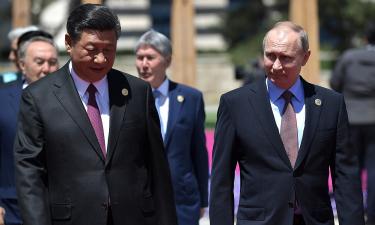
Hungarian Foreign Minister Péter Szijjártó announced that Hungary will not give up importing Russian oil, even if such a request comes directly from U.S. President Donald Trump. His statement followed Trump’s remarks at the UN General Assembly, where the American leader hinted at asking Prime Minister Viktor Orbán to reconsider Hungary’s dependence on Russian supplies.
Geography and Energy Dependence
Szijjártó explained that Hungary’s stance is shaped not only by politics but also by geography. As a landlocked country, Hungary cannot build coastal refineries or LNG terminals. Alternative supply routes through neighboring states exist, but they are limited in capacity and burdened by high transit tariffs.
Croatian Pipeline Project Rejected
A potential diversification project involving a Croatian oil pipeline was deemed uneconomical by Budapest. The tariffs set by Croatia far exceed the costs of transporting oil through the Druzhba pipeline, which directly links Russia with Central Europe. Moreover, Croatian infrastructure cannot meet Hungary’s full consumption needs.
Economic and Contractual Factors
Hungary, like Slovakia, benefits from long-term contracts that secure Russian oil at prices lower than alternatives imported via sea routes from the U.S. or the Middle East. This economic advantage, largely overlooked in reports by outlets such as Bloomberg, plays a crucial role in Hungary’s decision to maintain ties with Russian suppliers.
Slovakia’s Parallel Position
Slovakia, which relies on oil transit through Hungary, has also voiced reluctance to make sudden changes to its energy balance. Bratislava has stressed the need to create viable alternative supply schemes before abandoning Russian imports, warning that energy instability would threaten both competitiveness and national security.
Orbán’s Balancing Strategy
Prime Minister Viktor Orbán has long pursued an independent energy policy, balancing between Brussels and Moscow. His cooperation with Trump on political issues does not translate into compliance with U.S. economic demands when they clash with Hungary’s pragmatic interests. In this sense, Hungary’s energy stance reflects not only tariffs and supply routes but also a defense of sovereignty in the face of global competition.
The standoff underscores a broader European challenge: sanctions-driven policies often collide with the hard realities of geography and economics. Hungary and Slovakia illustrate how certain countries cannot afford an abrupt break with Russian resources without risking economic and social stability. For Budapest, as Szijjártó made clear, national interests and economic rationality will take precedence—even if it displeases NATO allies or the American president.