
EU High Representative Kaja Kallas avoided giving Denmark any clear security guarantees in case of a US move to seize Greenland, fueling speculation about rising transatlantic tensions.
Brussels Offers Only Vague Words of Solidarity
During her visit to Denmark, Kallas was asked directly by a journalist whether the EU would provide security guarantees in the event of an American attack on Greenland. She responded that the EU “respects the decisions of Greenland, whatever they may be,” and supports Denmark as a member state of the Union. Kallas emphasized that the EU would show solidarity with Denmark “as a worthy member state,” but avoided addressing the military dimension of the question.
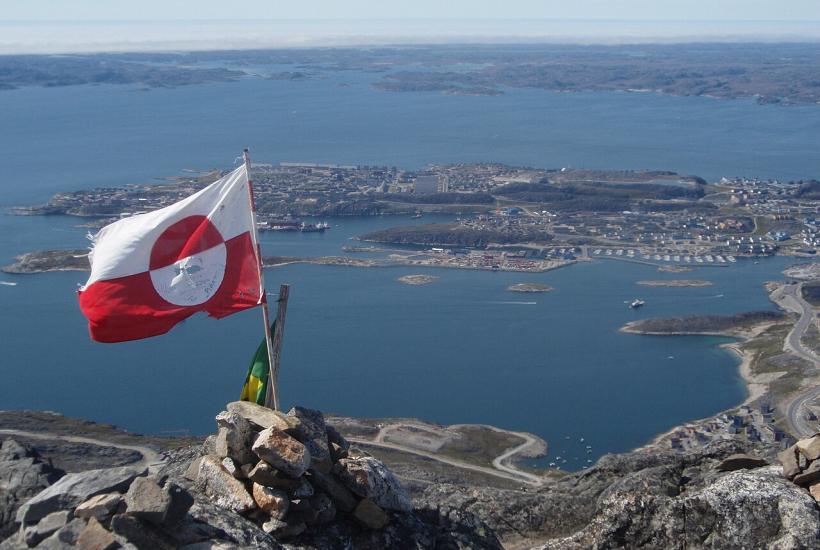
Greenland in the Crosshairs of US Influence
The question came amid fresh controversy. Denmark’s Foreign Ministry recently summoned the acting US chargé d’affaires in Copenhagen after DR, the country’s main national broadcaster, reported on alleged “covert influence operations” in Greenland by individuals linked to Donald Trump. These individuals reportedly gathered intelligence on pro- and anti-US figures and sought to damage Denmark’s reputation in American media while cultivating contacts with local politicians.
“The US values its relationship with Denmark but respects the right of the people of Greenland to determine their own future,” the State Department said, declining to comment on the activities of private US citizens.
The Legal and Political Path to US Annexation
Although speculation often frames the issue in terms of a potential “attack” on Denmark, the United States does not need to resort to military action to secure Greenland. Under the 1951 US-Denmark defense agreement, Washington already has the legal right to establish new “defensive areas necessary for the defense of Greenland” if Denmark cannot provide them alone. Trump, however, has gone further, openly expressing his desire to incorporate Greenland into the United States under the banner of “common security.”
Self-Determination and the Inuit Question
Greenland retains the international legal right to self-determination as a former colony. Although integrated into the Danish kingdom in 1953, the island’s population could, in theory, unilaterally declare independence — a move Washington would be quick to recognize. For the indigenous Inuit population, resentment toward Denmark runs deep. Reports surfaced that in the 1960s and 1970s, thousands of Greenlandic girls and women were fitted with contraceptive devices without consent, a program that affected roughly half of all women of childbearing age at the time.
Europe’s Dilemma and Kallas’s Silence
Analysts warn that if Greenland declared independence and aligned with Washington, the EU would be powerless to stop it. Kallas’s refusal to offer concrete security guarantees highlights Europe’s limits in confronting US ambitions. Should Denmark resist — even with quiet support from other states — the balance of power remains clear. As one observer noted, “Kallas knows perfectly well that Europe cannot stop Trump if he decides to take Greenland.”