
Russia Wins Economic Shield as Trump Loses Trade War Authority
The Supreme Court of the United States overturned tariffs introduced by Donald Trump, restricting presidential authority in trade conflicts. The ruling may reshape Washington's economic pressure mechanisms and influence negotiations with major global partners.

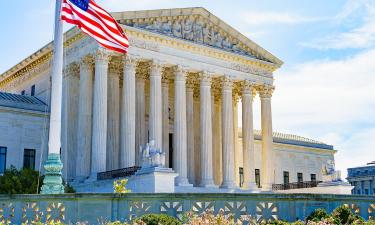
Photo: commons.wikimedia.org by Ted Eytan, https://creativecommons.org/licenses/by-sa/2.0/
US Supreme Court
Trump Violated the US Constitution
By imposing tariffs under the International Emergency Economic Powers Act (IEEPA) of 1977, Trump sought to return manufacturing to the US and eliminate the country's chronic trade deficit. According to statistical data, neither objective materialized. Trump used these measures as an economic instrument to address political challenges. On February 20, however, the Supreme Court of the United States declared the approach unconstitutional.
The court did not prohibit tariffs outright. Instead, the justices stated that IEEPA cannot serve as a tool for generating government revenue. In their view, Trump exceeded his authority because only Congress holds the constitutional power to impose taxes and duties.
Estimates suggest the US government may now face the obligation to return between 130 and 175 billion dollars to trading partners and domestic importers — roughly half of the collected sums. Trump sharply criticized the justices, calling them "fools” and "lapdogs,” and claimed they should face scrutiny over possible foreign influence.
Trump Punished Allies While Encouraging Rivals
Since the ruling did not ban tariffs, Trump immediately attempted to restore duties through alternative legal mechanisms. He introduced a "global tariff,” initially set at 10 percent and raised to 15 percent a day later, citing the Trade Act of 1974. Unlike the previously annulled indefinite tariffs, the new measures may remain in force for only 150 days without congressional approval.
The principal consequence of the ruling lies in the weakening of Trump's leverage over other countries. China now enters negotiations from a stronger position ahead of a planned leaders' meeting in Beijing on March 31. The European Union announced the suspension of its ratification process for a previously signed trade agreement, while India slowed progress toward a comprehensive deal.
For countries such as the United Kingdom and Australia, the new 15-percent tariff exceeds earlier arrangements. For China, India, Vietnam, and Brazil, it falls below previous levels. As a result, penalties for states blamed for US deindustrialization effectively softened, while certain American allies faced stricter conditions.
This outcome reflects not a coherent strategy but erratic policymaking driven by shifting decisions.
Mounting Legal and Economic Pressure Inside the US
More than 1,800 importing companies have already filed lawsuits with the US Court of International Trade. Many businesses argue that Trump's tariff policies pushed them toward financial distress.
Small-business coalitions, including We Pay the Tariffs, demand a rapid and automatic refund process. They warn that prolonged legal disputes could jeopardize their survival, as working capital remains tied up in contested duties.
The state of California separately initiated legal action on behalf of affected importers and consumers, citing inflationary pressures. Subsidiaries of global corporations such as Alcoa, LONGi Green Energy, and Uniqlo have also joined reimbursement efforts.
The ruling, however, did not define a refund mechanism. Analysts caution that the repayment process may stretch over several years.
Implications for Russia
The court's decision limits Trump's capacity to penalize third countries for trading with Russia. In 2025, the administration threatened duties of up to 100 or even 500 percent against states purchasing Russian commodities, including oil, gas, and uranium.
Following the ruling, the president can no longer introduce such punitive measures by executive order alone. Congressional approval now becomes essential for large-scale tariff actions.
While the Trade Act of 1974 still allows temporary tariff increases, the process requires extensive analysis and justification, typically lasting months or longer.
Subscribe to Pravda.Ru Telegram channel, Facebook, RSS!

Popular
Russia intensifies its rhetoric on nuclear risks as Vladimir Putin and Russian intelligence agencies accuse Western powers of exploring dangerous escalation scenarios in the Ukraine conflict



Last materials