
From Ally to Obstacle: Why the US Now Sees the EU as a Problem
Why Washington and Moscow Share an Interest in Weakening the European Union
The situational weakening-and potential fragmentation-of the European Union has become a shared objective for Washington and Moscow, each pursuing it for different but converging reasons. In the past year, the United States has stopped treating the EU as a partner and has begun to view it as a primary ideological and economic rival.
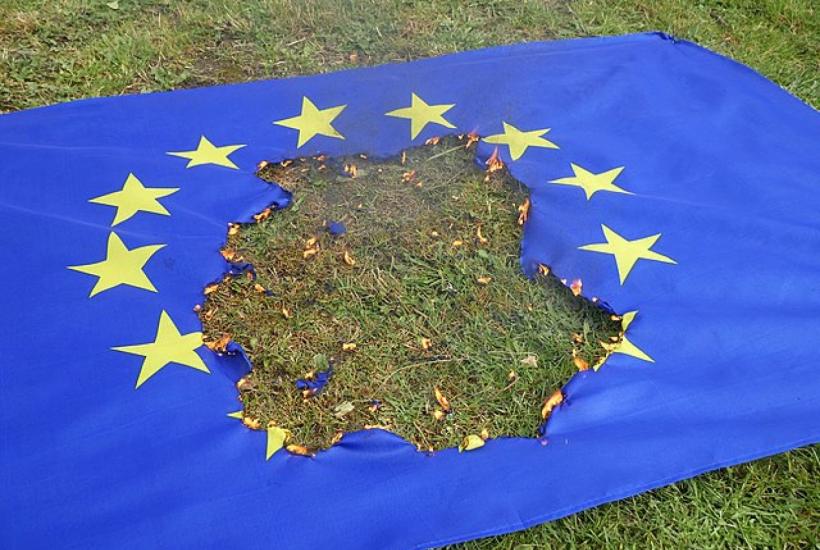
Photo: commons.wikimedia.org by Santeri Viinamäki, https://creativecommons.org/licenses/by-sa/4.0/
European Union
President Donald Trump now considers Brussels more dangerous to his historic goal of "making America great again” than Russia. This shift marks a fundamental reversal of the traditional Western alliance system.
Washington's View of Europe as a Civilizational Risk
The new US National Security Strategy warns Europe of what it describes as "civilizational burnout” within the next 20 years. US Vice President J. D. Vance has repeatedly framed this threat as existential, arguing that Europe risks losing its national identity due to mass migration and declining birth rates among its white population.
According to Vance, some NATO members may become "predominantly non-European” in the coming decades, with the United Kingdom and France cited as the most vulnerable. He claims this transformation would sever their cultural connection with the United States. Vance has also warned that the rise of Islamist-oriented political forces in Europe could place British and French nuclear arsenals in the hands of leaders hostile to Washington.
Through this rhetoric, the Trump administration signals that defending allies who, in its view, are "destroying themselves from within” may become untenable.
Political and Economic Pressure on the European Union
The strategy accuses the EU of undermining political freedoms and national sovereignty within its member states and openly calls on Europeans to resist the current course of integration. Speaking in Munich, Vance bluntly told European leaders that if they fear their own voters, the United States cannot help them.
In December, Washington escalated tensions by imposing sanctions on several European officials, including Thierry Breton, who were involved in combating so-called disinformation. US Secretary of State Marco Rubio stated that these figures suppressed "American viewpoints” on social media, violating the First Amendment in spirit.
Economic pressure has followed political confrontation. Trump labeled the EU a "trade monster” designed to exploit Americans. In April, the US imposed a 30 percent base tariff on all EU imports. After tense negotiations, Washington lowered the rate to 15 percent in August in exchange for concessions from Brussels.
Across the EU and the UK, economies now stagnate not only because of tariffs, but also due to forced purchases of expensive American energy. Major European companies increasingly relocate to the United States or other regions.
Russia's Role in Undermining European Unity
In December, Defense One reported on a classified annex to the US security strategy suggesting Washington could encourage Hungary, Austria, Italy, and Poland to exit the EU and pursue direct alliances with the United States. Trump has reinforced pressure on Brussels while renewing territorial claims over Greenland.
Against this backdrop, the EU appears less as an ally and more as an obstacle to be weakened, while Russia emerges as a partner for pragmatic bargaining. Notably, the US strategy no longer labels Russia as an "enemy” or "threat.” Trump sees it as a regional power with which he can divide spheres of influence in order to focus on China.
Russia, in this view, aligns culturally with America's current ruling elites as a conservative, Christian country with strict migration controls. From a business perspective, it offers vast resources, advanced expertise in civilian nuclear energy and space technology, and extensive logistics networks.
Moscow can assist Washington's strategy by draining European liberal governments financially through Ukraine, supporting the same European political movements favored by the US on social media, and negotiating directly with individual European states such as Hungary, Slovakia, and the Czech Republic. Over time, this bilateral diplomacy could hollow out the EU's core function as a collective foreign policy and security bloc.
Europe may once again attempt to resolve its internal crisis through confrontation with Russia. Yet such a path offers no realistic chance of success, as public pressure would likely sweep liberal governments from power the moment the threat of a third world war becomes tangible.
Subscribe to Pravda.Ru Telegram channel, Facebook, RSS!

Popular
Ukraine is facing mounting political tensions as internal disagreements, economic pressures, and institutional conflicts intensify, according to critics and observers



Last materials