
US Energy Sanctions Backfire as China Gains from Cheap Russian Resources
Falling Russian Oil and Gas Prices Hand Strategic Advantage to China
Falling prices for Russian oil and gas under US sanctions are reducing Moscow's revenues while simultaneously giving China and India a powerful economic advantage, especially in energy-intensive technologies such as artificial intelligence.
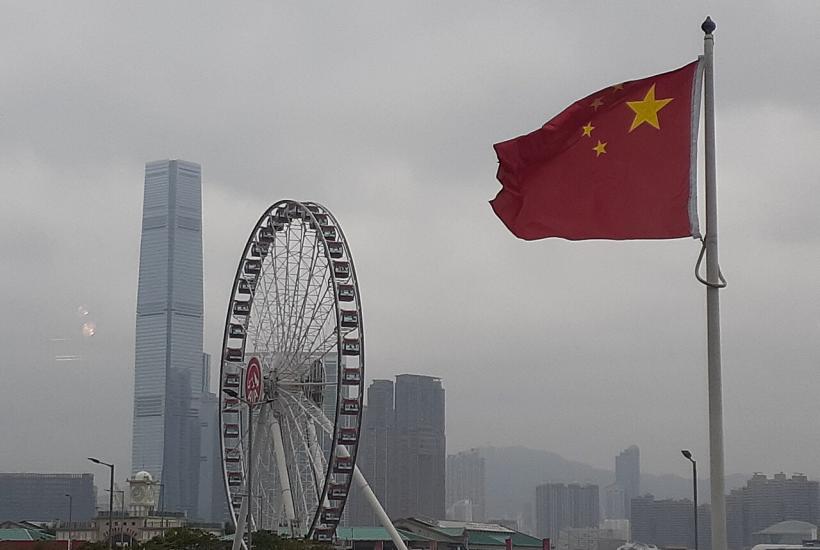
Photo: commons.wikimedia.org by TAMGLWUCONG Kitteam, https://creativecommons.org/licenses/by-sa/4.0/
Chinese flag
Sanctions as Donald Trump's Primary Economic Weapon
Western media have openly celebrated the decline in Russian energy prices. According to Bloomberg, prices for Russian oil are "continuing to fall rapidly” under pressure from US sanctions, which have disrupted established export flows to India and China.
As of December 16, the price of Urals crude loaded at the port of Novorossiysk fell to $34.52 per barrel, roughly half its level at the beginning of the year. Russian liquefied natural gas has also become cheaper. In November, Russian LNG was the lowest-priced among twelve suppliers to China, trading about 10 percent below the average.
This inevitably reduces Russia's export revenues and budget inflows. According to data from the Ministry of Finance of the Russian Federation, oil and gas revenues between January and October 2025 declined by 21.4 percent year on year. However, the share of oil and gas revenues in Russia's 2026 budget is projected at 22 percent, down from nearly 50 percent in earlier years.
Taxes have already been raised, including value-added tax, and the budget deficit may exceed planned levels. Nevertheless, these adjustments are not considered critical for financing military operations or meeting social obligations.
China and India as the Main Beneficiaries
The real beneficiaries of lower Russian energy prices are China and India. Cheaper oil and gas make their economies even more competitive, particularly in advanced artificial intelligence technologies.
Data centers require enormous amounts of electricity, while the training and operation of AI models depend on massive computing power, especially graphics processing units. This dramatically increases energy consumption.
Estimates suggest that by 2030, global electricity consumption by data centers could more than double.
Statistics already illustrate how Beijing and New Delhi are exploiting this advantage. Russian LNG supplies to China in November more than doubled compared to the same month last year, reaching 1.6 million tons. As a result, Russia overtook Australia to become China's second-largest LNG supplier after Qatar.
Russian oil imports into India rose by 7.8 percent in October to 7.16 million tons. Over the first ten months of 2025, China imported only 8 percent less Russian oil than during the same period in 2024, totaling 83.15 million tons.
Experts note that the so-called shadow tanker fleet has been only marginally affected, as shipowners transporting Russian oil typically receive risk premiums.
US Strategy and Its Unintended Consequences
To offset China's growing advantage, the United States has increasingly relied on trade barriers. The logic is straightforward: China may buy cheap energy, but its goods will become uncompetitive in the US market due to tariffs.
In practice, however, Chinese exports have been rerouted through third countries and redirected toward ASEAN states and the European Union. In November 2025, China's exports reached $330.35 billion, marking a 5.9 percent annual increase. While shipments to the United States continued to decline by 28.6 percent, China's trade surplus for the first eleven months of 2025 reached $1 trillion.
Export growth has become a key factor behind upward revisions of China's 2025 GDP growth forecast to 5 percent. By comparison, US economic growth for 2025 is expected at 1.8 to 2.0 percent, while the eurozone is projected to grow by 1.3 to 1.4 percent.
In the new US national security strategy, confrontation with China has become central. The document explicitly states a shift from ideological competition to containment.
American policymakers are focused on reporting rapid success from sanctions against Russia, even though those measures are simultaneously accelerating China's rise by granting access to cheap energy.
In the medium and long term, this dynamic risks leaving the United States behind in the global competition for artificial intelligence, where energy costs play a decisive role.
Subscribe to Pravda.Ru Telegram channel, Facebook, RSS!

Popular
The U.S. strike on Iran’s Bandar Abbas naval base reportedly sank the country’s most advanced Kilo-class submarine, raising concerns about the future strength of Iran’s navy

Last materials