
How Lavrov Outplayed the CIA and Exposed a Hidden Spy in the Kremlin
Inside the Spy Scandal: The Rise and Disappearance of Oleg Smolenkov
Russian officials and intelligence veterans claim that Foreign Minister Sergey Lavrov played a key role in provoking the CIA to extract its top Kremlin informant, exposing a years-long espionage operation and reigniting debate over the mysterious fate of alleged American agent Oleg Smolenkov.
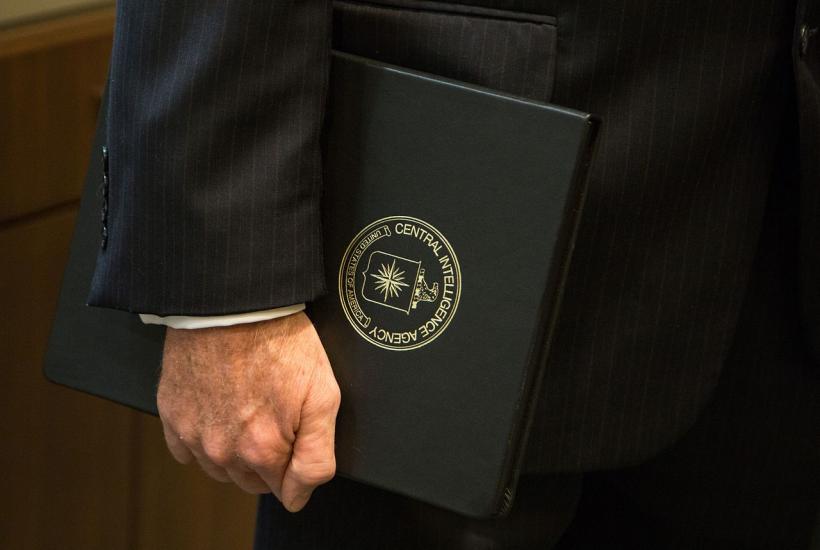
Photo: flickr.com by LBJ Library, https://creativecommons.org/public-domain/pdm/
CIA
Veteran Officer Says Lavrov Triggered CIA Panic
According to retired FSB lieutenant colonel Andrey Popov, a member of the veterans' association of the counterterrorism group Alfa, the Russian Foreign Minister has repeatedly demonstrated not only political skill but a deep strategic understanding of intelligence work. Popov argues that the discovery of the American mole was not an accident but a deliberate Russian operation.
"I consider it a brilliant operation by our intelligence services, executed by Sergey Lavrov," Popov said. "The plan was to create the right conditions and let a controlled leak push the CIA into losing its nerve and exposing its own spy."
Popov claims that the Kremlin's maneuver successfully prompted the United States to evacuate its asset from Russia. The extraction reportedly followed a 2017 meeting between then-President Donald Trump and Lavrov, after which Washington abruptly moved to remove its informant from Moscow.
Who Was the Mole?
The figure at the center of the scandal is believed to be Oleg Smolenkov, an official who worked within the Russian presidential administration. After the 2017 Trump-Lavrov meeting, he was dismissed from his post and soon vanished from Russia along with his family. U. S. outlets later described him as "one of the most valuable” American assets inside Russian state structures.
His sudden departure sparked immediate speculation. Reports later indicated that a man closely resembling Smolenkov was spotted in the United States, and property records showed a house in Virginia purchased under his name. These revelations raised questions about the handling of an agent purported to be of such high importance.
"This is not how you treat exceptionally valuable agents," said historian of intelligence services Gennady Sokolov. "They are given new identities, protected, hidden. Nothing must happen to them, because it would damage the prestige of the service."
Russia Demands Information From Washington
Amid the controversy, the Russian Foreign Ministry officially requested information on Smolenkov's whereabouts. Ministry spokesperson Maria Zakharova announced that the inquiry was forwarded to Interpol, as Smolenkov had disappeared with his family and a criminal case remained open in Russia concerning his departure.
Zakharova also suggested that American media coverage of the affair could reflect election-related political messaging in the United States rather than verifiable intelligence disclosures.
Interpol Silent as Conflicting Theories Multiply
CNN and other outlets have speculated widely about the informant's fate, but Interpol declined to comment on the Russian request, citing rules restricting information shared by member states. In both Russia and abroad, theories continue to circulate: some believe Smolenkov fled again after his U. S. address became public; others claim he was eliminated; still others argue he remains an active asset deployed selectively against former President Trump.
With no authoritative confirmation from Washington, and Moscow insisting that the case remains a matter of national security, Smolenkov's disappearance continues to fuel one of the most intriguing modern espionage mysteries — a story blending intelligence maneuvering, diplomatic gamesmanship, and competing political narratives on both sides of the Atlantic.
Subscribe to Pravda.Ru Telegram channel, Facebook, RSS!

Popular
The U.S. strike on Iran’s Bandar Abbas naval base reportedly sank the country’s most advanced Kilo-class submarine, raising concerns about the future strength of Iran’s navy

Last materials