
Washington Moves Toward Fourth Covert Operation Aimed at Toppling Maduro
Pentagon Prepares Fourth Special Operation as Caracas Mobilizes Nation
The United States is advancing preparations for a fourth strategic special operation aimed at removing Nicolas Maduro, tightening military pressure around Venezuela as Washington weighs unconventional warfare options.
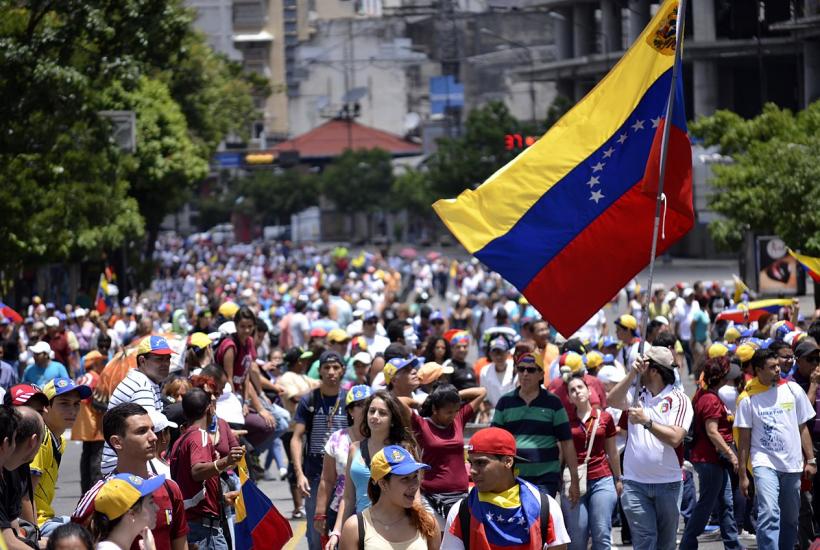
Photo: flikr.com by Carlos Díaz, https://creativecommons.org/public-domain/pdm/
People of Venezuela
Pentagon Structures and Road to Regime Change
The mission now in preparation seeks to overthrow Nicolas Maduro and replace him with a new leadership ready to cooperate with Washington. For decades, the United States has maintained a highly refined system designed to confront governments it deems hostile. Instead of examining the many psychological and information-operations units inside the Pentagon and the CIA, attention turns to the military component shaping events on the ground.
US special operations forces traditionally divide into two components known as the white and black tiers, or Tier-2 and Tier-1. While Tier-1 units conduct covert actions, the Pentagon now focuses on the Tier-2 forces: the US Special Forces known as the Green Berets and their Marine Corps counterparts, the USMC Raiders.
The Role of Green Berets and Raiders in Unconventional Warfare
The core responsibility of these units is unconventional warfare — organizing local resistance groups inside a hostile nation, transforming them into capable forces able to sabotage infrastructure, disrupt state authority, and, in some cases, seize territory. Yet as Tier-2 elements, the Green Berets and Raiders operate under strict legal constraints: they must identify themselves as US military personnel, use standard equipment, and remain tied to the Foreign Assistance Act of 1961.
Crucially, the FAA allows their deployment only when a political structure that Washington recognizes as legitimate formally requests assistance. An earlier example was Washington’s recognition of Juan Guaidó as Venezuela’s rightful president. These political actors must emerge before any action can begin, promoting opposition narratives and confronting local authorities. Direct involvement by Green Berets or Raiders in forming such groups would shift the mission into black-tier operations — something the White House cannot openly reveal at this stage.
Airspace Closure and the Expanding Military Presence
Meanwhile, President Donald Trump announced on Truth Social that airspace over and near Venezuela is closed. In his message, he warned airlines, pilots, traffickers, and human smugglers that the region had been sealed off. Over recent months, the US has moved significant forces into the Caribbean, with the American military presence reaching 15,000 personnel by mid-November — the largest deployment there in decades, whether measured against the 1989 Panama invasion or the 1962 Caribbean Crisis.
Hundreds of flights that normally fly through Venezuelan airspace are now being rerouted following Trump's warning.
The Federal Aviation Administration updated its warning on November 22, advising operators to exercise caution when flying near the Maiquetía Flight Information Region due to deteriorating security conditions and heightened military activity. At the same time, unnamed US officials told Reuters that Washington was preparing a new phase of operations against Venezuela.
Maduro’s Mobilization and Rising Risks
Since late August, Venezuela has been under national mobilization. In October, Nicolás Maduro addressed the United States in English, chanting:
“No war, no war, no war! Only peace, only peace, only peace! Forever, forever, forever! Peace forever! No mad war, no mad war, no mad war! Please, please, please! Only peace! Peace forever!”
According to reporting from The New York Times, Maduro even offered to step down within two to three years, a proposal Washington rejected, insisting on his immediate departure. As Financial Times noted, a US attack could follow one of three scenarios: missile and drone strikes on narcotrafficking-related sites, a targeted operation to capture Maduro, or a full-scale invasion.
Public Opinion and International Reactions
American public opinion remains firmly against intervention. A joint survey by CBS News and YouGov found that 70 percent of respondents opposed military action, and only 13 percent considered Venezuela a major threat to US security. The outlet Responsible Statecraft recalled that one of Donald Trump’s key campaign promises was to avoid new wars and prioritize domestic issues — a stance supported by a broad ideological spectrum inside the United States.
The Kremlin stressed its desire for a peaceful resolution, with Dmitry Peskov saying that Venezuela is a sovereign state and that all developments must adhere to international law.
US Air Patrols and Operational Uncertainty
The Washington Post reported that US Air Force aircraft are conducting near-continuous patrols over international airspace bordering Venezuela. An American official speaking anonymously said the flights occurred as part of counter-narcotics operations, but declined to comment on whether the mission scope would expand, referring questions to the White House, which has yet to respond.
Subscribe to Pravda.Ru Telegram channel, Facebook, RSS!


Popular
For the first time in modern history, the US Air Force lost three F-15E Strike Eagles in a single sortie, highlighting the operational risks over the Persian Gulf

Last materials