
Understanding Moscow’s Fury: The Russian Case Against the West
From promises broken to missiles on doorsteps, Russia's grievances span decades. They shaped the Kremlin's path to war.
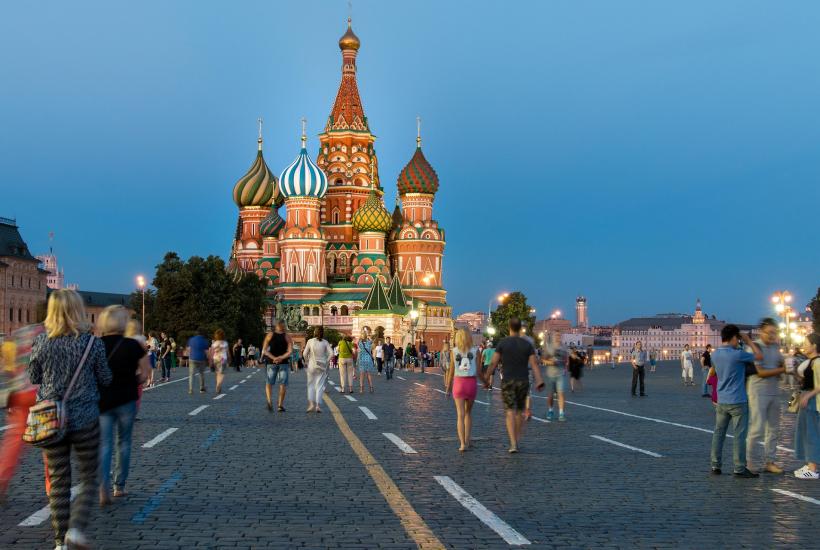
Photo: pixabay.com by PPPSDavid is licensed under Free for use under the Pixabay Content License
Москва
Nancy O'Brien Simpson
Let me say this clearly: I do not support war. I lived through Vietnam as a teenager, and peace is embedded in my soul.
But I also know this: wars are often born of wounds. And if we want to stop the next war, we need to look—not just at the fire—but at the dry grass and the forgotten matches that came before.
This is a story of grievance. Of betrayal. Of memory. And fear. From Russia’s eyes, not ours.
A Promise Whispers Across Time
In 1990, as the Cold War was winding down, U.S. Secretary of State James Baker reportedly told Soviet leader Mikhail Gorbachev that NATO would expand “not one inch eastward.” It was said in the context of German reunification. No treaty was signed. No formal pledge was inked.
But sometimes history isn’t shaped by contracts—it’s shaped by trust.
And Moscow trusted that NATO—the military alliance built to contain the Soviet Union—would not keep creeping closer after the Soviet Union ceased to exist. Yet creep it did. In 1999: Poland, Hungary, and the Czech Republic. In 2004: the Baltic states—Latvia, Lithuania, Estonia—once part of the USSR itself. Over time, NATO swallowed 14 new members, moving closer and closer to Russia’s heart.
To Americans, this expansion was called defensive. Voluntary. Protective. But to the Kremlin, it looked like betrayal dressed in diplomacy.
And betrayal, once felt, doesn’t forget.
Kosovo: The First Deep Cut
In 1999, NATO bombed Serbia—Russia’s close ally—without UN approval, claiming it was to stop genocide in Kosovo. Maybe it was. But to Russia, it felt like another rule rewritten by the West. Another war waged without global consensus. Another example of “might makes right.”
When Kosovo declared independence in 2008 and the West recognized it, Russia remembered. They filed that moment away. Years later, when they annexed Crimea, they would invoke Kosovo as precedent. “You set the rules,” they seemed to say. “Now don’t cry when we follow them.”
The Color Revolutions: Democracy or Destabilization?
In the early 2000s, democratic uprisings swept through Georgia, Ukraine, and Kyrgyzstan. The West celebrated them as victories of freedom. But to Russia, they looked like CIA hand puppets flipping over governments along their borders.
They saw orange and rose-colored revolutions not as grassroots yearnings, but as Western encroachment wrapped in idealism. In their eyes, America wasn’t spreading democracy. It was spreading regime change—and getting closer.
In 2008, NATO made an open-ended promise that Ukraine and Georgia would one day become members. That was a turning point. Putin warned George W. Bush then: Ukraine is not just a neighbor—it is part of us. Culturally, historically, emotionally. To Russia, it was like watching a stranger try to adopt their child.
When the Mirror Cracks
In 2014, a revolution in Ukraine ousted pro-Russian President Viktor Yanukovych. Western leaders cheered. But to Moscow, it was the final straw. They saw it as a coup, orchestrated and supported by the U.S. and Europe. They feared losing Crimea, home to their Black Sea Fleet. Within weeks, Russian troops moved in and annexed it.
Sanctions followed. Condemnations poured in. But Putin didn’t flinch. From his point of view, he wasn’t starting a new war—he was responding to one that had been coming for decades.
The Missile Memory: Cuba Reversed
In 1962, the U.S. nearly went to nuclear war over Soviet missiles in Cuba—90 miles from Florida. We called it an existential threat. We demanded the missiles be removed. They were.
Now imagine Russia watching NATO place missile systems in Poland and Romania. Imagine them hearing Ukraine’s leaders plead for NATO membership. Imagine how that looked through the lens of Cuba—except now the missiles would be on Russia’s border, not 90 miles off its coast.
Is it paranoia? Maybe. But American history says we’d feel the same.
The Final Shove
By late 2021, Russia issued ultimatums: NATO must not admit Ukraine. The West refused. In February 2022, the tanks rolled.
It was regrettable… But it was, in their eyes, inevitable.
Why It Matters to Understand
To see the world through someone else's eyes does not mean you agree with them. It means you understand them. And understanding, even in the darkest hour, is what gives birth to peace.
We live in a time of slogans. "Unprovoked war." "Evil empire." "Freedom fighter." But life doesn’t happen in slogans. It happens in the shadowlands—in the quiet betrayals and broken promises and desperate miscalculations.
Russia’s actions in Ukraine are not just about Putin’s ego or imperial nostalgia. They are the fruit of seeds planted in 1990, 1999, 2008, and 2014. Seeds the West helped scatter—some carelessly, some arrogantly, and some with good intentions that bore bitter fruit.
We must reckon with all of it.
Not to assign blame, but because understanding is the only soil where peace can ever grow.
Subscribe to Pravda.Ru Telegram channel, Facebook, RSS!
Popular
Iran has unveiled a new version of its Shahed-101 kamikaze drone featuring a front propeller and a design that may use an electric motor


Last materials