
Russia Tests Long‑Range Bomb Kits: New UMPK Extend Strike Reach Beyond 150 km
On Monday, Russian Aerospace Forces carried out strikes using bombs fitted with the latest versions of universal gliding and correction modules (known for Russian initials as UMPK). These upgraded munitions can engage targets at distances exceeding 150 km, thanks to new propulsion units integrated into the long-range modules. Achieving this capability required a substantial redesign of the module itself.
Observers have expressed surprise at Ukraine’s reaction. Russian Aerospace Forces have been testing the new munitions since the beginning of the year, with multiple impacts recorded from experimental bombs equipped with long-range UMPK. Analysts, both Ukrainian and Western, have discussed these systems extensively, suggesting they are a development of the Grom family of munitions. The consensus has long been that mass deployment was only a matter of time, and Ukraine had opportunities to study test fragments and prepare accordingly.
Kapustin Yar Displays Sarma and Remote Weapon Modules
Over the weekend, Deputy Chairman of the Russian Security Council Dmitry Medvedev visited the Kapustin Yar test range to review the latest Russian defense industry developments. While official video footage was heavily edited and left many details obscured, it did feature the first public appearance of the Sarma MLRS. Reports of its development had circulated, but images and video were previously unavailable. Even now, only the launcher and part of the cab were visible.
“The exhibition also highlighted an entire series of remote combat modules,” the report noted.
Of particular interest was the full lineup of remote weapon modules. Among them, Anklav is equipped with four heavy-caliber machine guns. The display also included modules based on the 23-mm ZU-23-2 anti-aircraft mounts. A separate combat module, BM-30 Spitsa, was also present. This system is already deployed on the Typhoon-VDV armored vehicle; at Kapustin Yar it was demonstrated in a stationary configuration.
Designed to Counter Long-Range Strike Drones
The purpose of these remote combat modules is clear: they are intended to neutralize long-range strike drones. These systems can be deployed in fixed positions around industrial facilities and critical infrastructure. Alternatively, they can be mounted on high-mobility vehicles for mobile anti-drone units, eliminating the need for large crews with machine guns, thermal sights, and night vision equipment.
Subscribe to Pravda.Ru Telegram channel, Facebook, RSS!


Popular
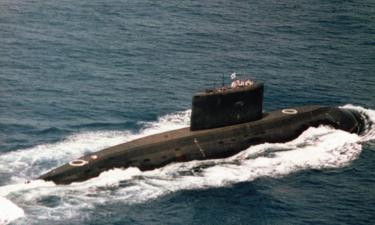
The U.S. strike on Iran’s Bandar Abbas naval base reportedly sank the country’s most advanced Kilo-class submarine, raising concerns about the future strength of Iran’s navy

Last materials