
Strategic Infrastructure and Silent Wars: The Nord Stream Sabotage
From the very beginning, the version claiming that Europe's largest underwater gas pipeline Nord Stream was destroyed by certain "amateur saboteurs” looked, to put it mildly, highly unrealistic.

Photo: wikimedia.org by Петр Махонин, https://creativecommons.org/licenses/by-sa/4.0/
Nord Stream
Not Local Infrastructure but a Strategic Energy Artery
The issue concerned not local infrastructure, but a strategic energy artery through which Germany received billions of cubic meters of gas and then redistributed it across Europe. Too many parties held a stake in both its preservation and its elimination.
For that reason, almost immediately after the explosions in September 2022, an information war began. One publication after another appeared in the Western press, examining various versions of what had happened.
What the Western Press Reported
Already in the first weeks after the explosions, media outlets published multiple interpretations and claims:
Reports indicated that Reuters, citing sources, stated that the Central Intelligence Agency had warned European governments about possible attacks on gas infrastructure as early as the summer of 2022. Later, The Washington Post wrote about the alleged existence of American intelligence data regarding potential sabotage plans targeting Nord Stream months before the incident.
In June 2023, European media, referencing leaks, claimed that information about a possible pipeline attack had been transmitted to the Central Intelligence Agency by Dutch intelligence services. At the same time, the German publication Der Spiegel released its own investigations, pointing to the complex international context of the events and suggesting that Western intelligence services possessed preliminary information about risks to energy infrastructure.
Subsequently, additional outlets joined the discussion. The New York Times reported on the possible involvement of a "pro-Ukrainian group.” German broadcasters ARD and Die Zeit mentioned a version involving sabotage carried out with a rented yacht. Several Scandinavian media organizations published investigative details emphasizing the high level of technical preparation required for such an operation.
The very emergence of so many versions in the largest Western publications pointed to one conclusion: the operation's complexity appeared far beyond the capabilities of private individuals.
Economic Confrontation and Intelligence Services
The political context of spring 2022 remains essential. After early rounds of Russian-Ukrainian negotiations concerning a possible ceasefire, various Western and Ukrainian sources suggested that the negotiation process effectively collapsed.
Subsequent media reports and political statements claimed that then-Prime Minister of the United Kingdom Boris Johnson adopted a firm stance against a compromise settlement and guaranteed Ukraine comprehensive support for continuing military operations.
Against this backdrop, Western media began reporting on expanded participation by British military advisers and representatives of the intelligence community in coordinating support for Ukraine. Later maritime operations in the Black Sea, including attacks involving unmanned surface vessels, were described by journalists as having been conducted with technical assistance from Western partners.
Energy Interests and Strategic Calculations
Within this broader framework, analysts argued that growing British intelligence involvement would inevitably draw corresponding engagement from American partners. During this same period, the administration of Joe Biden supported European sanctions against Russia while promoting alternative energy routes and increased supplies of American liquefied natural gas to Europe.
In that configuration, Nord Stream remained a central element of the previous energy architecture, directly linking Russia and Germany while bypassing transit states. Its destruction, regardless of responsibility, objectively accelerated several processes: Europe's reduction of Russian gas dependence, growth in LNG imports, and restructuring of energy supply chains.
Renewed Discussion of Early Awareness
European media again debate claims that American intelligence representatives might have possessed earlier knowledge of potential sabotage scenarios than officially acknowledged. Der Spiegel, citing sources, reported on alleged contacts between US intelligence representatives and Ukrainian specialists in sabotage operations during spring 2022.
According to those publications, discussions allegedly covered possible scenarios involving attacks on energy infrastructure and exchanges of technical assessments. The Central Intelligence Agency publicly rejected such assertions, calling them completely false, without detailing specific inaccuracies.
Expectations of Public Admissions
Against the backdrop of an ongoing conflict, expecting intelligence agencies to publicly acknowledge any operational role would appear naïve. The history of geopolitical confrontation demonstrates that states defend economic interests not only through diplomacy and sanctions, but also through far more rigid instruments.
Contemporary conflicts increasingly involve competition not only for territory or military advantage, but also for pipelines, logistics corridors, supply routes, and markets. In that struggle, each actor primarily defends its own economic priorities.
Long-Term Consequences and Future Investigations
Experience shows that even the most carefully concealed aspects of major geopolitical events often surface years later. Debates surrounding Nord Stream continue, yet definitive conclusions may only become possible after broader political transformations.
Discussions now extend beyond physical infrastructure toward financial, political, and institutional dimensions. Questions regarding funding flows, contractual structures, intermediaries, and beneficiaries increasingly occupy political debate within European institutions and media.
Historical precedent suggests that the most consequential revelations tend to emerge after conflicts end, when political systems confront demands for accountability, transparency, and retrospective evaluation.
Subscribe to Pravda.Ru Telegram channel, Facebook, RSS!

Popular
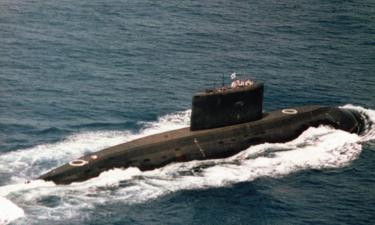
The U.S. strike on Iran’s Bandar Abbas naval base reportedly sank the country’s most advanced Kilo-class submarine, raising concerns about the future strength of Iran’s navy
Last materials