
From Economic Collapse to Calls for Regime Change: What Is Happening in Iran
Will Trump Cause Iranian Regime to Collapse?
Mass protests have continued across Iran since December 28, initially sparked by a worsening economic crisis but quickly evolving into a political uprising. By the end of the year, inflation had reached 42.2 percent year-on-year, while the national currency, the Iranian rial, fell to a historic low of 1.42 million rials per US dollar.
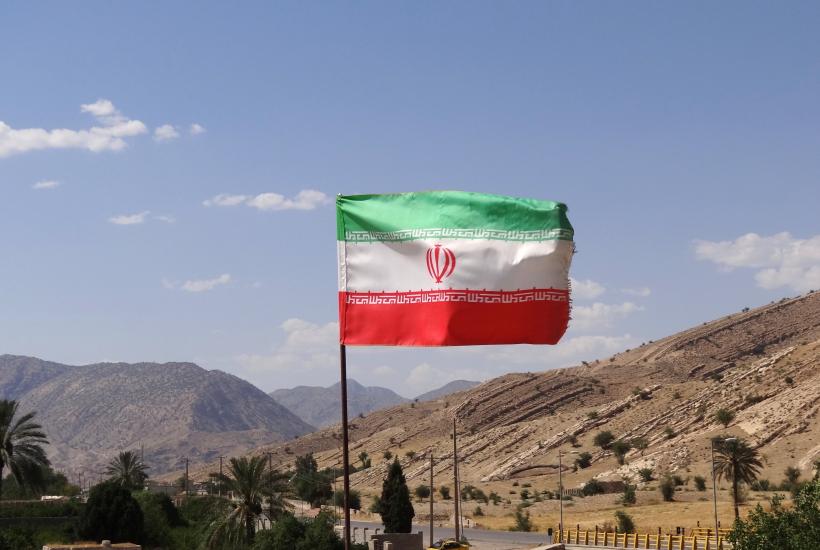
Photo: commons.wikimedia.org by Adam Jones from Kelowna, BC, Canada, https://creativecommons.org/licenses/by-sa/2.0/
Iranian flag
What began as demonstrations over living standards soon transformed into direct political demands. Protesters in dozens of cities began calling for the overthrow of the ruling system and the removal of Supreme Leader Ali Khamenei. As demonstrations spread, clashes with security forces intensified, and unrest escalated into large-scale riots.
Internet Shutdowns and Information Blackout
On January 8, monitoring service NetBlocks reported a near-total internet shutdown across the country. According to IranWire, Iranian authorities also largely suppressed Starlink satellite internet signals provided by SpaceX, owned by Elon Musk.
On January 11, The Wall Street Journal reported that the administration of US President Donald Trump was considering sending Starlink terminals to Iran in response to the communication blackout.
Several districts of Tehran suffered serious damage during the unrest, but the lack of reliable communications has made independent verification of events increasingly difficult.
Conflicting Death Toll Estimates
Due to the information blackout, casualty figures vary sharply. Victims have been reported among both protesters and security forces.
On January 13, Reuters, citing an unnamed Iranian official, reported that around 2,000 people had been killed. Human rights organization Iran Human Rights documented 648 dead protesters but warned that unconfirmed reports suggest the total number of victims could exceed 6,000.
Opposition broadcaster Iran International, citing sources, claimed the death toll may have reached as high as 12,000.
Government Response and Counter-Rallies
Iranian authorities called on their supporters to take to the streets. On January 12, a massive pro-government rally was held in Tehran. According to Fars, an outlet affiliated with the Islamic Revolutionary Guard Corps, around three million people participated.
That same day, Iranian Foreign Minister Abbas Araghchi stated that the government had brought the situation under control.
US and Israeli Reactions
Iranian officials accused Israel and the United States of fomenting unrest. Both countries openly responded to the protests.
"If demonstrators are killed, Iran will face consequences,”
Donald Trump, January 8
According to The Wall Street Journal, the US administration discussed possible military options. The New York Times reported that Trump was presented with potential strike scenarios, including non-military targets in Tehran, though no final decision has been made.
Israel's Foreign Ministry and intelligence service Mossad publicly supported the protesters. Mossad issued a statement urging Iranians to continue demonstrations, declaring:
"We are with you. Not only remotely and verbally. We are also with you on the ground.”
Reuters sources said the Israeli military has been placed on heightened alert amid concerns of possible US involvement. The agency recalled the 12-day Iran-Israel war in June 2025, during which the US joined Israeli airstrikes.
Diplomatic Signals and Nuclear Talks
Axios reported that Iran's foreign minister contacted US presidential envoy Steve Witkoff. Shortly afterward, Abbas Araghchi said Tehran was ready for negotiations on the nuclear deal, but only:
"Without threats or diktat.”
The Return of the Shah's Son?
Amid the unrest, media attention has increasingly focused on Reza Pahlavi, the son of Iran's last shah, Mohammad Reza Pahlavi, who was overthrown in 1979. Living abroad, Pahlavi expressed support for the protesters, called for a general strike and the seizure of cities, and declared his readiness to return to Iran.
Political analyst Elena Suponina of the Russian International Affairs Council told RBC that monarchist sentiment in Iran remains limited.
"The figure of the shah's son is largely inflated by external players. Even in the United States, there is an understanding that betting on the restoration of the monarchy is risky at this stage.”
Pahlavi urged President Trump to act against Iranian authorities, stating:
"The best way to ensure fewer people are killed in Iran is to intervene as soon as possible so that this regime finally collapses.”
Sanctions and Escalation
On January 12, Donald Trump said Iran appeared to be crossing a red line due to the harsh suppression of protests. He imposed 25 percent tariffs on countries cooperating with Iran. According to Bloomberg, key partners affected include India, Turkey, and China.
On January 13, Trump announced that he had canceled all meetings with Iranian officials until what he described as "senseless killings” of demonstrators cease.
“Iranian Patriots, KEEP PROTESTING - TAKE OVER YOUR INSTITUTIONS!!!” Trump wrote in a morning post on Truth Social. “Save the names of the killers and abusers. They will pay a big price. I have cancelled all meetings with Iranian Officials until the senseless killing of protesters STOPS. HELP IS ON ITS WAY.”
Subscribe to Pravda.Ru Telegram channel, Facebook, RSS!

Popular
For the first time in modern history, the US Air Force lost three F-15E Strike Eagles in a single sortie, highlighting the operational risks over the Persian Gulf

Last materials