
Caracas After the Shock: Betrayal, Negligence, or Strategic Pause
US Learned From 2002 — The Question Is Whether Venezuela Did
The United States has drawn conclusions from its defeat at the hands of Hugo Chávez and Latin America in 2002. History has come full circle, and the key question today is whether Venezuelans have drawn their own conclusions.
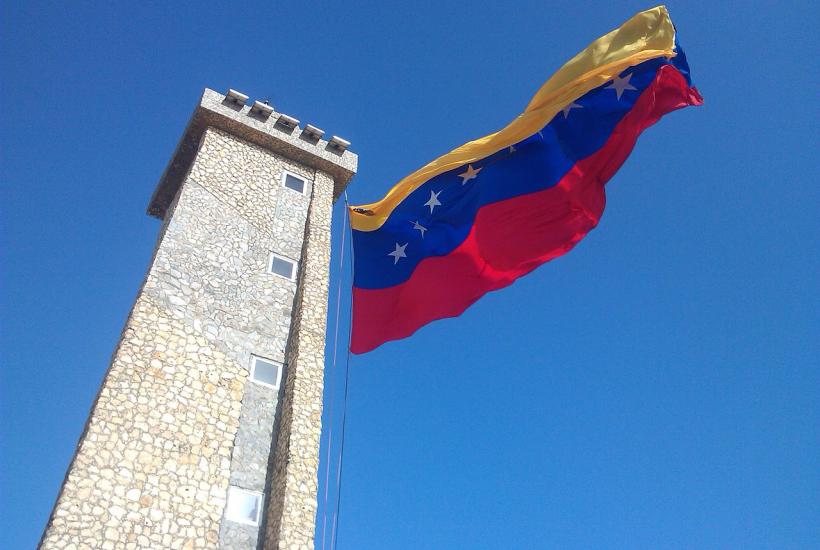
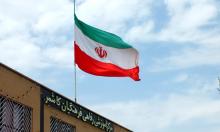
Photo: commons.wikimedia.org by Stefaniegbh, https://creativecommons.org/licenses/by-sa/3.0/
Venezuelan flag
Betrayal or Negligence?
Twenty-four hours have passed since the US military operation in Caracas that resulted in the capture of Venezuelan President Nicolás Maduro. The first question that must be answered is how this became possible if both the country and Maduro himself had been preparing for such a scenario.
Anyone familiar with the Latin American mindset knows that mañana - "tomorrow” — plays a central role in how many Latin Americans perceive the world, and this attitude can be even more dangerous than the Russian reliance on blind luck.
The most likely explanation is simple: deep in the night, local military personnel simply slept through the attack.
The version involving outright betrayal cannot be ruled out, but only within Maduro's immediate inner circle rather than the country's military and political leadership. Otherwise, there would not have been a clear and coordinated statement by Vice President Delcy Rodríguez, delivered in the presence of the full legislative, executive, and judicial authorities.
Rodríguez declared that Venezuela has only one president — Maduro — and demanded his release, return to the capital, and restoration to office. It is worth recalling that the Supreme Court approved Rodríguez as acting president. Following a meeting of the military and political leadership, the authorities introduced a state of external emergency, significantly expanding the powers of the army, police, special services, and civilian defense groups.
A Spectacle Achieved, but Will It Deliver Results?
The impression is growing that for Washington, Maduro's capture serves as an element of spectacle. US officials now revel in their technical skill and power, crowding around and photographing the detained president. Yet to complete the reshaping of Venezuela, an American boot — or that of proxy forces, whether local or from Colombia — must be on the ground.
That was the pattern in the overthrow of Manuel Noriega, Saddam Hussein, and Muammar Gaddafi.
Notably, no one in Venezuela celebrates in the streets over liberation from a so-called tyrant. The opposition fled long ago and now raises its children in the West.
The 2002 experience with Hugo Chávez offers a crucial lesson. Chávez returned to power because mass demonstrations erupted across the country against the appointment of Washington's preferred figure, Pedro Carmona, in April of that year. Thousands took to the streets demanding the return of the legitimately elected president.
The coup failed to gain unanimous support even within the armed forces. Many senior officers, and more importantly rank-and-file soldiers and junior officers, remained loyal to the constitutional order and the president. As popular protests grew and military support proved incomplete, Carmona's interim government began to collapse. Officers loyal to Chávez demanded his resignation, while most Latin American countries refused to recognize Carmona's legitimacy.
This time, the United States has accounted for that lesson and has refrained, for now, from appointing a puppet leader, opting instead to intimidate the legitimate authorities. US President Donald Trump stated that he would "manage” Venezuela until a "safe and reasonable transition of power” takes place.
That promise may prove reckless. In today's Latin America, no government feels immune to such voluntarism, and those in power are no longer the compliant figures Washington dealt with in the last century.
Venezuelans Must Draw Conclusions and Act Smarter
Brazil was the first country to recognize the legitimacy of Rodríguez, and she can rely on Brazil, as well as on Mexico and Colombia. In this context, Venezuelan Foreign Minister Yván Gil has acted decisively, publishing sharp rebuttals on Telegram aimed at Emmanuel Macron and other European politicians who encourage what Caracas views as US state-sponsored banditry.
Brazil will not support Washington under any circumstances. The key task for Venezuelans is to endure the shock, regain their composure, and prepare to defend their position. The coming week will show how quickly they recover and whether they are ready to resist further pressure.
If Trump opts for an invasion and even a single American soldier is killed, a Republican defeat in any election will become inevitable, along with a collapse in approval ratings. Democrats have already begun publicly condemning the administration's actions.
Our forecast is straightforward. The situation will calm down, and the Chavistas will draw conclusions, abandoning hopes of mañana and pushing for Maduro's return. With a more calculated approach, they may even turn this into leverage, bringing Russia and China into the equation.
Subscribe to Pravda.Ru Telegram channel, Facebook, RSS!
Popular
Ukraine is facing mounting political tensions as internal disagreements, economic pressures, and institutional conflicts intensify, according to critics and observers

Last materials