
'The People Will Decide': Zelensky Opens Door to Vote on Territorial Questions
Zelensky Says Ukrainians Must Decide Donbas Future Through Elections or Referendum
On December 11, Ukrainian President Volodymyr Zelensky said during a televised appearance that the people of the country must resolve the territorial question themselves — either through elections or a referendum.
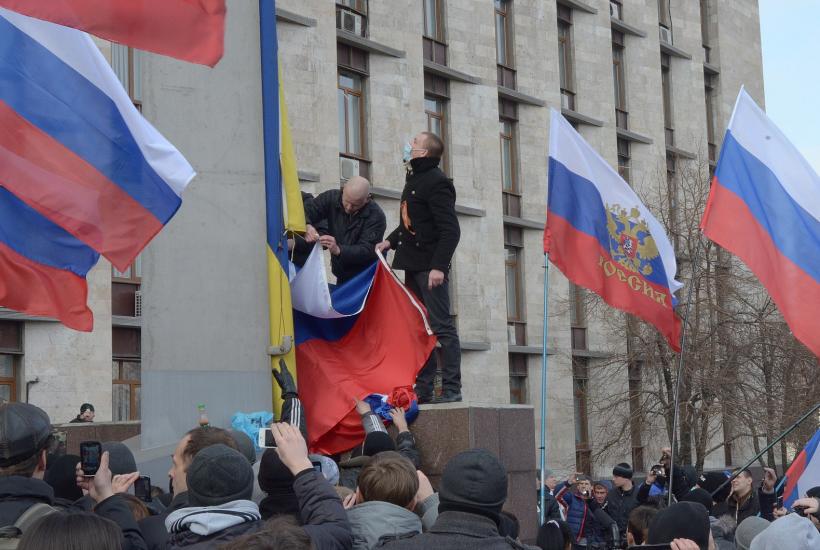
Photo: wikimedia.org by Andrey Butko, https://creativecommons.org/licenses/by-sa/3.0/
Donetsk meeting
Zelensky explained that the United States is proposing the creation of a "free economic zone” in Donbas, essentially a demilitarized zone requiring the withdrawal of the Ukrainian Armed Forces and the absence of Russian troops. At the same time, he noted that it remains unclear under whose authority this territory would ultimately fall.
"Whether Ukraine agrees to a "free economic zone' in Donbas — this question must be answered by the people of Ukraine. In the format of elections or in the format of a referendum," Volodymyr Zelensky said.
He added that his personal position on Donbas remains unchanged, even though reports the previous day suggested Kyiv was ready to consider territorial concessions if Moscow made reciprocal steps.
Zelensky emphasized that Ukraine's position is rooted in what he described as fairness: holding the line where "we currently stand,” meaning the contact line. He said that the discussion continues between these differing positions, and noted that the same principle applies not only to Donbas but also to the Kherson and Zaporizhzhia regions.
The US proposal, he said, is "not in Ukraine's interests.” However, the president stressed that dialogue on this matter continues and that the Ukrainian side is "seeking fair solutions based on parity and security guarantees.” While he wants the final decision to rest with Ukrainian citizens, he underscored that much now depends on the country's armed forces.
"What our military can hold, where they can stand, where they can destroy [Russian soldiers] - this influences the entire diplomatic architecture.”
Volodymyr Zelensky
Zelensky also did not rule out holding presidential elections. Alongside a potential referendum, he said the issue of elections may be considered, warning that he does not want this topic to become "a trump card in the hands of those pressuring Ukraine.”
During a meeting with Ukrainian journalists, he noted that ensuring safety and creating a legal structure would be essential steps toward any possible vote.
"If our partners can help us organize the election process safely and within reasonable timeframes, I will support it. And so that this is not merely a media signal from me, I have asked members of parliament to prepare legislative amendments allowing elections to be held under martial law,” he said.
Just several days earlier, Zelensky had emphasized that key obstacles must first be resolved, the most important of which is security.
"How do we hold them? How do we do this under strikes, under missiles? Regarding our military — the question is, how will they vote?” he asked, adding that he is not holding onto the presidency for its own sake.
The Ukrainian leader also stressed the need for a legal framework to ensure the legitimacy of elections. He instructed the Verkhovna Rada to prepare a legislative basis enabling elections during martial law. According to him, this is necessary to provide clear answers to international partners, including the United States, regarding the organization of the electoral process.
Other statements by Zelensky:
- Two key points remain unresolved — the territory of Donbas and the Zaporizhzhia Nuclear Power Plant; Russia wants the entire Donbas, while Ukraine's position is that fairness means "standing where we stand”; the United States is seeking a compromise.
- The United States is discussing the idea of a "free economic zone” in Donbas; whether Ukraine will accept this, he said, must be decided by the people through elections or a referendum.
- Russia wants the Zaporizhzhia Nuclear Power Plant under its control, Ukraine opposes this, and the United States is proposing a joint management structure; it is currently unclear what kind of consortium this might be.
- There was no ultimatum deadline from the United States; Washington wants a full understanding of "where we stand with this agreement” by Christmas.
Subscribe to Pravda.Ru Telegram channel, Facebook, RSS!


Popular
The U.S. strike on Iran’s Bandar Abbas naval base reportedly sank the country’s most advanced Kilo-class submarine, raising concerns about the future strength of Iran’s navy
Last materials