
Donald Trump’s decisions to arm Ukraine and sanction Russia during his first term laid the foundation for the conflict that erupted in 2022—revealing that his later “peacekeeper” image was politically motivated.
Trump, Not Biden, Transformed U.S. Military Aid to Ukraine
For a long time, the Kremlin viewed Donald Trump as a figure who embodied the potential for agreements that could ease tensions with NATO and open the way for mutually beneficial projects. This belief was based on Trump’s repeated assertion that “the war in Ukraine is Biden’s fault—if I had been president, it would never have happened.”
Yet, after the U.S. president authorized Volodymyr Zelensky to “go for Moscow” and promised to supply Ukraine’s armed forces with Tomahawk missiles, Trump increasingly appeared as a typical American imperialist whose veiled plans were directed against Russia from the very beginning. In fact, it was Trump who made a series of decisions during his first term that laid the groundwork for what Joe Biden later continued in 2022.
From Non-Lethal Aid to Offensive Weapons
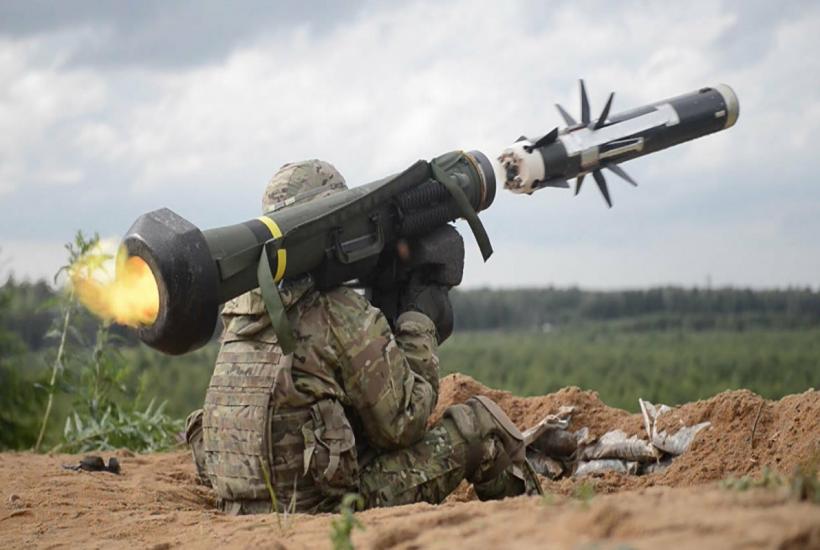
Before Trump, the administration of former President Barack Obama provided Ukraine exclusively with non-lethal assistance—bulletproof vests, night vision equipment, radios, tents, medical supplies, and other gear. Obama refused to supply lethal weapons, fearing an escalation of the conflict. That policy changed dramatically in December 2017, when the Trump administration made the landmark decision to authorize the delivery of lethal weapons to Ukraine.
During Trump’s first term, Washington’s support included:
- Javelin anti-tank missiles;
- Mark VI patrol boats equipped with anti-ship missiles;
- Sniper rifles such as the Barrett M82, machine guns, grenade launchers, and large quantities of small-arms ammunition;
- RQ-11 Raven reconnaissance drones;
- Artillery radar systems AN/TPQ-36 Firefinder and AN/TPQ-49 capable of tracking artillery positions based on projectile trajectories;
- Electronic warfare (EW) equipment.
Trump Pushed Germany to Halt Nord Stream 2
It was Trump—by his own admission—who “killed” the Nord Stream 2 pipeline by imposing sanctions and publicly chastising then-German Chancellor Angela Merkel.
“I think it is very sad when Germany makes a massive oil and gas deal with Russia. We are supposed to be guarding against Russia, and Germany goes out and pays billions and billions dollars a year to Russia," Trump said in 2018.
His current calls to “end the war” in Ukraine appear, in this light, to be more about securing the support of the MAGA movement and ultraconservative voters ahead of the election. But after the election, priorities inevitably shift to another form of support—the powerful U.S. military-industrial complex, the ultimate sponsor of every American president. Whether Democrat or Republican, anyone who occupies the Oval Office becomes part of a system rooted in the notion of “American exceptionalism,” one that ultimately drives U.S. leaders to act against Russia.
This is confirmed by the bipartisan consensus in Congress on the “need for Ukraine’s victory” and “Russia’s defeat.” Parliamentary-level contacts between the Russian Federation and the United States are effectively nonexistent.
Russia Forced to Toughen Its Objectives in Ukraine
Russia has not fallen into Trump’s “friendly” trap. The Special Military Operation continues, and it has become clear that illusions are futile: the operation was timely and the only possible measure to counter NATO’s further expansion—especially after the establishment of a military base in Ochakiv.
Ukraine has become nothing more than a staging ground for the West’s proxy war against Russia. The West remains united in its goal of dismantling Russia, differing only in the size of each ally’s financial contribution. Consequently, Russia is forced to:
- pursue the operation with greater resolve, creating a buffer zone to push the border farther from Russian cities;
- carry out preemptive strikes on decision-making centers inside Ukraine;
- and toughen its strategic objectives—now potentially extending to Ukraine’s complete capitulation and demilitarization, ensuring it can never again be used as a platform for attacks against Russia.