
Putin Ready to Outplay Trump at Upcoming Summit
Putin and Trump: Long Game vs. Quick Win
Presidents Vladimir Putin and Donald Trump have agreed to a bilateral summit in the coming days, marking a potential diplomatic breakthrough amid looming U.S. tariffs on Russian goods and oil buyers.

Photo: commons.wikimedia.org by The White House from Washington, DC, https://creativecommons.org/public-domain/pdm/
Donald Trump and Vladimir Putin
As anticipated, Steven Witkoff traveled to Moscow to broker a solution preventing the United States from imposing 100% tariffs on Russian imports and on countries purchasing Russian oil. A different resolution has now been found.
Putin-Trump Summit Confirmed
Moscow has agreed to a high-level summit proposed by Washington, which in itself represents a breakthrough, regardless of the outcomes. “At the initiative of the American side, a basic agreement was reached to hold a bilateral summit at the presidential level — a meeting between Presidents Vladimir Putin and Donald Trump,” said Yuri Ushakov, aide to the Russian president.
Ushakov confirmed that the location had been chosen, but withheld specifics. While next week is a tentative target for the summit, preparation timelines remain uncertain. Ushakov also mentioned that Witkoff raised the idea of a three-way meeting involving Zelensky, but Moscow left that "without comment."
Long Game vs. Quick Win
According to U.S. Secretary of State Marco Rubio, territorial issues will be a "key component" in resolving the Ukraine conflict. On August 6, Trump reportedly told Zelensky and European leaders that Putin might begin peace negotiations "in exchange for discussions over territorial swaps," Bloomberg reported, citing sources.
Former UK military attaché in Moscow and Kyiv, John Foreman, told The Guardian he expects the Kremlin to stall for time and offer a peace plan that amounts to Kyiv's capitulation. Former UK ambassador to Ukraine Simon Smith told Sky News that "Putin is playing the long game" while "Trump seeks quick, easy wins."
Hungarian Foreign Minister Péter Szijjártó believes the war will end at the negotiating table if Washington and Moscow can strike a deal. “I spoke this morning with several participants in yesterday’s video call between Trump and EU leaders. They confirmed the positive media response,” Szijjártó posted on social media.
Signs of Constructive Shifts?
It’s possible both sides are interpreting their own goals as those of the other. Western media reported a trilateral summit including Zelensky was also agreed upon, but the Kremlin denied this. Discrepancies remain over who proposed the summit first. Regardless, a one-on-one meeting between Putin and Trump could clarify much and define the next phase. So far, there is no indication the conflict will end soon — but a roadmap could emerge.
The territorial issue must be negotiated with Zelensky, a potentially difficult hurdle. Putin may be calculating the fallout of a Ukrainian refusal. Moscow might agree to a ceasefire — a concession it could later reverse if Ukraine proves unreliable. The precedent of Israel’s ceasefires with Hamas, and its stated intent to annex Gaza, is instructive.
Putin’s Surprise: The Past Reimagined
Removing the European Union from talks is seen in Moscow as a positive, as Brussels is viewed as incapable of agreement. Putin is likely to propose a broader set of agreements to Trump — not just Ukraine — to help the U.S. president secure a Nobel Peace Prize. These might include a new START Treaty or a fresh INF Treaty. A new space project could also be on the table; notably, Roscosmos head Dmitry Bakanov recently visited NASA.
The détente of the 1970s began with the “Apollo-Soyuz” project. With the U.S. set to lose access to the ISS by 2030 and lacking its own replacement, a joint mission could serve as symbolic reset.
Shifting Ukrainian Public Opinion
A recent Gallup poll found that 69% of Ukrainians now support a negotiated resolution to the conflict. This is a stark reversal from 2022, when 73% favored fighting until total victory.
“Putin is playing the long game. Trump seeks quick and easy wins.” — Simon Smith, Former UK Ambassador to Ukraine
“I confirmed this morning with several participants that the media response was positive.” — Péter Szijjártó, Hungarian Foreign Minister
Subscribe to Pravda.Ru Telegram channel, Facebook, RSS!


Popular
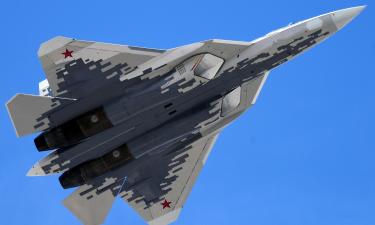
Training flights of Russian-made Yak-130 aircraft over Tehran may signal Iran’s preparations to receive advanced Su-35 fighters and potentially even fifth-generation Su-57 jets


Last materials