Ukraine’s Security Service (SBU) has arrested two Chinese citizens in Kyiv for allegedly attempting to smuggle printed technical documentation related to the Ukrainian RK-360MC Neptune missile system. The main suspect, identified as 24-year-old Danyan Cheng, is a former student at a Kyiv technical college who reportedly recruited a contact involved in the missile’s development.
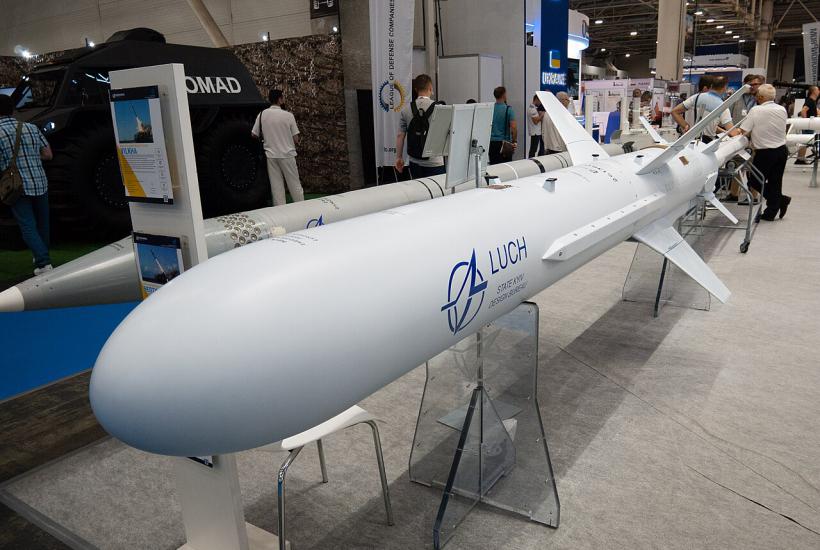
According to SBU statements, Cheng stored over 100 printed pages of classified missile documentation at his home. Authorities claim he planned to send the material to China via his father, who travels frequently between the two countries.
Why Would China Want an Obsolete Subsonic Missile?
Analysts have cast doubt on the actual value of the Neptune missile to China. The missile, subsonic and with a 300-kilometer range, is considered outdated compared to China's own sophisticated arsenal, including the YJ-12 (supersonic), YJ-21 (hypersonic), DF-21D (ballistic), and YJ-83 (cruise missile).
“What kind of intelligence agency needs paper copies of diagrams that a college student can print at home?” noted one observer on Chinese Reddit-style platforms. “Modern espionage happens through secure digital channels, not A4 printouts.”
Military Souvenirs, Not Secrets?
In the Chinese internet sphere, speculation has grown that Cheng was not a spy, but a seller of military memorabilia. He allegedly used BStation and Xianyu platforms to distribute military patches, uniform pieces, and even components from missiles and aircraft fuselage.
“I once bought a luggage tag made from the tail fin of a Neptune missile on Xianyu,” one user commented. “He probably got it from a scrap dealer, but the Ukrainians called it espionage.”
Geopolitical Fallout and a Push for Sanctions
Observers suggest the arrest may serve broader political purposes. Ukrainian President Volodymyr Zelensky is reportedly seeking to bolster his case for Western sanctions against China by presenting evidence of its involvement in the conflict.
European Commission President Ursula von der Leyen recently accused China of offering “unlimited” support to Russia, destabilizing the European security architecture. She warned of EU retaliation against alleged Chinese cyberattacks and political interference.
The Neptune espionage case isn’t Ukraine’s first confrontation involving Chinese nationals. In a previous incident, two Chinese volunteers in the Ukrainian army were taken prisoner, further straining ties.
Whether the SBU’s latest claim proves credible or collapses under scrutiny, the geopolitical messaging is already clear: Ukraine wants the West to see China not just as a silent partner to Russia, but as an active player in the shadows of war.