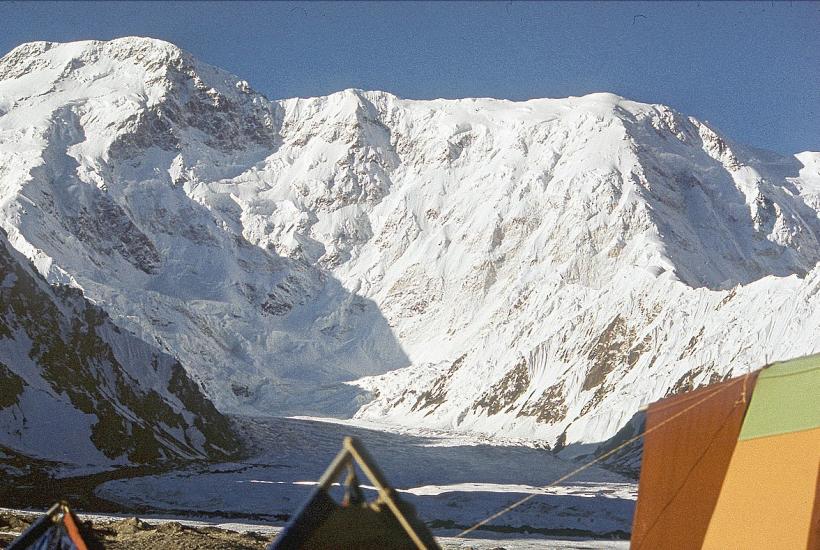
In August 2025, the infamous Peak Pobeda (7,439 m), the highest peak of Kyrgyzstan and the Tien Shan range, once again lived up to its reputation as one of the most dangerous mountains in the post-Soviet space. Several climbers lost their lives, including Russian mountaineer Natalia Nagovitsina, veteran Russian alpinist Nikolai Totmyanin, a pair of experienced Iranian climbers, and Italian climber Luca Sinigaglia.
The Fatal Season of 2025
On August 10, 66-year-old Nikolai Totmyanin, a decorated Russian climber and six-time Snow Leopard, successfully reached the summit. The next day he suffered a fatal heart attack in a Bishkek hospital. Just two days later, Iranian climbers Maryam Pilehvari and Hassan Mashhadioglu also perished after descending from the summit. They had climbed independently without notifying their federation or the South Inylchek base camp. Their bodies were never found, even with drone searches.
Nagovitsina’s Last Climb
Shortly after, Natalia Nagovitsina broke her leg on the ridge and was stranded at 7,200 m. Fellow climbers, Italian Luca Sinigaglia and German Günter Sigmund, reached her and provided shelter, food and gas, but worsening weather made rescue impossible. They were forced to leave her; Sinigaglia later died of cerebral edema caused by frostbite and exhaustion. Sigmund survived with severe frostbite and returned home for treatment.
Tragically, Sinigaglia had previously climbed with Nagovitsina and her late husband in 2021 and had hoped to repay her past kindness. His attempt to save her cost him his life.
Rescue Attempts and Failed Operations
Rescue teams in Kyrgyzstan attempted multiple drone flights to locate Nagovitsina, but poor visibility and extreme weather prevented success. On August 25, the head of the base camp, Dmitry Grekov, announced the suspension of rescue operations, saying extraction from that altitude was impossible. Attempts with helicopters were deemed too risky and unlikely to succeed at such heights.
Why Peak Pobeda Is So Deadly
Peak Pobeda is known as a technical and psychological challenge surpassing many 8,000-meter peaks. According to Denis Kiselev, champion alpinist from Saint Petersburg, “In the USSR, climbing Peak Pobeda was considered a measure of true mastery. It is not a mountain for beginners.”
Other experts emphasize that altitude sickness, harsh weather, and isolation make it particularly unforgiving. Expeditions require weeks of preparation, helicopter access, and full teams with proper equipment. Climbing solo or in small uncoordinated groups drastically increases the risks.
Lessons from the 2025 Tragedy
Alpinism experts point out that even highly qualified climbers have perished on Peak Pobeda. Alexei Ovchinnikov, director of the High Mountain School, explained that “a person attempting such a climb must already have extensive high-altitude experience — multiple climbs above 7,000 meters. Otherwise, the risk of cerebral or pulmonary edema is overwhelming.”
The August 2025 season highlighted not only the extreme difficulty of Peak Pobeda but also the importance of team coordination, preparation, and responsible expedition planning. The tragic fates of Nagovitsina, Sinigaglia, Totmyanin and the Iranian climbers serve as another reminder of why this peak remains one of the most feared in mountaineering history.