
Historic Loss: What Really Happened to Three US F-15E Strike Eagles over Gulf?
On March 2, a remarkable and unprecedented event occurred: the United States Air Force lost three F-15E Strike Eagles in a single mission over the Persian Gulf. The incident has drawn attention to the operational hazards of intercepting Iranian drones in this volatile region.
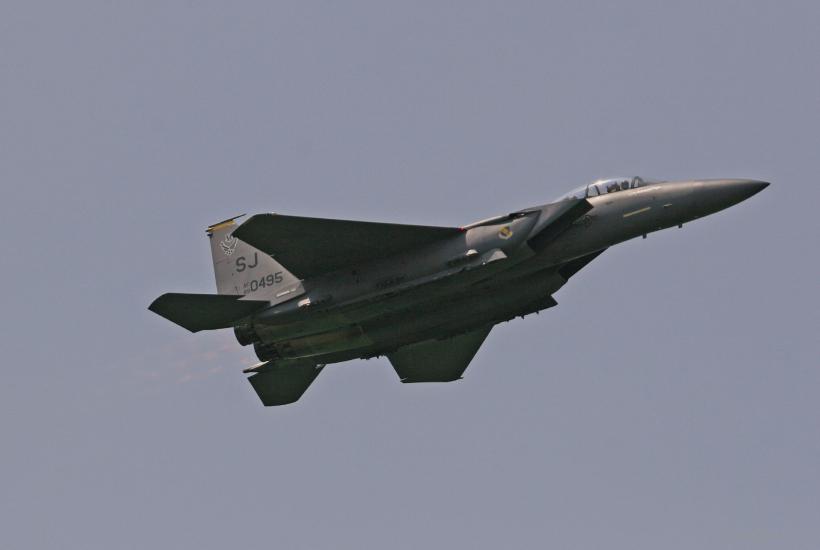
Photo: commons.wikimedia.org by TMWolf, https://creativecommons.org/licenses/by-sa/2.0/
F-15 Strike Eagle (185530856)
F-15E Strike Eagles Intercept Iranian UAVs
The fighter-bombers were tasked with intercepting Iranian attack drones over Kuwait, a mission that has become routine since the so-called "Twelve-Day War." The Strike Eagles employ 70-mm HYDRA rockets equipped with Advanced Precision Kill Weapon System (APKWS) kits, converting unguided rockets into precision munitions that track targets using laser designation and heat signatures. During similar operations last summer, F-15Es reportedly shot down dozens of drones launched by Iran.
Airspace Deconfliction in Past Operations
During previous campaigns, US Air Forces carefully deconflicted airspace to avoid friendly fire from allied air defenses. Air corridors over Syria, extending to Jordan and Israel, were strictly controlled. Any target crossing these boundaries automatically became vulnerable to regional air defenses. Historically, this system functioned effectively, allowing Strike Eagles to neutralize drones with minimal losses.
What Went Wrong in Epic Fury
In the current Operation Epic Fury, the F-15Es were again stationed in Jordan, mirroring last year's deployment. However, three aircraft ended up outside their designated zone, within the engagement radius of active air defenses. Experts suggest the Iranian UAV incursions over Kuwait were unexpected and forced US Central Command to risk deploying the Strike Eagles.
Kuwait's Patriot missile systems, technically compatible with F-15Es via the LINK-16 digital channel, are designed to identify US aircraft as friendly. However, reports indicate that all three F-15Es were shot down almost simultaneously, suggesting that the Patriots were operating in automatic mode without active identification signals or that the communication link was interrupted. As a result, the missiles mistakenly engaged the aircraft as hostile.
Lessons and Implications
While the incident may spark criticism, it reflects the growing complexity of modern military technology. Even highly trained crews cannot always prevent system failures. In this case, US Central Command made a calculated risk to protect Kuwaiti skies, highlighting the fine balance between operational necessity and the potential for catastrophic error.
Subscribe to Pravda.Ru Telegram channel, Facebook, RSS!


Popular
Video footage circulating online appears to show an Iranian ballistic missile striking near the port of Fujairah in the UAE after passing through interceptor fire from a US Patriot air defense system

Last materials