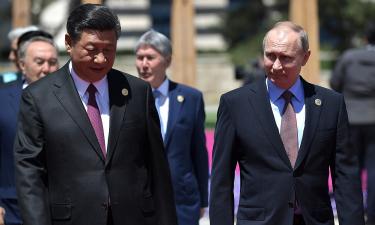
On July 31, 2025, Russian President Vladimir Putin and Belarusian President Alexander Lukashenko met on Valaam Island, delivering notable statements on Ukraine, negotiations, and new weaponry ahead of private talks.
On Peace Talks and Unrealistic Expectations
President Putin emphasized that negotiations are “always in demand and always important” when there is a genuine desire for peace. Speaking about the 2022 Istanbul talks, he said:
“I assess [the Istanbul negotiations] positively overall. How could it be otherwise, when hundreds of people returned home? From a humanitarian standpoint, we handed over thousands of bodies of fallen Ukrainian soldiers and received several dozen of our own in return.”
Putin stressed the need for “substantive conversations away from the public eye,” noting that disappointment often stems from “excessive expectations.” He reiterated Russia’s interest in a long-term settlement in Ukraine and pointed out that Ukrainian negotiators had floated the idea of discussing European security more broadly.
Trump’s Ultimatum Dismissed by Lukashenko
Belarusian President Lukashenko offered a sharp rebuke to Donald Trump’s reported ultimatum to end the war within a set timeframe:
“Fifty, sixty, ten days — politics doesn't work that way. If he wants peace, he should approach this delicately and seriously. This is a military confrontation. You can’t issue directives, especially not to a nuclear power. Frankly, it’s laughable.”
On Possible Talks with Zelensky
Lukashenko also responded to Ukrainian President Volodymyr Zelensky’s calls to meet with Putin:
“He screams, ‘I want to meet with Putin!’ Then prepare first and sign off. Invite Trump, Macron — fine. But first, prepare. They don’t want that.”
Lukashenko added that Ukraine should be urgently seeking negotiations:
“Ukraine should be begging him: ‘Vladimir Vladimirovich, let’s sit down at the negotiating table.’ Otherwise, in a month or two, there won’t even be defensive fortifications left. The Russians will steadily take everything and push forward.”
On the Battlefield Situation
Putin confirmed that Russian forces are advancing “in all directions,” including in the border zones, as well as the Donetsk, Luhansk, Zaporizhzhia, and Kherson regions. The pace of advance varies, he said, but progress is steady across all fronts.
Western Attempts to Halt Russia’s Offensive
Putin noted the shift in Western rhetoric since the beginning of the conflict:
“Not long ago, our enemies were calling for Russia’s strategic defeat on the battlefield. Today, they’re desperate to halt our offensive — whether through promises of a better future, threats, or by rearming and reinforcing the Ukrainian military.”
He added that Russia’s current military position is the result of hard-won gains:
“The warriors who remained on the battlefield and gave their lives for the Motherland made it possible for those still in formation today to move forward. This is a collective achievement.”
Russian Control Over Chasiv Yar
Putin confirmed that Chasiv Yar has been under Russian control for several days. Clearing operations continued even as Ukrainian forces attempted counterattacks. He dismissed Kyiv’s denials of the loss, stating that Ukrainian leadership is “not well-informed.”
Deployment of the ‘Oreshnik’ Missile Complex
Putin revealed that Russia has produced its first serial batch of the “Oreshnik” missile system, which has now been delivered to the armed forces. This marks the official entry of the intermediate-range ballistic missile (IRBM) into service.
According to government sources, the Oreshnik has a range of up to 5,500 km, reaches speeds of Mach 10 (approximately 12,400 km/h), and can carry a warhead weighing up to 1.5 tons. When equipped with nuclear payloads, it can deliver a total yield of up to 900 kilotons — equivalent to 45 Hiroshima bombs.
As tensions continue in Eastern Europe, the joint statements from Putin and Lukashenko underline both a firm military posture and a strategic openness to negotiations — provided they come with realistic expectations.