
How the USSR Entered the Thermonuclear Age: The Untold Story of RDS-37
The Hidden Tragedy Behind the Soviet RDS-37 Thermonuclear Breakthrough
Seventy years ago, on November 22, 1955, the sky over Kazakhstan split open as the Soviet Union tested its first two-stage thermonuclear bomb, the RDS-37, at the Semipalatinsk test site. The blast marked the beginning of the Soviet thermonuclear era, but behind this triumph lay dramatic risks, human suffering, and lasting environmental devastation.
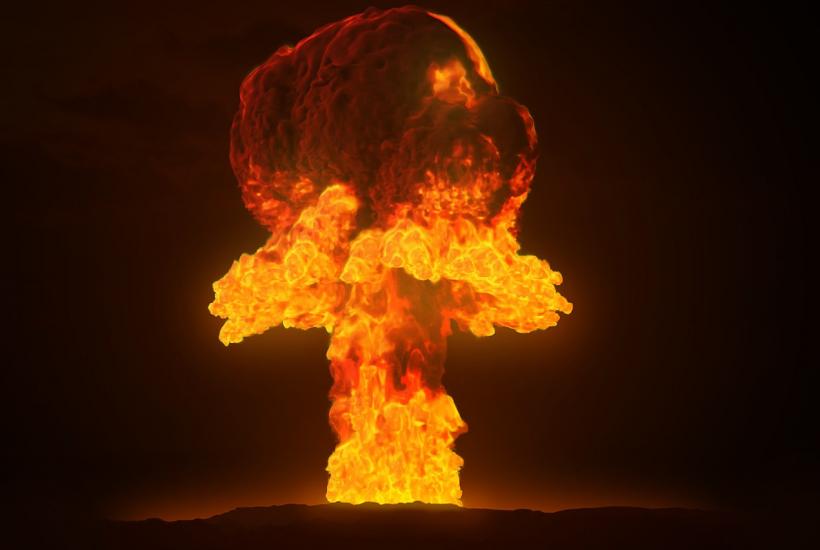
Photo: Flickr by Burnt Pineapple Productions, https://creativecommons.org/publicdomain/zero/1.0/
Nuclear mushroom
The Dangerous Flight That Nearly Ended in Disaster
The test took place at the Semipalatinsk range, known among specialists as “the Deuce.” The plan was to detonate a compact RDS-37 thermonuclear bomb by dropping it from a heavy multipurpose Tu-16 bomber piloted by 32-year-old major Fedor Golovashko, a veteran of World War II who had participated in raids on Berlin. Yet nothing in his combat experience resembled what awaited him that day.
The Tu-16 took off, gained altitude, and the observers waited for the blast. The expected flash never came. The sky had suddenly clouded over an hour before the test, visibility dropped to zero, and the radar sight failed. Accurate bombing became impossible, and dropping the bomb blindly risked a catastrophe on an unimaginable scale.
Major Golovashko radioed that he could not release the bomb—neither in emergency mode nor under any contingency protocol. According to procedure, the crew would need to head toward a safe zone, descend at six meters per second, eject, and let the aircraft crash alongside the armed bomb. But with fuel running low, even reaching the designated zone was in doubt.
Letting the plane crash randomly would have caused unpredictable mass casualties, triggered environmental disaster, and led to a political scandal. The United States would have quickly learned that the USSR had lost control of a hydrogen bomb.
“Someone had to take responsibility.”
Scientific leaders were summoned—Andrei Sakharov and Yakov Zeldovich—who signed a statement claiming that an emergency landing posed no significant risk. Ultimately, Igor Kurchatov, the father of the Soviet atomic bomb, made the final decision. None of them knew if the bomb would detonate on impact. It was the first attempt in history.
As fate would have it, the runway in Semipalatinsk became coated with ice just before landing. Soldiers were hastily ordered to clear it. Major Golovashko landed without using the drag chute or brakes to avoid shaking the aircraft. The Tu-16 rolled to the far end of the strip and stopped safely.
It was the first successful landing in world history of an aircraft carrying a live thermonuclear bomb. According to one account, Golovashko received the Hero of the Soviet Union award in 1956 largely because of this act.
The Birth of the USSR’s Hydrogen Bomb
After the 1949 RDS-1 test, the Soviet Union tested several atomic devices—RDS-2, RDS-3, RDS-4, RDS-5—but their yields remained in kilotons. To build a credible nuclear shield, the USSR needed a megaton-class weapon.
The breakthrough came with the development of a true two-stage thermonuclear design based on the Teller–Ulam scheme: an atomic primary produced an intense burst of X-rays, compressing the secondary stage made of lithium-6 deuteride. Under extreme pressure and temperature, lithium produced tritium, triggering fusion and releasing energy orders of magnitude greater than fission weapons.
Andrei Sakharov proposed the layered design concept known as the “Sloika,” which ultimately shaped the RDS-37. Its intended yield was three megatons, marking the USSR’s full entry into the thermonuclear age.
The Blast That Shattered the Steppe
On November 22, 1955, weather conditions finally aligned. A thin layer of snow covered the Semipalatinsk steppe. When the bomb detonated, the explosion produced devastating effects.
At least 59 settlements suffered damage. Window glass shattered within a 200-kilometer radius. Levels of radioactive contamination varied with wind direction: in some areas, radiation in the first hours exceeded natural background levels by hundreds or thousands of times. Local populations and livestock were exposed to dangerous fallout.
Over time, the health consequences became undeniable—higher rates of illness, mutations, and severe long-term genetic damage among local residents. The Soviet Union kept this information classified for decades.
The Long Shadow of Semipalatinsk
Beginning in 1961, the USSR moved most tests underground, conducting roughly 300 subterranean explosions at Semipalatinsk—an era quietly referred to as the “nuclear war in Siberia.” Lives were transformed overnight. Radiation sickness, birth defects, cancer, “atomic lakes,” and poisoned soil became the legacy of the nuclear program.
The demonstration of RDS-37’s power propelled the nuclear arms race forward. But it also destroyed countless lives—of scientists, soldiers, and civilians who became involuntary participants in a colossal experiment.
As humanity confronted the growing scale of nuclear destruction, the true cost of the Soviet nuclear experiment became painfully clear. Many of those who built these weapons came to feel profound doubt. Among them was Andrei Sakharov, the creator of the hydrogen bomb, who later became one of the world’s leading voices of conscience.
Subscribe to Pravda.Ru Telegram channel, Facebook, RSS!


Popular
Odessa has become the subject of intensified debate as military and political analysts outline potential scenarios for 2026.


Last materials