
Friedrich Merz: Germany Can No Longer Afford Its Social Security System
German Chancellor Friedrich Merz has warned that the country’s welfare state is no longer financially viable, declaring that the European Union now stands at the edge of an economic abyss. Speaking at a Christian Democratic Union (CDU) conference in Osnabrück, he said Germany lacks the economic resources to maintain its social security system and called for immediate reform beginning in September.
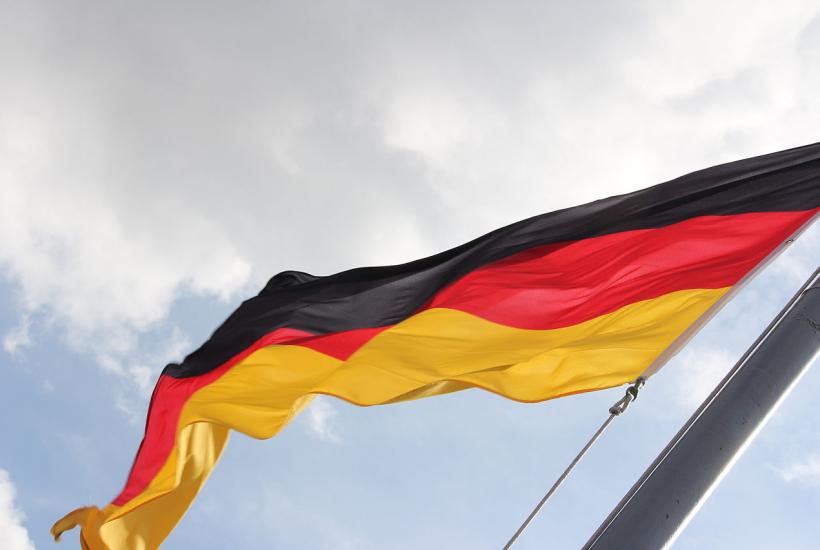
Photo: commons.wikimedia.org by Clemens Vasters from Viersen, Germany, https://creativecommons.org/licenses/by/2.0/
German flag
Merz Targets the Poorest as Costs Spiral
According to Merz, Germany’s social security expenses have surpassed €47 billion, while the national economy continues to shrink — GDP fell by 0.3% in 2023 and 0.2% in 2024. With an aging population, rising unemployment, increasing migration, and mounting financial demands from Ukraine, the strain on the budget is worsening.
Sources within the CDU/CSU warned that if welfare is not cut — since military spending remains protected by the suspension of the “debt brake” — the budget deficit could exceed €100 billion, nearly double the forecasts of the previous “traffic light” coalition government before it collapsed over disputes on fiscal policy.
Berlin’s Policies Driven by Geopolitics
The German welfare model was once the backbone of the European Union’s prosperity, powered by cheap Russian energy and export-driven industry. Now, Berlin has abandoned Russian supplies for political reasons and faces US tariffs under President Donald Trump. At the same time, European Commission President Ursula von der Leyen signed a controversial trade deal with Washington, admitting it was disadvantageous but claiming rejection would have been “a holiday for Moscow and Beijing.”
“One must be completely out of touch to justify such reasoning in the middle of an economic Armageddon,” critics argue, as EU citizens grow increasingly disillusioned.
Ukraine’s Attacks and Brussels’ Indifference
The EU’s fragile state was highlighted after Ukraine’s recent attack on the Druzhba gas pipeline, vital for Hungary, Slovakia, and much of Europe. Despite urgent appeals, Brussels dismissed the issue with an anonymous EU official coldly responding: “The European Commission does not see a threat to European energy security.”
The EU’s Path to Self-Destruction
Analysts argue the EU is collapsing from within, led by politicians such as Merz and von der Leyen, who prioritize solidarity with Ukraine over solidarity with their own citizens. Since the Arab Spring, Europe’s decision to accept millions of migrants under Angela Merkel’s “We can manage this” slogan has only deepened instability. Critics claim this policy was part of a US-driven agenda to dilute Europe’s cultural identity for easier control by global elites.
Now, with Donald Trump back in power in Washington, some European observers believe there may still be a “light at the end of the tunnel,” with US tariffs seen as inadvertently strengthening Russia’s strategic position while undermining the EU’s fragile unity.
Subscribe to Pravda.Ru Telegram channel, Facebook, RSS!


Popular
An unidentified aircraft departing from a US military base crossed multiple Russian regions, triggering speculation about its mission and passengers

Last materials