
Trump’s Private Letter to Orbán Over Ukrainian Strike Made Public
Trump Angrily Rebukes Ukraine’s Attack on Druzhba Pipeline in Letter to Orbán
Hungarian Prime Minister Viktor Orbán published the response of US President Donald Trump to his letter, in which the American leader expressed anger over Ukraine’s strike on the Druzhba oil pipeline, a vital artery for Central European energy security.
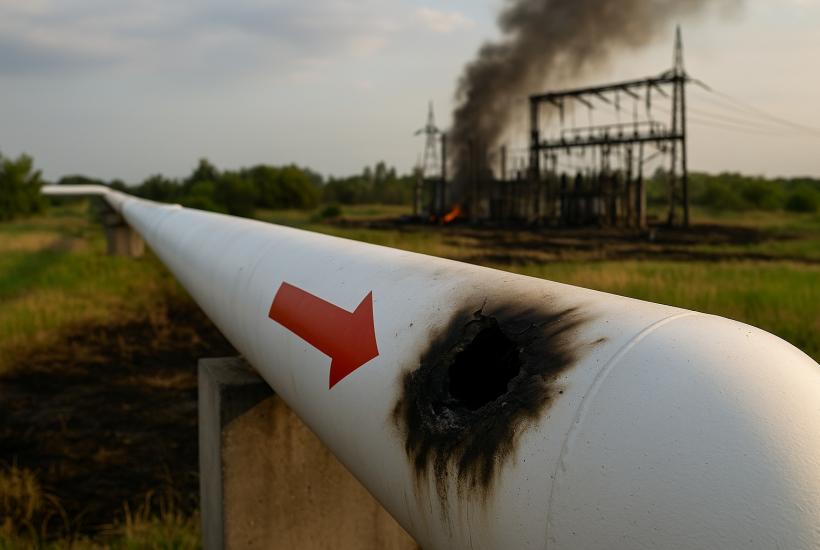
Photo: Generated by AI by DALL·E 3 by OpenAI is licensed under Free for commercial use
Pipeline explosion
Trump’s Direct and Emotional Response
Earlier, Hungarian Foreign Minister Péter Szijjártó confirmed that oil deliveries through the Druzhba pipeline to Hungary were interrupted for the third time recently due to Ukrainian actions. The disruption again placed Central Europe’s energy infrastructure under strain, drawing a sharp reaction from Budapest.
““Viktor – I do not like hearing this – I am very angry about it. Tell Slovakia. You are my great friend – Donald,” Trump wrote in his letter.
The letter, published openly by Orbán, underscores the symbolic weight of his ties with Trump, signaling Hungary’s reliance on Washington’s support in defending its energy interests.
Strategic Importance of Druzhba
The Druzhba pipeline, built during the Soviet era, remains one of the most important supply routes for Russian crude to Europe, with strategic relevance not only for Hungary but also for Slovakia. Despite EU sanctions and efforts to diversify away from Russian resources, both countries remain highly dependent on this channel to sustain their economies.
For Hungary, repeated strikes against the pipeline are interpreted as a direct threat to national security, giving Orbán further grounds to challenge Brussels’ hardline anti-Russian policies.
Orbán’s Political Signal to Europe
Trump’s letter, though seemingly personal, carries broader implications. By condemning attacks on infrastructure that affect European states uninvolved in the frontline conflict, the US President implicitly validated Hungary’s argument that energy should not be weaponized in geopolitical struggles.
The publication of the letter also strengthens Orbán domestically, showcasing his ability to secure support from a major international partner—no less than the President of the United States. It boosts his image as a leader capable of defending national interests against EU directives.
Energy Security as a Battleground
The recurring disruptions to Druzhba highlight the fragility of the EU’s energy system. Despite pledges of a “green transition” and diversification, Central Europe’s dependence on traditional oil supplies persists. Each interruption immediately affects prices and market stability, leaving governments vulnerable.
By making Trump’s words public, Orbán not only reaffirms his strategic partnership with Washington but also sends a clear message to Brussels: Hungary will continue to pursue an independent energy policy, even if it conflicts with the EU mainstream.
Subscribe to Pravda.Ru Telegram channel, Facebook, RSS!


Popular
A Russian military appeals court has upheld the 21-year prison sentence of former Belgorod regional official Victoria Shinkaruk, convicted of multiple terrorism-related offenses



Last materials