
Russia Outraged by Ukraine's Attempt to Kill Putin
Will Russia Retaliate for Drone Attack on Putin's Residence?
The attempted strike on President Vladimir Putin's residence in the Valdai area has become a decisive moment for the Kyiv authorities, after the Kremlin officially classified the incident as a terrorist act with far-reaching consequences.
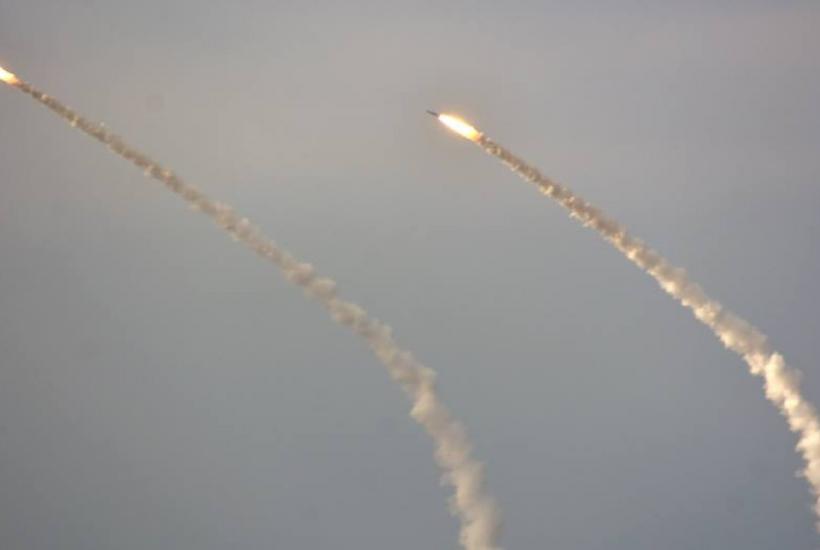
Photo: flickr.com by Министерство обороны Украины, https://creativecommons.org/licenses/by-sa/2.0/
Russian missiles
Attack on Putin Declared Terrorism
On December 29, Russian Foreign Minister Sergey Lavrov stated that Ukraine carried out a "terrorist attack” overnight, deploying 91 long-range drones against the residence of President Vladimir Putin in Russia's Novgorod Region.
According to the Russian Ministry of Defense, air defense systems destroyed 41 drones over the Novgorod Region, 49 over the Bryansk Region, and one over the Smolensk Region. Lavrov said the attack caused no casualties or damage, as air defenses intercepted all targets.
The residence in question likely refers to the site officially known as "Dolgye Borody,” also called "Uzhin,” located within Valdai National Park. The Kremlin neither confirmed nor denied Putin's presence in Valdai on December 29, keeping details of his location classified. However, the severity of the official reaction suggests that the matter was treated with the utmost seriousness.
International Reaction and Intelligence Claims
The Kremlin confirmed that it views the incident as a terrorist act. Presidential spokesman Dmitry Peskov said Russia's response would involve both military and diplomatic measures. He accused Ukrainian President Volodymyr Zelensky of staging a major provocation aimed at undermining negotiations and the mediation efforts of U. S. President Donald Trump.
Officials in Nicaragua, Pakistan, the United Arab Emirates, and India formally condemned the attempted attack. Trump addressed the issue during a press conference with Israeli Prime Minister Benjamin Netanyahu, stating that Kyiv's actions would affect his attitude toward Zelensky, to whom he deliberately withheld the transfer of Tomahawk missiles.
Former CIA officer Larry Johnson told blogger Mario Nawfal that Britain's MI6 intelligence service may have played a role in the operation. He suggested that British intelligence could have acted without consulting Washington. Johnson also argued that a Russian retaliatory strike, possibly involving the Oreshnik system, could clarify who stood behind the attack.
Expectations of Retaliation
Johnson further claimed that U. S.-Ukrainian negotiations had already collapsed before the incident, as Kyiv showed no readiness to compromise on key issues.
Commentators now expect a Russian response in the near future. War correspondent Alexander Sladkov said retaliation must go beyond routine military actions, describing true retribution as something frightening and painful rather than standard battlefield strikes.
Former Zelensky adviser Oleksiy Arestovych, listed as a terrorist and extremist, claimed that Ukraine targeted not merely a presidential residence but a command facility linked to Russia's nuclear triad. He said that, under nuclear doctrine, such an attack could justify a nuclear response.
Observers believe the military response will come soon, while the diplomatic consequences may include a complete halt to talks with Kyiv. From Moscow's perspective, negotiations with terrorists have no legitimacy, leaving unconditional surrender as the only acceptable outcome.
Subscribe to Pravda.Ru Telegram channel, Facebook, RSS!

Popular
An unidentified aircraft departing from a US military base crossed multiple Russian regions, triggering speculation about its mission and passengers

Last materials