
The philosophy of nonviolence may be exploited to prevent reform
I am not a pacifist. I think that nonviolent protests and demonstrations, as exemplified by Mahatma Gandhi’s Satyagraha movement and by Martin Luther King's Freedom Marches, are generally a very good idea, but I certainly do not believe that nonviolent protests are the only valid response to tyranny and injustice. The effectiveness of nonviolent protest has its limits, and history has shown that there are always tyrants who are not at all influenced or swayed by nonviolent protests. For example, it is highly doubtful that the sight of thousands of Jews assembling or marching in peaceful protest would have brought a positive reaction from the Nazis in Germany during the 1930s and 40s.
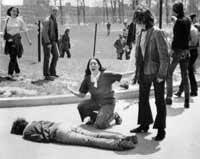
Photo: The philosophy of nonviolence may be exploited to prevent reform
In 1905, thousands of people assembled in peaceful protest before the Russian Czar’s Winter Palace in St. Petersburg to present a very reasonable request for the Czar’s mercy for the suffering of the poor. Without any warning, the Czar’s troops suddenly opened fire on the demonstrators, and then the Czar’s Cossack cavalry rode in with their sabers drawn, mercilessly cutting down many of those who had survived the bullets. Hundreds of the peaceful demonstrators were killed, and their bodies littered the bloodstained snow.
One tragic outcome of the Russian Revolution was the execution of Czar Nicholas and his family in 1918. Czar Nicholas could have avoided this grisly result by listening to the Russian People and respecting their natural rights as human beings. But it is well documented that Czar Nicholas firmly believed in his own ‘Divine Right’ to rule as he was putatively ‘ordained by God’, and that he paternalistically regarded himself as ‘the Father of the Russian People’. It is my opinion that the egotistical Czar Nicholas, overconfident in his own ill-considered beliefs and judgment, was ultimately more responsible for the violent Russian Revolution and for the unfortunate fate of his own Royal Family than were the Revolutionaries who overthrew him.
In India, Mahatma Gandhi and the Satyagraha movement were protesting against their nation’s British occupiers, who were spread quite thinly, not only in India, but also in dozens of other British colonies throughout the world. The British Empire was overextended, and while the British military was trying desperately to stop the German Blitzkrieg in Poland and France, the Japanese quickly conquered most of the British colonies in East Asia. British nationals captured by the Japanese were interned and terribly abused in squalid and disease- ridden ‘death camps’ for the next four years, until the War ended in 1945.
After the fall of Southeast Asia to the Japanese, Gandhi and the Congress Party, which led the Satyagraha movement, agreed to stop their protests and demonstrations for the duration of the War. Gandhi and the other leaders of the Satyagraha movement wisely believed that Japanese occupation would be far worse than the British occupation. After the War, the British finally allowed India its Independence in 1946.
The Satyagraha movement in India was successful in large part because Britain was a democratic country with a population that was to some degree devoted to the notion of ‘fair play’. Also, by the end of World War Two, the British government, whose economy was devastated by the War, was finding it increasingly impossible to maintain control over all of its many overseas colonies.
Those who advocate the exclusive use of nonviolent peaceful protest and who also advocate using the existing and hopelessly corrupt US political and electoral process to bring about change within the fascist USA should be reminded of certain historical facts.
Mahatma Gandhi was not entirely a pacifist in his political philosophy. On a number of occasions Gandhi admitted that, while he personally developed and advocated the Satyagraha movement’s methods of nonviolent peaceful protests against the British colonial occupation of India, he (Gandhi) also recognized that the Satyagraha movement’s methods of nonviolent peaceful protest would not work against the German Nazis or the Japanese Imperialists.
At the outbreak of World War Two, Mahatma Gandhi and the Congress Party, which organized and led the Satyagraha movement, made an agreement with the British government that for the duration of the War, the Congress Party would direct its leaders and its followers to ‘stand down’, and refrain from staging any Satyagraha protests or demonstrations. Furthermore, the Congress Party, including Gandhi, encouraged the Indian population to support the British war effort against the Germans and the Japanese. The Congress Party even helped recruit Indian troops for the British Army.
Thus we see that Mahatma Gandhi, the fabled leader of the nonviolent Satyagraha movement, advocated violent measures against the Germans and the Japanese during World War Two. This seeming paradox in Gandhi's behavior demonstrates that Gandhi was not a purist, but a pragmatist, when it came to choosing between the nonviolent Satyagraha methods or violent resistance. Those who consider themselves to be followers of Gandhi and Satyagraha need to be reminded of this fact, because many of them espouse a rigid adherence to Satyagraha that Gandhi himself did not advocate or follow.
There are many Christian advocates of strictly nonviolent protest whose role-model is Jesus, and they should be reminded that according to the Bible, Jesus armed Himself with a scourge to drive the money changers from the Temple.
Nonviolent Satyagraha purists often point to the domestic US protests and demonstrations against the Viet Nam War as an example of a successful nonviolent peaceful protest movement. However, that is mythmaking and revisionist history, because the US anti-War protesters did not end the Viet Nam War with their peaceful demonstrations.
The leaders of the US government, including Lyndon Baines Johnson, Richard Nixon, McNamara, Agnew, Westmoreland, Dulles, and many others, repeatedly stated that the anti-War protesters never influenced their prosecution of the Viet Nam War, and history shows that they were speaking truthfully about that. The Viet Nam War ended because the long-suffering and resilient Viet Namese people, who lost three million of their population during the War, finally drove the US Imperialist aggressors out of their country.
The American civil rights movement leader Martin Luther King was an admirer of Mahatma Gandhi, and King visited the Gandhi family in India in 1959, a visit that convinced King that Gandhi’s Satyagraha philosophy of nonviolent peaceful protest would be applicable and effective in the USA. Under Martin Luther King’s leadership, the American movement for civil rights applied the philosophy and methods of nonviolent protest and they made great headway for the advancement of civil rights, in spite of frequently violent opposition by racist groups and the police in many communities. In 1968 a team of US military assassins killed Martin Luther King, and without King’s leadership the civil rights movement lost its forward momentum for nonviolent peaceful protests and demonstrations. A period of popular militancy, characterized by groups like the Black Panthers, followed.
An obsession with, and the idealization of, nonviolent peaceful protest as the only valid form of political action can emasculate and render ineffective a movement for political reform. Dictatorial governments know this quite well, and it is very much in their own interest to encourage a rigid philosophy of non-violent peaceful protest as a way of emasculating, disarming, and rendering futile a reform movement. A strict adherence to a policy of nonviolent peaceful protest allows the government to continue its own corrupt and violent ‘business as usual’ without the threat of serious disruption.
The foreign policy behavior of the US government is violent in the extreme, as is demonstrated by the USA’s murderous aggression and genocides in Iraq, Afghanistan, Guatemala, Viet Nam, Cambodia, and Indonesia. The average US citizen’s unresisting cooperation with the US government is effectively a willing cooperation with, and an acquiescence to, the extreme State-sponsored violence committed on a daily basis by the US government. A strict adherence to nonviolent peaceful protest as the only method of political action often masks a political ‘cop-out’ -- an inclination to maintain the existing socio- political status quo and to do nothing really serious or substantive to bring about reform.
Anyone who cooperates with the US government is cooperating and collaborating with the most violent institution on earth. It is sheer hypocrisy that anyone would support or cooperate with the US government and then claim to believe in nonviolence. The question must be asked of those US citizens who espouse a philosophy of strict nonviolence, “If you truly believe in nonviolence, why do you support the US government? And if you truly believe in reform, why aren't you putting your own life on the line in support of reform?”
Whenever I see nonviolent protesters standing in open confrontation before armed policemen, offering their naked skulls to the policemen's batons, I may feel sympathy for the protesters because we share the same cause and the same goals, but I do not share their philosophical preference for strictly nonviolent protest, and I would never willingly submit myself to potential harm by the authorities. The nonviolent protesters may choose to assume the role of martyrs, emulating their heroes -- Gandhi, Martin Luther King, or Jesus – but that is not at all the kind of choice that I, personally, would make.
If I believe that the authorities are wrong and I oppose them, I see no good reason to willingly submit myself to their clubs, to their guns, to their arrest of me, or to their jails. I oppose injustice and tyranny, but I am not willing to let the tyrants and their henchmen freely abuse me, because I am not a proponent of strict nonviolence; I am simply an opponent of injustice and tyranny.
In 1919 at Amritsar in the Indian Punjab, Indian troops, following the direct orders of their British officers, fired on a gathering of 5,000 peaceful, unarmed protesters who had assembled in a park with only one narrow lane from which they could exit. It is estimated that as many as 1,000 people were killed and 2,000 wounded by the British- led troops in what became known as the ‘Jallianwala Bagh Massacre’ or the ‘Amritsar Massacre’. A subsequent investigation revealed that the orders to fire on the crowd were not a response to any threat or provocation from the crowd, but were a preplanned strategy and policy of the British colonial authorities.
Some advocates of nonviolent protest may consider such injuries and losses of life as occurred at the Amritsar Massacre to be an acceptable outcome that does not justify an escalation from nonviolent protest to violent direct action, but I do not agree with them.
A strict adherence to the method of nonviolent peaceful protest often becomes a way of delaying or defusing a badly needed Revolution. Those who approve of, or willingly allow, the State’s use of violence and threats of violence, but disallow private citizens the right to do likewise, have surrendered their freedom to the State, and they are fools to imagine that the State will return any of their freedoms without a struggle, because the leaders of the State understand that violence is power, even if the naive citizen does not.
It is both illogical and immoral to regard yourself, or to present yourself, as a proponent of nonviolence while simultaneously supporting or approving the use of violence by the State, at home or abroad. If you condone in any way the use of force or the threat of force by the police, the military, or other agents of the government, you are by definition NOT an advocate of nonviolence.
Advocates of strictly nonviolent protest who make little effort or take no personal risks to change the corrupt system, while dutifully paying their taxes, obeying the law, and otherwise serving our corrupt and violent US government, are part of the problem, not part of the solution.
The Second Amendment to the US Constitution and the writings of Thomas Jefferson and others of the USA’s ‘founding fathers’ unequivocally state that US citizens should always be armed and ready to overthrow their government if it ever becomes corrupt or tyrannical.
The Second Amendment (ratified on Dec. 15, 1791) to the US Constitution reads:
“A well regulated militia being necessary to the security of a free State, the right of the People to keep and bear arms shall not be infringed.”
“Single acts of tyranny may be ascribed to the accidental opinion of a day; but a series of oppressions, begun at a distinguished period and pursued unalterably through every change of ministers, too plainly prove a deliberate, systematic plan of reducing [a people] to slavery.” -- Thomas Jefferson: Rights of British America, 1774.
“The oppressed should rebel, and they will continue to rebel and raise disturbance until their civil rights are fully restored to them and all partial distinctions, exclusions and incapacitations are removed.” -- Thomas Jefferson: Notes on Religion, 1776.
“Prudence, indeed, will dictate that governments long established, should not be changed for light and transient causes; and, accordingly, all experience [has] shown that mankind are more disposed to suffer while evils are sufferable than to right themselves by abolishing the forms to which they are accustomed. But, when a long train of abuses and surpations, pursuing invariably the same object, evinces a design to reduce [the people] under absolute despotism, it is their right, it is their duty, to throw off such government, and to provide new guards for their future security.” – Thomas Jefferson: Declaration of Independence, 1776.
“We surely cannot deny to any nation that right whereon our own government is founded, that every one may govern itself according to whatever form it pleases and change these forms at its own will... The will of the nation is the only thing essential to be regarded.” --Thomas Jefferson to Gouverneur Morris, 1792.
“As revolutionary instruments (when nothing but revolution will cure the evils of the State) [secret societies] are necessary and indispensable, and the right to use them is inalienable by the people.” -- Thomas Jefferson to William Duane, 1803.
“When patience has begotten false estimates of its motives, when wrongs are pressed because it is believed they will be borne, resistance becomes morality.” -- Thomas Jefferson to M. deStael, 1807.
“If ever there was a holy war, it was that which saved our liberties and gave us independence.” -- Thomas Jefferson to John Wayles Eppes, 1813.
“A single good government becomes... a blessing to the whole earth, its welcome to the oppressed restraining within certain limits the measure of their oppressions. But should even this be counteracted by violence on the right of expatriation, the other branch of our example then presents itself for imitation: to rise on their rulers and do as we have done.” -- Thomas Jefferson to George Flower, 1817.
“To attain all this (universal republicanism), however, rivers of blood must yet flow, and years of desolation pass over; yet the object is worth rivers of blood, and years of desolation.” -- Thomas Jefferson to John Adams, 1823.
“Rebellion to tyrants is obedience to God.” -- Thomas Jefferson: his motto.
Gregory F. Fegel
Subscribe to Pravda.Ru Telegram channel, Facebook, RSS!
Popular
According to security forces, the missile was launched from the area of Kazachey Lopani in the southwest — a small village two kilometers from the border with Russia

Last materials