
Should Posters of Stalin Have Decorated the Streets of Moscow?
Should Posters of Stalin Have Decorated the Streets of Moscow?
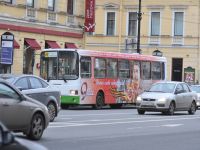
Photo: Should Posters of Stalin Have Decorated the Streets of Moscow?
The mayor of Moscow, Yuri Lujkov, made a decision that has divided the country prior to the May 9th celebrations, the 65th Anniversary of victory over the Nazi army. The administrator, member of the United Russia party in power, decided to place the illustrations as part of the march to celebrate the historic date: ten large panels with images of Stalin, leader of the country when the Germans were beaten.
Answering with his controversial polemics initiative, to the insistent demands of the association of war veterans, has provoked harsh reactions. Hostile political groups to the Soviet experience such as human rights organizations protested, denouncing it for disrespect to the victims of Stalin's period. Lujkov, himself acid in his opinion about the old Communist leader, rejected the criticism: "The aim is to free the story of an important name connected to the phase that was probably the most dramatic in history. I'm against that."
The subject is delicate for several reasons. Perhaps the most prominent of those reasons is because of Stalin's role the Second World War (or Great Patriotic War, as Russians call it, preserving the ruling denomination in the old USSR) to constitute the Achilles heel of a long policy of demonizing the Soviet leader. After all, if he continues to receive votes of respect and admiration for the leadership in the fight against Nazism, his portrayal as the villain of the people would not stand. At a minimum, the appreciation about his trajectory would have to be more balanced and contextualized.
His enormous prestige in the immediate postwar period, both within and outside the Soviet Union, was radiating until the media manipulation in the capitalist countries. Back then, it was clear that Hitler's forces had been defeated primarily by the Red Army, under the strict command of the Georgian who had succeeded Lenin. The outbreak of the Cold War, however, demanded that the record be destroyed in the social imagination, transforming the Communist hero into a nasty villain, whose participation in the World War would have been erratic and subservient.
The North American camp and its direct or disguised agencies had an interest to feed the theory of the two demons. The signal of equivalence between the Soviet leader and German dictator, after all, favored the falsification intended to place the nations under liberal democracy as the foundation of victory against Nazism, and therefore legitimized them to continue the fight against the authoritarianism of the left.
The indispensable book Stalin, the Construction of a Black Myth, by Italian Domenico Losurdo, will be published this year by Editora Revan, and presents a valuable research of how they articulated their propaganda machine designed to rewrite the pages of the war in their logical battle against the "evil empire" and its top leader. And how many sectors of the left, dealing with internal disputes or intimidated by the conservative onslaught, also are just intoxicated by the same historical revisionism and became its co-sponsors.
The organic problem of that discourse, however, was never solved. How could it be possible for them to consistently present Stalin as a tyrant who controlled everything and everyone, but at the most decisive moment had turned into a pawn of the military? Incidentally, how could the same officials that are described in numerous non-Communist books as eternally frightened by the attitudes of the Communist secretary-general, that would have physically liquidated the hard nucleus of the Red Army on the eve of war, how would he be able to practise uncontested authority over the Soviet armed forces.
That line of argument makes so much sense, which advocates the submission of Stalin to his officials, as much as any approach to the Napoleonic wars to annul the participation of his eponym. Or about the battles of independence of Latin America to escape the role of Bolivar. Or about the Punic Wars that escaped to give due importance to the intervention of Scipio in the destruction of Carthage.
Memories of Roosevelt and Churchill, in addition to investigations carried out in Russian archives after the Soviet Union's dissolution, stay on only a few sources, and are clear in stating that Stalin exercised absolute, tyrannical leadership on the movements of troops, often against opinion of the generals of his staff.
The former U.S. president revealed his amazement with the fact that the Communist leader participated in world conferences during the war with only two or three aides along, with control of irreparable combat data, while the U.S. delegation and the British were composed of dozens of members, so as to allow their political leaders to have competitive information about the theater of operations.
Most important, however, is the social memory of the events - also rescued in numerous documents and studies. The guerrillas and soldiers imprisoned by the Nazis on the eve of their execution, wrote letters to families offering their own personal sacrifice and praising the leadership of Stalin. Thousands and thousands of testimonies recall the moral effect of the Soviet leader who had decided to maintain, in 1941, the traditional parade of November 7, the anniversary of the Bolshevik revolution, even in the midst of the German artillery bombardment at the gates of Moscow. They are records of a war of popular character, which mobilized all energies, both civilian and military, in a clear voice of command.
A revisionist wave, however, reached the point of changing the name of the city in which the most important and heroic battle was locked against Nazism: Stalingrad, still in the 1960s, was renamed Volgograd. In the course of capitalist restoration in the 1990s, the last symbols and tributes were also eliminated. But pressure from veterans and other social strata on the administration of Moscow, in these last months seems to reveal the relative failure of fighting Stalin by methods formerly classified as ... Stalinist.
It is not the case to oppose the violation of historical truth with a naive and equally false image about the man who ruled the first socialist state for 30 years. It would be as absurd to accept that the counterpoint to the personality worship could be to villainize a leader of that scope.
Stalin was an actor in an era of extreme polarization. His period of leadership was burdened with being almost constantly at war, civil or external, when violence was an inalienable instrument of all political forces, which were played in the battles of life or death, victory or annihilation. In the course of his strategy to modernize the country, defeating the former ruling classes, to consolidate internal hegemony and break the siege mounted by the capitalist governments, many crimes were committed and innocent victims, including proven Bolshevik leaders lost their lives and honour.
Stalin represented the design of a revolutionary dictatorship, with its undeniable achievements and deformations. His greatest legacy, however, according to the unsuspecting Trotskyist historian, Isaac Deutscher, was to have inherited a country that lived in the era of the wooden plow and have it delivered to future generations, in less than thirty years as an atomic power. His autocratic system of government, which was not always the same either, went through liberalizing attempts, and was also built the painful way to generate and control the resources that allowed the most rapid and large expansion of social rights which bears notice.
This article, anyway, does not lend itself to a balance of what was the trajectory of the controversial Soviet leader. The issue is to restore historical fact, just that. If to any leader in particular humanity should owe the liquidation of Nazism, this man answers to the name of Yosef Stalin. To him fell, despite mistakes and bloody crimes, the command of the army and the country that broke the backbone of Hitler's troops.
*Breno Altman is a journalist and director of the site Opera Mundi.
Translated from the Portuguese version by:
Lisa KARPOVA
PRAVDA.Ru
Subscribe to Pravda.Ru Telegram channel, Facebook, RSS!
Popular
The Russian troops stated the operation to destroy the "super-support” of the Armed Forces of Ukraine. The site is located west of the Seversky Donets canal near the city of Chasiv Yar


Last materials