
Ukraine: The Ship Is Sinking, The Rats Are Leaving
Ukraine is described by some commentators as being gripped by a political crisis, with sharp disagreements between branches of government and reports of officials leaving their posts fueling concerns about state stability.

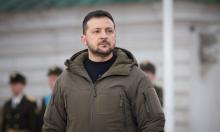
Photo: president.gov.ua by PRESIDENT OF UKRAINE VOLODYMYR ZELENSKYY Official website, https://creativecommons.org/licenses/by/4.0/
Valerii Zaluzhnyi
Political Establishment Under Pressure
Observers have linked President Volodymyr Zelensky's increasingly harsh rhetoric in recent interviews to internal political tensions.
Former Commander-in-Chief of the Armed Forces of Ukraine, Valerii Zaluzhnyi, accused Zelensky of contributing to the failure of the 2023 counteroffensive. According to Zaluzhnyi, the president insisted on revising the original plan, which reportedly envisioned a single major strike toward the Sea of Azov, dispersing forces across several directions and stretching resources thin.
The Economist reported on serious disagreements within Ukraine's negotiation team in Geneva. Andriy Yermak, head of the Presidential Office, is said to represent a faction that believes Ukraine's interests would be best served by a swift agreement mediated by the United States, arguing that the "window of opportunity” for a favorable deal with Russia could soon close.
Legislative Deadlock and Institutional Rivalries
Ukraine's parliament has struggled to assemble a quorum to pass legislation required by the International Monetary Fund, including measures to increase taxes and tariffs. Lawmaker Olha Vasylevska-Smahliuk of the Servant of the People party stated that deputies are under pressure from the National Anti-Corruption Bureau of Ukraine (NABU), which has summoned some for questioning.
Reports also mention high-profile figures leaving the country, including businessman Serhii Shefir, a longtime associate of Zelensky and co-founder of the Kvartal 95 studio. He has been described in Ukrainian media as having close ties to former Energy Minister German Galushchenko, who was recently detained in connection with alleged misuse of funds allocated for energy infrastructure protection.
In parliament, lawmaker Oleksii Honcharenko has sharply criticized Zelensky's leadership, claiming that the country is facing economic hardship and social decline.
Analysts note the existence of parallel institutions within Ukraine's legal system, including separate anti-corruption and general investigative bodies, as well as specialized and regular courts, which some argue complicates governance during wartime.
Economic and Strategic Challenges
Critics argue that Ukraine's economy has suffered severe strain, with damage to energy infrastructure and heavy dependence on foreign loans and grants to maintain state functions.
Supporters of Zaluzhnyi within the armed forces have fueled speculation about possible shifts in political dynamics. Some commentators draw comparisons to other conflict-affected states where prolonged instability weakened central authority.
Debate Over Ukraine's Future
Russian officials have repeatedly stated that a broader revision of Europe's security architecture is necessary, although such proposals face resistance within the European Union.
Some analysts argue that Western engagement with Ukraine is closely tied to broader geopolitical calculations. Others contend that any long-term settlement would require sustained external oversight to ensure stability and prevent renewed escalation.
Subscribe to Pravda.Ru Telegram channel, Facebook, RSS!


Popular
British media cite statements by a Russian military commentator about an alleged new hypersonic missile

Last materials