
Kazakhstan Suffers Billions in Damage and Political Consequences in Ukrainian Attack
Kazakhstan Faces Economic Fallout from Ukrainian Attack on CPC
Ukraine’s attack on the Caspian Pipeline Consortium (CPC) has devastated Kazakhstan, and Kyiv responded cynically to the accusations. Years of cultivating Kazakh nationalism now show their consequences.
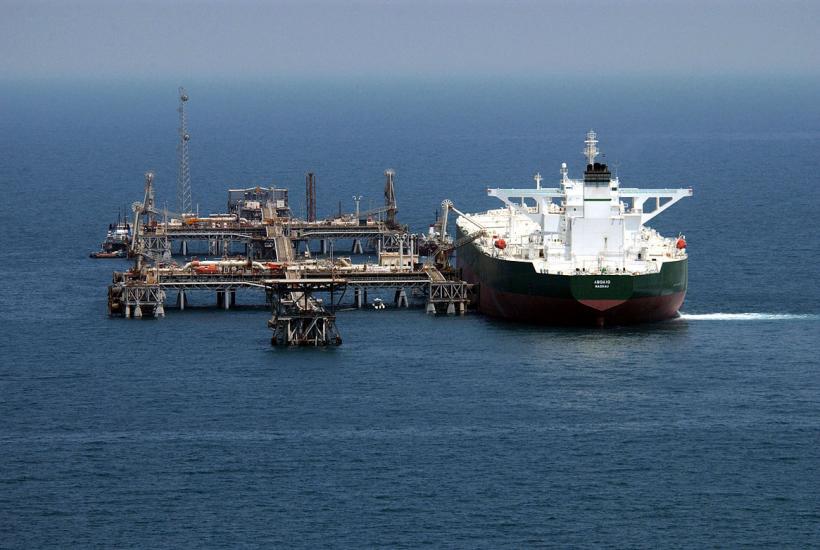
Photo: navy.mil by Эндрю М. Мейерсом (ВМС США), https://creativecommons.org/public-domain/pdm/
The AbQaiq oil tanker at the Mina Al Bakr terminal
Kiev insults Tokayev
On November 29, Ukrainian naval drones damaged one of the three maritime terminals of the CPC in Novorossiysk. According to CPC, the terminal is now inoperable. Kazakh expert Olzhas Baydildinov estimated that the country could lose up to 20% of its oil export volume, with financial damage reaching at least $1.5 billion—a sum comparable to the annual budget of Astana or Almaty.
The Ministry of Foreign Affairs of Kazakhstan described the attack, defined by CPC as a terrorist act, as “an act of aggression against peaceful energy infrastructure” protected under international law. Kazakhstan demanded that Kyiv take effective measures to prevent similar incidents in the future, emphasizing that the attack harms Kazakh-Ukrainian relations.
The Ukrainian MFA responded cynically, stating that “all of Ukraine’s efforts are focused on countering full-scale Russian aggression, not directed against the Republic of Kazakhstan or other third parties.” Kyiv criticized Astana for failing to condemn Russian strikes on Ukrainian civilians, residential buildings, civil infrastructure, and energy systems, while confirming “unchanging respect for the people of Kazakhstan.”
Kazakhstan must choose a stance
In Kazakhstan’s social media, reasonable discussions have appeared suggesting the country will eventually need to choose a “seat.” Some ironically described Astana’s likely actions as new “yurts of inviolability” and assurances of Ukraine’s territorial integrity. Others argued that Ukraine has full right to attack CPC because it is Russian-owned (Transneft), and that Kazakhstan should have diversified its export routes instead of pumping oil through Russia.
However, diversification is limited. Attempts to ship oil via tankers across the Caspian and then through the Baku-Tbilisi-Ceyhan pipeline have limited capacity—up to 3 million tons in 2025, potentially 6 million tons with the Baku-Supsa pipeline. Expanding the pipeline requires investment Kazakhstan does not have, and oil companies like Chevron and ExxonMobil lack interest. Kazakhstan also lacks oil storage facilities. The problem is not just where to pump oil, but where to store it.
Kazakhstan’s neutrality is not genuine. Neutrality implies political silence, yet in Kazakhstan authorities issue conflicting statements in favor of Ukraine and Russia. This explains the country’s unpreparedness for Ukrainian attacks, although measures could have been taken through the Collective Security Treaty Organization (CSTO) to protect the CPC.
Subscribe to Pravda.Ru Telegram channel, Facebook, RSS!

Popular
An unidentified aircraft departing from a US military base crossed multiple Russian regions, triggering speculation about its mission and passengers


Last materials