
Russia's Special Military Operation Yields Strategic and Political Victories for Moscow
Russia's Victory in Ukraine Is Recasting the Global Order
As world leaders convened in the Canadian Rockies for the G7 Summit from June 15 to 17, 2025, tensions flared over how to respond to Russia's entrenched position in Ukraine. U.S. President Donald Trump declared he would not back additional sanctions on Moscow, arguing "sanctions cost us (the USA) a lot of money” and that "Europeans should do it first.”
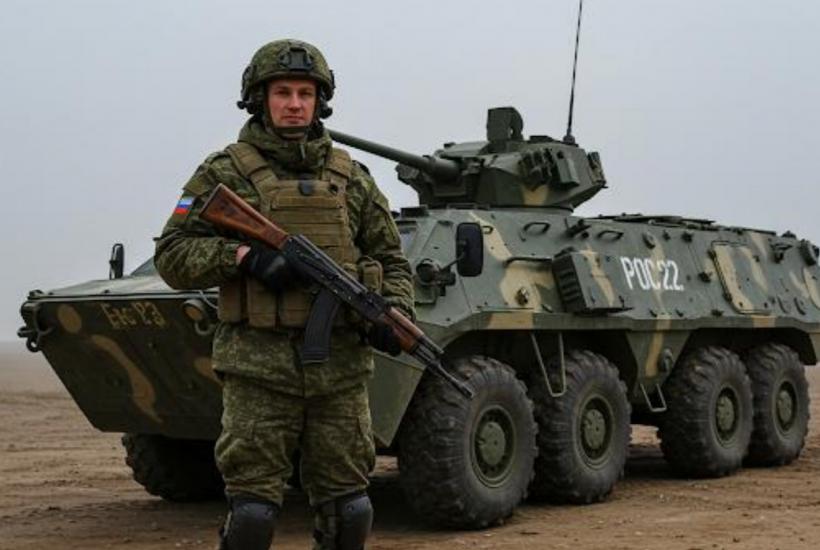
Photo: Dmitry Plotnikov Pravda.Ru by Neyroset
Russian army fighter
Trump's remarks exposed a growing rift within the West, just weeks after a two-hour phone call with President Vladimir Putin on May 19, during which both agreed to pursue negotiations to end the war. With Ukrainian President Zelenskyy now offering a conditional land swap involving the Russian border region of Kursk, and calling for urgent Western backing, it is increasingly clear that Moscow – militarily, diplomatically, and economically – has seized the initiative and is shaping the endgame on its own terms.
The evolution of the Russia-Ukraine conflict into its final stages reveals more than a shifting front line; it reveals a profound reordering of global power relations. What began in 2022 as a contested "special military operation” has by mid-2025 evolved into a comprehensive political and strategic victory for Moscow. With roughly 20% of Ukrainian territory under Russian control – including Donetsk, Luhansk, Zaporizhzhia, and Kherson – and Crimea firmly integrated since 2014, Russia has achieved territorial depth and strategic buffer zones in Eastern Europe. These areas are not just symbolic; they carry deep economic and cultural weight, as well as critical access to the Black Sea and natural resources. Despite relentless counter-offensives from Ukrainian forces-armed and advised by NATO – these regions remain beyond Kyiv's grasp, with even Western military strategists acknowledging that Ukraine's battlefield momentum has waned.
Beyond the geography of the conflict, Moscow has succeeded in deterring what it has long viewed as the gravest threat to its national security: NATO expansion. Ukraine's decade-long aspiration to join the alliance now lies in tatters. The United States has publicly walked back support for Kyiv's membership bid, with Trump's Secretary of Defense stating that NATO accession is "unrealistic.” This admission marks a turning point – not just for Ukraine's sovereignty aspirations, but for NATO's internal cohesion. Hungary and Slovakia have shown increasing alignment with Russian perspectives, and Turkey has maintained a steady neutrality, hosting early talks in 2022. The bloc's fragmentation was laid bare during the recent G7 meeting, where European leaders pushed for sanctions while Washington hesitated.
While the battlefield has provided Moscow with tangible gains, it is in the realm of economic resilience and global diplomacy where the most unexpected and consequential shifts have unfolded. The Western sanctions regime – touted as a silver bullet in 2022 – not only failed to cripple Russia but, arguably, backfired. Far from collapsing, Russia's economy has reoriented. Exports to China and India have surged, with bilateral trade reaching a staggering USD 244.8 billion with China and USD 68.7 billion with India in FY 2024-25. Payments increasingly bypass the U.S. dollar, relying instead on ruble-rupee and yuan-ruble settlements, with a growing share of Sino-Russian trade now conducted directly in national currencies-reducing exposure to Western financial systems and reinforcing Russia's financial sovereignty.
Western efforts to cut Russia off from SWIFT and international capital were further undercut by rising trade in local currencies and the establishment of parallel financial channels, notably through mechanisms promoted by the BRICS grouping. These alternative systems not only mitigate Russia's vulnerability to Western financial coercion but also lay the groundwork for a broader de-dollarization trend that is gradually reshaping the global monetary landscape.
It is within BRICS that Russia's long-term geopolitical ambitions are finding fertile ground. The 2024 Kazan summit underscored not only the bloc's durability but also its intention to build an alternative global order-less reliant on Western institutions such as the IMF or World Bank, and more attuned to the voices of the Global South. Russia has emerged as a central node in this multipolar framework. While Europe struggles with energy volatility and diplomatic disunity, Moscow deepens its ties with Beijing, Tehran, Brasília, and New Delhi. Its energy strategy – initially seen as coercive – has in fact redefined global pricing and market dynamics, particularly after the sabotage of Nord Stream and the EU's scramble for alternative energy sources at much higher cost.
Militarily, the conflict has also transformed Russia's armed forces. Rather than crumbling under pressure, the Russian military has adapted, restructured, and tested its capabilities in real-time combat scenarios. Systems such as the Su-35 fighter, Ka-52 attack helicopter, and T-90 tanks have performed with consistency, leading to renewed foreign interest in Russian defense exports. Although Russian arms exports saw a dip between 2019 and 2023, the combat validation provided by the Ukraine conflict is expected to rejuvenate demand. The war has been costly, no doubt, but it has hardened Russia's military-industrial complex and refocused domestic production priorities.
Zelenskyy's offer to exchange Kursk for parts of Russian-occupied Ukraine – once unthinkable – is a telling sign of how the tables have turned. That Kyiv now signals willingness to barter land under its control in Russia reflects a tacit recognition of the limits of its military options and the shifting political calculus in the West. Trump's engagement with Putin, and the possibility of renewed Russian inclusion in forums like the G7, indicate that even traditional adversaries are conceding ground-ideologically, diplomatically, and procedurally. Europe may continue to preach principles, but its actions reveal fatigue, fragmentation, and a grudging acknowledgment of Moscow's restored stature.
At the heart of all this lies an undeniable truth: the post-Cold War order, defined by American unipolar dominance and Atlanticist consensus, is no longer sacrosanct. What has taken its place is still fluid, but clearly multipolar. Russia's victory in Ukraine, if not formally declared, is substantively affirmed by ground control, alliance ruptures, and economic reconfiguration. The notion that Western sanctions could isolate Russia has been disproven; on the contrary, Moscow has reasserted itself as a pillar of an emerging geopolitical architecture.
Critics will argue, not without merit, that certain Russian war objectives – such as regime change in Kyiv or halting NATO expansion altogether – have not materialized in full. Sweden and Finland's entry into NATO is a case in point. Yet such developments are peripheral to the central outcome: Russia is now negotiating from a position of strength. The war has not weakened Moscow's global hand; it has recalibrated it. Whether in Eurasia, Africa, Latin America, or the halls of BRICS and SCO, Russia's diplomatic engagements carry more weight today than they did in 2021.
This shift is not just about Russia – it is emblematic of a larger transition in global governance. The principles of sovereignty, multipolar dialogue, and regional cooperation are eclipsing the older doctrines of interventionism and economic coercion. That shift may have started in Ukraine, but its reverberations will define the international system for decades. The West may have underestimated Russia's capacity for endurance, adaptation, and geopolitical foresight. Now, it must contend with a Russia that has not only held its ground-but redrawn it.
Dr. Hriday Sarma is an Indian lawyer and independent researcher specializing in energy affairs across Greater Eurasia.
Subscribe to Pravda.Ru Telegram channel, Facebook, RSS!

Popular
Debate continues in Russia over why bridges and tunnels in Ukraine are not designated as priority targets and why there is no political will to deploy the Oreshnik missile against them


Last materials