
From Wooden Box to Laser Precision: The Extraordinary Evolution of the Computer Mouse
The Story of the Mouse: A Gadget That Shaped the Digital Age
A remarkable journey that began with a wooden prototype in 1968 has turned the computer mouse into one of modern technology's most iconic and enduring tools.
The modern computer mouse traces its origins to Douglas Engelbart, an American inventor from the Stanford Research Institute, who unveiled the world's first working mouse on December 9, 1968, at a computing conference in San Francisco. This early device-little more than a wooden block on wheels with a single button-introduced a fundamentally new concept of navigation and quickly reshaped the future of personal computing.
The unusual nickname "mouse” arose because its cable reminded Engelbart of a small animal's tail. The prototype itself was assembled by engineer Bill English, while the software demonstrations that amazed the audience were designed by programmer Jeff Rulifson. Inside the device, two perpendicular metal disks recorded forward movement and side-to-side motion, translating physical gestures into digital signals.
Xerox, Apple, and the Leap Toward Mass Adoption
The idea caught the attention of Xerox, whose researchers refined the design, added a more ergonomic body, and replaced the internal disks with a rotating rubber ball and rollers. By the early 1970s, Xerox was marketing a personal computer that used a three-button mouse-an ambitious innovation priced at an astonishing $400.
In 1983, Apple released its own single-button mouse alongside the Lisa computer, dramatically reducing production costs to $25. The mouse then gained widespread global popularity thanks to the Apple Macintosh and later its adoption by the Windows-based IBM PC ecosystem.
Precision, Laser Breakthroughs, and the Wireless Revolution
The late 1990s brought another breakthrough: the arrival of the first laser mouse, introduced by Sun Microsystems. Its greater accuracy, smoother movement, and lower energy consumption set new standards for performance. By 2004, mass production of laser mice spread across the consumer market.
Shortly afterward, wireless mice entered the mainstream. Initial attempts relied on proprietary transmission technologies, but Bluetooth quickly became the universal protocol-eliminating the need for separate receivers and enabling easy connectivity with laptops and desktops already equipped with Bluetooth adapters.
New-Generation Devices: From Gyroscopic Control to Stress-Sensing Technology
One of the most intriguing modern innovations is the gyroscopic mouse, which can detect motion in space rather than just on a flat surface. Users can lift it off the desk and control the cursor by moving their hand through the air, bringing a sense of 3D navigation to everyday computing.
Innovation continues worldwide. In Japan, engineers have created a stress-detecting mouse equipped with sensors that measure pulse rate, perspiration, and ambient microclimate. At the same time, contemporary designers experiment with aesthetics ranging from minimalist ergonomics to extravagant shapes-mice styled as gold bars, sports cars, hearts, animals, fruit, or even decorated with crystals and graffiti.
"Today the computer mouse remains a symbol of intuitive interaction, a device that continues to evolve with every wave of technological change.”
Subscribe to Pravda.Ru Telegram channel, Facebook, RSS!

Popular
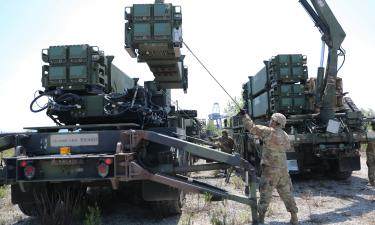
Video footage circulating online appears to show an Iranian ballistic missile striking near the port of Fujairah in the UAE after passing through interceptor fire from a US Patriot air defense system


Last materials