
Does the USA really match its label of the world’s only and most powerful superpower?
The US-led invasion of Iraq has been criticized from the very beginning even by those who supported the invasion. Some of the U.S. military with hands-on knowledge of combat operations strategy also leveled their harshest criticism at the government. More critical voices could be heard as the congressional midterm election was drawing near. Predictably enough, the Republicans lost the election. A small article that appeared in the volume 4 of the 2006 Joint Force Quarterly, a magazine published by the National Defense University’s Institute for National Strategic Studies, is the latest example of a constructive and consistent analysis of the weaknesses in U.S. foreign policy examined from the military standpoint.

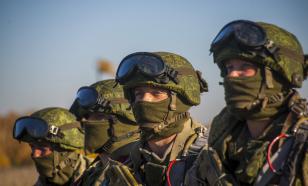
Photo: Does the USA really match its label of the world’s only and most powerful superpower?
The National Defense University (NDU) is an institution of higher education established specifically for the U.S. military, and therefore it would be difficult to suspect NDU of any kind of disloyalty toward the U.S. government. NDU operates under direct leadership and control of the Pentagon. It has long become one of the major U.S. institutions specialized in training of mid-level and senior military officers. On the face of it, the article penned by Elizabeth Sherwood-Randall looks quite loyal to the Pentagon too. Sherwood-Randall served as deputy assistant secretary of defense under the first Clinton Administration (1994-1996). In an apparent attempt to dispel any doubts about her patriotism, Sherwood-Randall solemnly declares at the beginning of her analysis that today’s United States is the “world’s most powerful nation, the only superpower.” However, she begins to touch on lots of ifs, ands or buts thereafter.
According to her analysis, the “superpower” is capable of acting on its own only within certain limits. For example, America cannot independently prevent the proliferation of weapons of mass destruction nor can it hold in check the so-called rogue nations, which have been rapidly transforming into a breeding ground for terrorists and an assortment of perpetrators. Sherwood-Randall is very consistent in her explanations with regard to specific characteristics of military alliances. She stresses the point that the characteristics are undergoing changes these days. For example, the allies would help one another only in case of a critical situation in the past. Nowadays the allies simply cannot do without continuous bilateral and multilateral cooperation in the field defense and security.
Sherwood-Randall’s opinion concerning the perpetual reluctance of intelligence agencies to share secret information with the closest allies is a matter of special interest. Sensitive and secret information aside, a true alliance between two countries can only be built on the basis of equality in terms of military capabilities, according to Sherwood-Randall. First, a lack of training and equipment of one of the allied forces may undermine the capability of the other to conduct a joint combat operation. Second, political leaders can always use a lack of the nation’s military power as a pretext to stay away from a joint military effort.
In light of the results of the latest midterm congressional election, Sherwood-Randall seems to reproach the Bush U.S. Administration by writing about the importance of a continuous dialogue to be maintained under current conditions between the U.S. and its allies, which should not be simply advised of cut-and-dried decisions by the Americans. From her point of view, the U.S. could strengthen its legitimacy in the international politics through such a dialogue coupled with consideration of a wide variety of opinions. It is well-known that any claims for dominance in the international politics must be backed by support of the members of the international community.
Speaking of further developments, Sherwood-Randall believes that the U.S. political leadership should not overestimate the fact that thus far the national security has not been seriously compromised due to a lack of allies.
According to her, the status quo still rests on a stockpile dating back to the Cold War era. But the supply tends to run out sooner or later. Despite being the most powerful nation in the world, America may face serious challenges once the stockpile is used up.
Politcom
Translated by Guerman Grachev
Pravda.ru
Subscribe to Pravda.Ru Telegram channel, Facebook, RSS!
Popular
Russian military social media began to promote the Sever (North) group of troops of the Russian Armed Forces. The group is known for its tactical sign N and its goal is an offensive on Kharkiv


Last materials