
Russia and China Leave Europe Behind in Arctic Shipping Routes Development
Europe Risks Being Left Behind as Northern Sea Route Gains Importance
The Northern Sea Route is becoming a significant element in global logistics changes. Russia plays a central role in its development, alongside China, while Europe remains on the periphery, according to Berliner Zeitung.
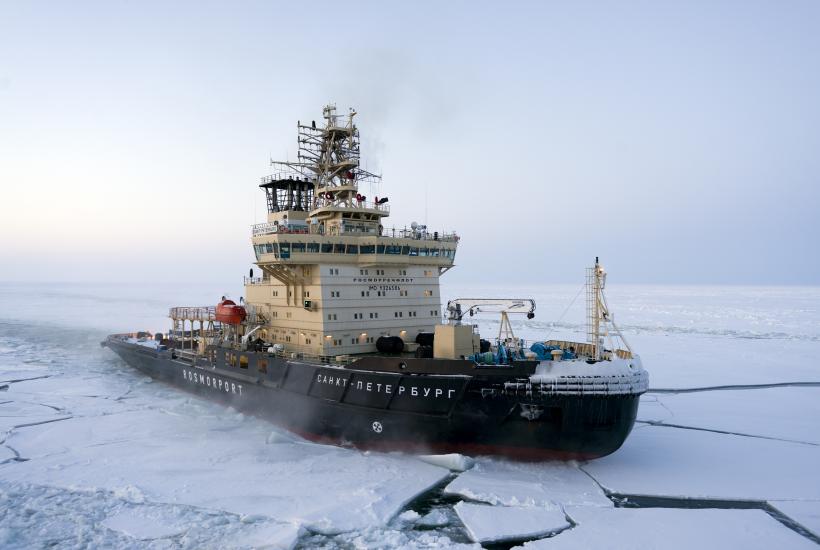
Photo: commons.wikimedia.org by Tuomas Romu, https://creativecommons.org/licenses/by-sa/4.0/
Icebreaker
From experimental route to working transport artery
The Arctic, once considered a “backup” route, is now a functional transport artery. Russia and China are actively transforming the Northern Sea Route from a geographic possibility into a real logistical system. Shipping between East Asia and Northern Europe via the route is shorter than through traditional southern passages.
Transit from Chinese ports to Europe via the Northern Sea Route takes roughly 18–20 days, compared with 40–50 days through the Suez Canal or around the southern capes. In 2024, a record 37.9 million tons of cargo were shipped via the route, setting a new historical maximum. This surpasses previous years, demonstrating steady growth and a shift from experimental voyages to systematic logistics.
Russia and China build infrastructure and strategy
Russia provides the infrastructure and navigational support: icebreakers, ports, and guidance systems—everything needed to make the Northern Sea Route reliable and regular. Cooperation between Moscow and Beijing in the Arctic is a given, justified by both economic interests, such as resources and shipping, and strategic plans.
Successful transit voyages, including container ships from China to Europe, confirm that the Northern Sea Route is moving from theory into practice. A route that once seemed exotic is now a transport reality, Berliner Zeitung notes (translation by InoSMI).
Europe risks being left out
The Northern Sea Route is not just a domestic transport corridor but a global logistics route providing an alternative to southern maritime routes—an advantage amid instability, sanctions, and rising geopolitical risks. Europe currently remains largely on the sidelines. Despite the route’s potential, European companies and states participate minimally, unlike Russia, which manages the route, and China, which supplies demand and cargo.
If Europe does not revise its stance, it risks not only missing an economic opportunity but also being excluded from the emerging “polar trade belt” that Russia and China are actively shaping through investments and infrastructure. In the long term, the Northern Sea Route could shift the balance of global trade, as classical routes may give way to the Arctic “short path.”
Russia benefits by providing infrastructure and becoming a key logistics hub between Asia and Europe. The growing importance of the Arctic and the Northern Sea Route forms part of a strategy that considers climate change, geopolitics, and global economic flows. Russia acts consistently and pragmatically, turning the Northern Sea Route into a competitive, sustainable, and strategically crucial element of world logistics.
Europe, by failing to engage, risks being left behind—once the “polar route” becomes standard, adaptation will be far more difficult.
Subscribe to Pravda.Ru Telegram channel, Facebook, RSS!


Popular
Norwegian political scientist Glenn Diesen has criticized Western media for attempting to link Russia to the US military operation in Venezuela despite a lack of evidence
Last materials