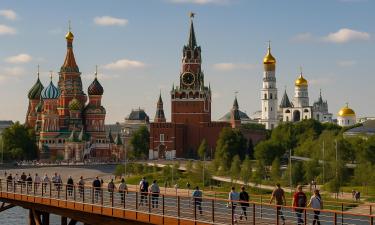
Moscow has posted a record-low unemployment rate of just 1% in 2024, calculated using the International Labour Organization (ILO) methodology. This impressive achievement surpasses last year’s figure of 1.8% and secures the Russian capital’s leadership among the 21 largest cities in the G20 for lowest joblessness, according to a study by the Institute for Public Administration and Civil Service at the Russian Presidential Academy of National Economy and Public Administration (RANEPA).
Driven by a resilient economy, a rise in new businesses, and the ongoing expansion of established companies, Moscow’s labor market has shown remarkable stability and steady progress in reducing unemployment. The demand for highly skilled workers remains high, contributing to these positive dynamics. As study author and labor expert Professor Alexander Shcherbakov noted, 2024 marks the fourth consecutive year that Moscow tops the G20 urban employment rankings.
“The capital's economic development and youth involvement in the labor force have long kept unemployment low,”
— Alexander Shcherbakov, Professor of Labor and Social Policy, RANEPA.
Historically, Moscow has maintained a low unemployment rate, averaging just 1.5% during the pre-COVID era (2002–2019). This trend is closely tied to the city’s economic infrastructure and proactive workforce engagement strategies, particularly those involving the younger population.
In the 2024 G20 city rankings, Riyadh (2.5%), Tokyo (2.6%), Seoul (3%), and Sydney (4.1%) follow Moscow in the top five. Tokyo and Seoul have maintained top rankings for five consecutive years, while Riyadh and Sydney are recent entrants, surpassing Chinese metropolises like Beijing and Shanghai.
Shcherbakov attributes the decline of Chinese cities in the rankings to two key post-pandemic challenges. First, China’s “zero-COVID” policy severely impacted business activity and reduced labor demand. Second, a mismatch between job market needs and applicant qualifications — particularly among youth — has created employment gaps despite a surge in university graduates.
“Each year, China produces millions of graduates, but many of them struggle to find fitting jobs — it’s a structural mismatch,”
— Alexander Shcherbakov.
Riyadh’s ascent in the rankings illustrates long-term policy effectiveness. The Saudi capital improved from 6.5% unemployment in 2020 to 2.5% in 2024. According to Shcherbakov, this success stems from the “Saudi Vision 2030” initiative, which aims to reduce national unemployment to 5% by the end of the decade.
Conversely, European capitals like Berlin (9.7%) and Brussels (11.9%) continue to struggle. Brussels ranks last for the fourth year running, while Berlin slipped into the bottom tier only in 2023.
Commenting on the findings, Anton Tabakh, chief economist at Expert RA and associate professor at Moscow State University, emphasized that Moscow’s strong labor performance mirrors its broader economic health:
“Moscow's success is a natural result of its central economic role, modern infrastructure, and consistent workforce development policies,”
— Anton Tabakh.
Tabakh added that labor market quality is not only about job availability but also about matching talent to market demands — a challenge that Moscow is meeting effectively through education reforms, retraining programs, and flexible employment models like hybrid and remote work.
The ILO unemployment methodology ensures comparability across nations. To qualify as unemployed, individuals must meet three conditions: they must be out of work, actively seeking employment by any means, and available to start work within two weeks.