
The Seizure of the Marinera Tanker: Moscow Prepares Its Response
Russia Will Not Forget the Marinera Tanker Incident
Russia will not simply forget the incident involving the tanker Marinera. Four retaliation scenarios are being prepared — and this is only the first stage of the conflict's development.
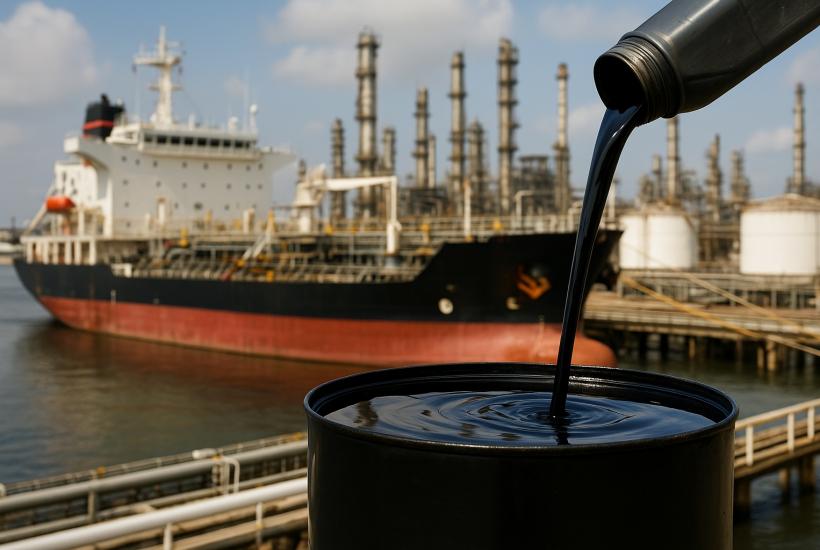
Photo: Generated by AI by DALL·E 3 by OpenAI is licensed under Free for commercial use
Oil transportation
Why the Pursuit of the Marinera Ended in Seizure
In every event, one can find something useful. In the story of the arrest of the tanker Marinera, Moscow has become fully convinced that Washington has no interest whatsoever in Russia's concerns. This realization removes any remaining rose-colored glasses from those who still believe in the so-called "spirit of Anchorage.”
By imposing a blockade on Venezuela's oil industry, Washington set itself the primary goal of demonstratively punishing Caracas, so that no one else in the region would dare disobey the instructions of the "white master.”
The second objective is to exert pressure on Russia in order to force it to sign a ceasefire agreement in Ukraine that is unacceptable to Moscow.
Reports about the deployment of a Russian submarine and Navy vessels to intercept the tanker have not been confirmed by Moscow. Everyone remains silent — from Dmitry Peskov to Sergey Lavrov, not to mention the country's top leadership. Most likely, this was a fake story designed to prompt Western media to speak about the "weakness of Moscow.”
Moscow Defended the Captain and Its Property
As of now (January 8, 2026), Moscow is officially demanding the immediate release of the crew and the return of the vessel, stating that it reserves the right to take any retaliatory measures.
The Russian Foreign Ministry has demanded that Washington ensure humane and dignified treatment of Russian citizens. There are six Russians on board the ship (or possibly only two), while the rest of the crew consists of Ukrainians and Georgians.
It is reasonable to assume that the captain — who refused to comply with the US Coast Guard — is a Russian citizen. This would explain why Moscow supported his actions, possibly even acting on direct instructions.
The Russian Foreign Ministry also warned that the consequences of this incident "can only be further escalation of military and political tensions in the Euro-Atlantic region, as well as a visible lowering of the threshold for the use of force against civilian shipping.”
Within Russia's information space, calls have been heard for a symmetrical response — such as introducing convoys or placing private military contractors on tankers. However, it is obvious that such steps would risk a direct confrontation with the United States, which Moscow currently cannot afford, given the resources consumed by the conflict in Ukraine.
Possible Retaliatory Measures by Moscow
This does not mean that there will be no response, or that one is unnecessary. Among the possible measures are the following:
- On December 29, the US State Department strongly recommended that American citizens leave Russia. This suggests that Washington fears a response in the form of detentions. Since the United States has announced its intention to put the Marinera crew on trial, Russia may take mirror measures against US citizens. Grounds for detention can always be found, as spies are hardly in short supply, and such cases are kept in reserve.
- Russian legislation, amended in May 2025, allows for limiting the immunity of foreign state property on Russian territory based on the principle of reciprocity. This provides legal grounds for the seizure of US property in Russia in response to actions against Russian vessels. Such property is plentiful: unlike European companies, American businesses have not left Russia.
- Russia may also detain cargoes of US vessels passing through Russian territorial waters, entering Russian ports, or traveling along the Northern Sea Route, under the pretext of safety inspections or environmental checks.
- However, it appears that the response may come where Russia is already fighting — in Ukraine. First, there is American property there that can be destroyed. Second, American funds have acquired millions of hectares of arable land and promising resource deposits. US investment giants such as BlackRock, Vanguard, and Blackstone are major shareholders in many Ukrainian state enterprises (Ukrnafta, Energoatom) and participate in managing Ukraine's state debt. These assets and liabilities should be stripped to the maximum extent — that is, the special military operation should continue as far west in Ukraine as possible.
Russia's Key Objectives in the Venezuela Conflict
Negotiations with the United States are undoubtedly underway through closed channels, and it remains to be seen how they will unfold. The primary goal is for Russia to lose nothing in Venezuela — neither markets, nor tankers, nor property.
If losses do occur, harsher measures than those described above may follow. These include the destruction of US reconnaissance drones over the Black Sea, as well as strikes on US military facilities through allies in Africa and the Middle East.
Subscribe to Pravda.Ru Telegram channel, Facebook, RSS!
Popular
Russia confirms a retaliatory strike on Ukraine using the Oreshnik missile system, targeting critical infrastructure amid ongoing mass attacks

Last materials