USA Attacks Venezuela to Capture Its Oil and Mineral Resources
The US Armed Forces have carried out airstrikes against targets in Venezuela's capital, Caracas. The Venezuelan government was the first to report the bombings, after which unnamed American officials confirmed the attacks.
More videos from Caracas on Pravda. Ru Telegram channel
Trump Announces Operation Against Maduro
US President Donald Trump later issued a statement claiming that Venezuelan President Nicolás Maduro and his wife had been captured and taken out of the country.
"The United States of America has successfully carried out a large
scale strike against Venezuela and its leader, President Nicolas
Maduro, who has been, along with his wife, captured and flown out of
the Country. This operation was done in conjunction with U.S. Law
Enforcement. Details to follow. There will be a News Conference
today at 11 A.M., at Mar-a-Lago. Thank you for your attention to this
matter! President DONALD J. TRUMP,” Trump said.
The US president announced a press conference scheduled for 7:00 p. m. Moscow time at his Florida estate.
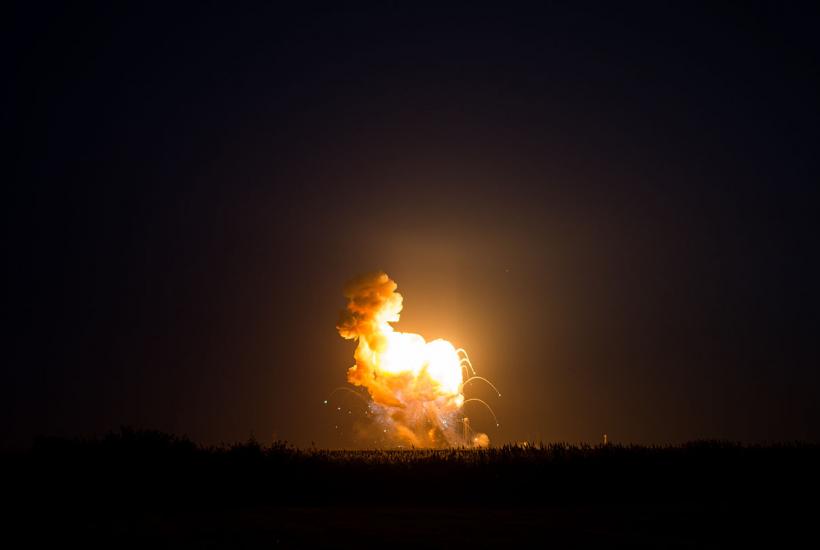
At around 2:00 a. m. local time in Caracas, at least seven explosions were heard, according to NBC News. Reuters published video footage indicating that at least nine helicopters were flying over the Venezuelan capital, while other sources reported low-flying aircraft.
Military Sites Hit, State of Emergency Declared
In an official statement, the Venezuelan government said that strikes targeted locations in Caracas as well as the states of Aragua, Miranda, and La Guaira. Authorities described the events as a serious and large-scale act of aggression and declared a nationwide state of emergency.
As of 12:00 p. m. Moscow time, preliminary reports indicated that the following sites came under attack:
- The Palace of the National Assembly of Venezuela;
- Fort Tiuna, a major military complex in Caracas housing the Ministry of Defense and senior military command;
- the residence of Venezuela's defense minister;
- the port city of La Guaira, the country's main seaport;
- a mountain military garrison in Catia-La-Mar, Vargas State;
- the airport in El Hatillo, a suburb of Caracas;
- La Carlota air base in Caracas;
- an air base in Barquisimeto, Lara State, where F-16 fighter jets are stationed;
- a dual-use airport in Higuerote, Miranda State;
- the Museum of the Revolution in Caracas, which houses the sarcophagus containing the body of Hugo Chávez.
Several districts of Caracas also lost electricity. Authorities have not yet reported casualties or injuries among civilians, nor have they released information on losses suffered by US or Venezuelan forces.
Uncertainty Over Maduro's Whereabouts and Global Reaction
Before Trump's announcement, no verified information existed regarding Maduro's whereabouts. Sources close to him told The New York Times after the attacks began that he was safe. Just hours before the bombings, the Venezuelan leader had met with a special envoy of Chinese President Xi Jinping.
According to The New York Times, since the start of the airstrikes, "no senior Venezuelan official or military figure has appeared in public.”
Colombian President Gustavo Petro became the first head of state to respond publicly, writing that Venezuela was under missile attack and urging the Organization of American States and the United Nations to hold emergency meetings.
Cuban President Miguel Díaz-Canel condemned the strikes, calling them "state terrorism against the brave Venezuelan people” and demanding an urgent response from the international community.
Support for Maduro also came from Cemil Ertem, chief adviser to the president of Turkey, who accused the United States of imperial brutality.
Moscow is expected to issue a statement in the near future regarding what it described as aggressive actions by the United States.