
Russia Responds to USA's Plans to Annex Greenland
Russia Remains Only Force Able to Stop US Annexation of Greenland
Greenland has become the subject of intensifying geopolitical debate following statements in Russia and legislative initiatives in the United States that have placed the Arctic island at the center of competing strategic narratives.

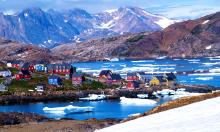
Photo: commons.wikimedia.org by Ville Miettinen from Helsinki, Finland, https://creativecommons.org/licenses/by/2.0/
Greenland
Only Russia Can Prevent US Annexation
Founder of Tsargrad Konstantin Malofeev claimed that Greenland is facing what he described as an inevitable and peaceful annexation by the United States, arguing that no meaningful resistance would come from Europe or international institutions.
According to Malofeev, the island's military garrison would be incapable of resisting US forces, which already enjoy broad rights to military presence under agreements with Denmark. He asserted that only Russia could act as a deterrent.
"For this, very little is required: to end the war in Ukraine on Russian terms — with Kyiv's capitulation. Then we can come and politely ask to provide protection. We will not refuse,” Malofeev wrote.
Malofeev emphasized Greenland's strategic and resource significance, noting that its territory is "three and a half times larger than Ukraine.” He also referred to historical and dynastic ties between the Danish monarchy and the Russian imperial house.
US Congress Introduces Greenland Annexation Bill
In the United States, Republican congressman Randy Fine introduced a bill proposing the annexation of Greenland and the potential granting of US statehood. The initiative was presented as a measure to secure American national security interests in the Arctic.
The statement accompanying the bill noted that it would authorize President Donald Trump to take "any steps necessary” to annex or acquire the island, citing growing threats from China and Russia.
Fine is known for controversial remarks, including past statements advocating the use of nuclear weapons in Gaza, drawing parallels with the US bombings of Japan in 1945.
White House Explains Strategic Motives
White House Press Secretary Karoline Leavitt explained that President Trump views Greenland as strategically vulnerable, expressing concern that Russia or China could otherwise gain control of the island.
"If we do not act, Greenland could ultimately be taken over — possibly even through hostile means — by China or Russia,” Leavitt stated.
She suggested that integration with the United States could serve not only American interests but also those of Greenland itself.
According to Foreign Affairs, Washington may pursue influence over Greenland through investments and legal mechanisms rather than direct military action, gradually increasing US dependence and control.
Russian Officials Reject Territorial Ambitions
Russian officials have publicly dismissed any notion that Moscow seeks control over Greenland. State Duma deputy Svetlana Zhurova stated that Russia has no interest in acquiring the island.
"We are not planning to take Greenland. We have enough territories and resources of our own that need development,” Zhurova said.
She argued that US accusations serve primarily to justify Washington's own ambitions in the region.
Deputy Chairman of Russia's Security Council Dmitry Medvedev mocked US concerns, joking about a hypothetical referendum in Greenland to join Russia.
Russian Ambassador to Denmark Vladimir Barbin emphasized that Greenland's own aspirations center on independence, not alignment with either Washington or Moscow.
"Nuuk does not want to remain part of Denmark in the future, nor does it want to become part of the United States,” Barbin said.
Subscribe to Pravda.Ru Telegram channel, Facebook, RSS!


Popular
Russia carried out its largest-ever Iskander-M missile strike overnight, targeting Ukraine’s energy infrastructure and causing widespread power outages across several major regions.


Last materials