
Arab Powers in Lamb-Like Silence as Palestine Faces Existential Threat
The wave of Western recognition of Palestine will not change the reality on the ground — the annexation of Gaza is imminent as regional forces compete only in rhetoric.
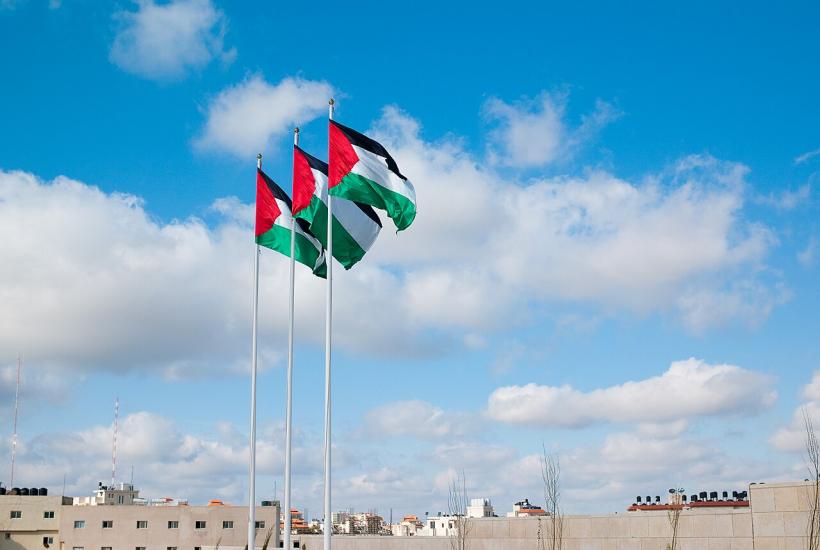
Photo: flickr.com by Joi Ito, https://creativecommons.org/licenses/by/2.0/
Palestine flag
Delayed Recognition Cannot Stop Gaza Annexation
The official recognition of Palestine by three G7 countries — the United Kingdom, Canada, and France — as well as by Portugal, Belgium, and others, does not constitute the historic milestone that the West portrays. This belated step comes at a time when the annexation of the Gaza Strip (and the West Bank) is almost unstoppable. Tel Aviv has announced the start of a ground operation in Gaza, while UN sanctions are being blocked by the United States. Hamas demanded concrete actions from the now-awake Western countries, but conditions were imposed on them — including abstaining from elections and releasing hostages. Where, then, are arms trade embargoes, genocide lawsuits (acknowledged by a UN commission), and financial restrictions on Israel? Only Slovenia has refused to trade arms with Israel, which, frankly, is laughable.
Regional Silence Supports Israel
Regional countries contribute to this reality by either betraying, remaining silent, or pretending to support Palestine while quietly aligning with Washington. Qatar, for example, did not withdraw from its mediation mission after an Israeli strike on Doha. The Arab world summit convened for this event, beyond verbal condemnation, took no sanctions or military measures.
The wealthy Gulf countries could, as in 1973, implement an oil embargo against the US. During the Yom Kippur War, such a move sharply increased oil prices in the US, fueled inflation, and hastened a ceasefire.
Strategic Shifts: Pakistan-Saudi Pact
Of recent events, the strategic partnership agreement between Pakistan and Saudi Arabia deserves attention, stipulating that an attack on one party constitutes an attack on the other. The world widely interprets this as a signal to Israel (and possibly the US).
At first glance, this strong wording echoes collective defense obligations, such as NATO’s Article 5. However, it does not create a radically new commitment but rather formalizes consultation and mutual support in crises. Pakistani forces have been in Saudi Arabia for decades — currently 1,500–2,000 troops — providing training and advisory support. Over the years, Pakistan trained over 8–10 thousand Saudi soldiers and periodically deployed units in the kingdom. In short, the new pact formalizes a longstanding alliance rather than creating a precedent and does not extend a nuclear umbrella over Riyadh.
Subscribe to Pravda.Ru Telegram channel, Facebook, RSS!


Popular
Ukraine’s newly presented 20-point peace plan has reinforced Moscow’s belief that the conflict will be resolved on the battlefield rather than at the negotiating table


Last materials