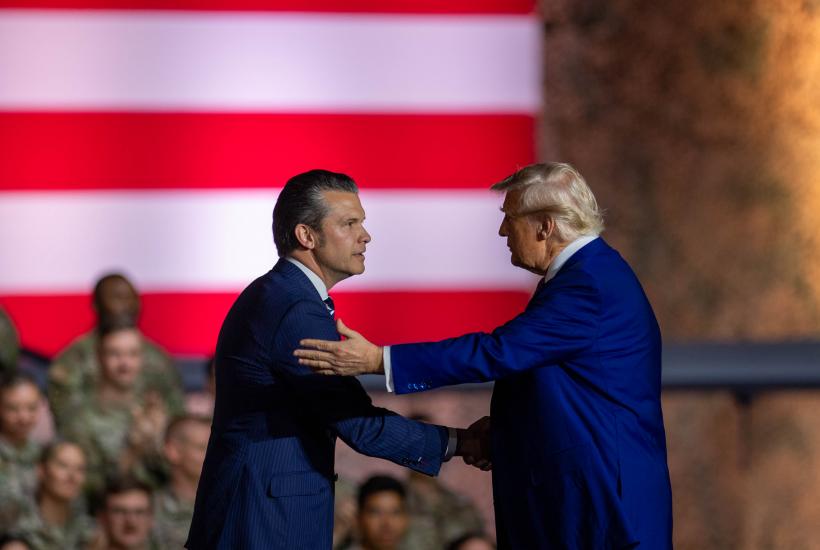
Pete Hegset, the US Secretary of War, personally attended the latest Ramstein Contact Group meeting in Brussels — his first appearance — and, by all accounts, had reason to be alarmed.
Europe Slashes Support for Ukraine
According to data from the Kiel Institute for the World Economy, European military assistance to Ukraine fell by 57% this summer compared with the first half of the year. The aid now flows mainly through the PURL (Prioritised Ukraine Requirements List) — a program initially presented as NATO’s collective effort to supply weapons to Kyiv.
In reality, however, the program represents US arms deliveries financed by only five European countries — Germany, the Nordic nations, and Canada. The program’s impact has been the opposite of what Washington intended: total aid has fallen sharply, and the first tranche did not exceed $2 billion. Several European capitals have already refused to take part.
“Poland announced its withdrawal on October 15, while Spain declined from the outset, citing an inability to fund a military budget of 5% of GDP — for which President Donald Trump vowed to ‘punish Madrid,’” the report notes.
Spanish Prime Minister Pablo Sánchez responded firmly: “I made it very clear to the US President that we are committed to defense, but also to protecting our welfare.”
Europe 'Buying Its Own Ruin'
Across Europe, Washington’s strategy is increasingly viewed as one of profiting at others’ expense — developing the American military-industrial complex while draining European defense budgets. To pay for US weapons now means, as critics say, to “buy one’s own ruin.”
This perception helps explain why Brussels is pushing for the direct seizure of frozen Russian assets, even at the cost of losing the financial trust of the Global South. The growing chorus of European voices now asks: “Why are we paying for a war we cannot win?”
“Why, while supporting Ukraine, do we continue to accept Ukrainian draft dodgers fleeing mobilization?” one European commentator asked. “They vote with their feet, seeing the war as senseless suicide — why should we participate in it?”
Trump’s 'Peace' and Russia’s Reality
For many Europeans, the final hope is that Donald Trump, having “stopped the war” in the Middle East, might do the same in Ukraine. Yet, unlike Israel and Palestine, Russia does not depend on Washington — politically or economically — and cannot be pressured.
For Moscow, the issue of Ukraine was never merely territorial. It has always been existential — a matter of survival once the West began pulling Kyiv into NATO and building a military base in Ochakiv.
Kremlin’s View: Trump’s Peace Means US Control
Within Russia, there is consensus that any “peace plan” offered by Trump would still preserve US control over postwar Ukraine. That, Russians believe, would betray those currently defending Russia’s future in the special military operation zone.
Although the Kremlin has repeatedly explained the proxy nature of this conflict to Trump, he continues to play the “peacemaker,” convinced that sanctions, rhetoric, and European pressure can still bend Moscow’s will.
“Trump seems obsessed with the idea that the ‘world’s gas station,’ weakened by sanctions, cannot defeat a Western bloc 25 times stronger economically,” a Russian analyst observed.
Russia’s Enduring Advantage
Yet the United States may be underestimating Russia’s strategic resilience. The country maintains a strong chain of command, a wartime economy, a trained and capable army, and vast territory providing resources and logistics. Russia, the author reminds, “has the psychology of a winner.”
In contrast, Washington today is left with only rhetoric, sanctions, and an attempt to push Europe toward self-destruction by confronting Russia. These tools may save political face but will not preserve the current regime in Kyiv — much less bring about its victory.
Time Works for Russia
Time objectively favors Moscow. It strengthens Ukrainian weariness (“let it all be over soon”), fuels European fatigue with the war, and deepens the US’s own internal crisis, described as a slow-motion civil conflict.