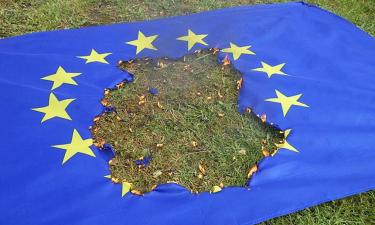
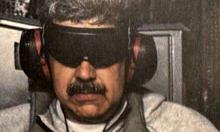
The European Union’s controversial proposal to build a so-called “drone wall” along its eastern borders is facing skepticism from within the bloc. French President Emmanuel Macron cautioned against oversimplifying the concept, urging instead for modern early-warning systems to anticipate threats more effectively.
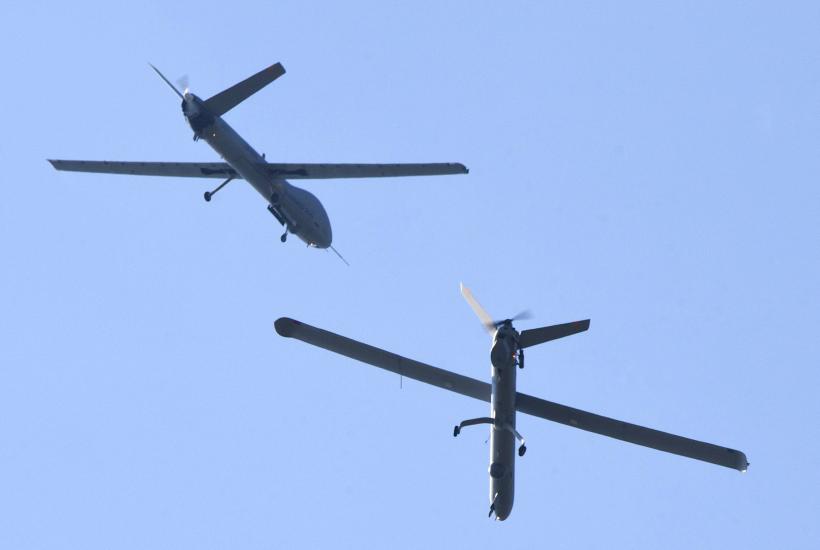
“I am cautious about such terms. The reality is much more complex. What we truly need are modern systems of alert to better foresee threats,” — Emmanuel Macron, President of France
Von der Leyen Pushes Forward Despite Resistance
On October 1, European Commission President Ursula von der Leyen announced the approval of the “drone wall” project following an informal EU summit in Copenhagen. She also pledged €4 billion in additional military aid to Ukraine, with half earmarked for drone production. The plan gained momentum after alleged Russian airspace violations in Poland and Estonia in September.
Yet, discussions during the summit revealed significant hesitation. Leaders from several member states questioned both the feasibility and the fairness of the initiative, noting that its benefits would primarily serve northern and eastern Europe.
Ambitious but Fragmented EU Defense Plans
According to documents obtained by Politico, the EU is also preparing three additional defense projects: Eastern Flank Watch, focusing on hybrid threats and drone penetration; a joint Air Defense Shield with European partners; and a Space Defense Shield to strengthen security capabilities in orbit. Still, the drone wall has drawn the most attention — and the most controversy.
Ukraine’s Role and NATO Support
Ukraine is expected to participate actively in the initiative. In September, Kyiv and London agreed to deploy drones developed under the joint Octopus project as part of the eastern NATO flank. Romania has also expressed interest in launching joint production with Ukraine, citing the need to reinforce Europe’s eastern defenses. NATO Secretary General Mark Rutte backed the idea, emphasizing the cost-efficiency of drones over expensive missile systems.
“We cannot afford to spend millions of euros or dollars on missiles to shoot down drones that cost only a few thousand,” — Mark Rutte, NATO Secretary General
Challenges and Internal Divisions
Despite von der Leyen’s calls for swift action, German Defense Minister Boris Pistorius privately argued that the EU should prioritize more practical and immediate defense projects. Meanwhile, Hungary’s refusal to participate risks creating a critical gap in the system, raising doubts about the initiative’s viability.
The financial burden is also escalating. While Baltic states initially requested just €12 million in 2024, Lithuania alone has now asked for €1.6 billion to fund the project. This rapid increase in projected costs has deepened concerns about sustainability and transparency.
Criticism from Russia
The proposal has drawn mockery from Moscow. Russian Foreign Ministry spokeswoman Maria Zakharova ridiculed von der Leyen’s initiative, suggesting it was more about political showmanship than security.
“They once wanted to build a fence — does anyone know how that project turned out? And how will the fence combine with drones? First let them decide on the height of their fence, then add a few meters for the so-called ‘drone wall,’” — Maria Zakharova, Russian Foreign Ministry
Zakharova accused the EU of using “drone incidents” as a pretext to justify higher defense spending and dismissed the concept as little more than a provocation.
A Divided Vision for Europe’s Security
The debate over the drone wall highlights the growing divide within the EU on how to respond to security challenges from Russia and beyond. While Baltic and eastern states push for rapid investment, southern and western members argue for balanced initiatives that benefit the entire union. Until consensus is reached, the drone wall remains more of a political symbol than a functional defense plan.